
Port Huron STR Market Report 2026: The $12,482 Year

Updated: Aug 28
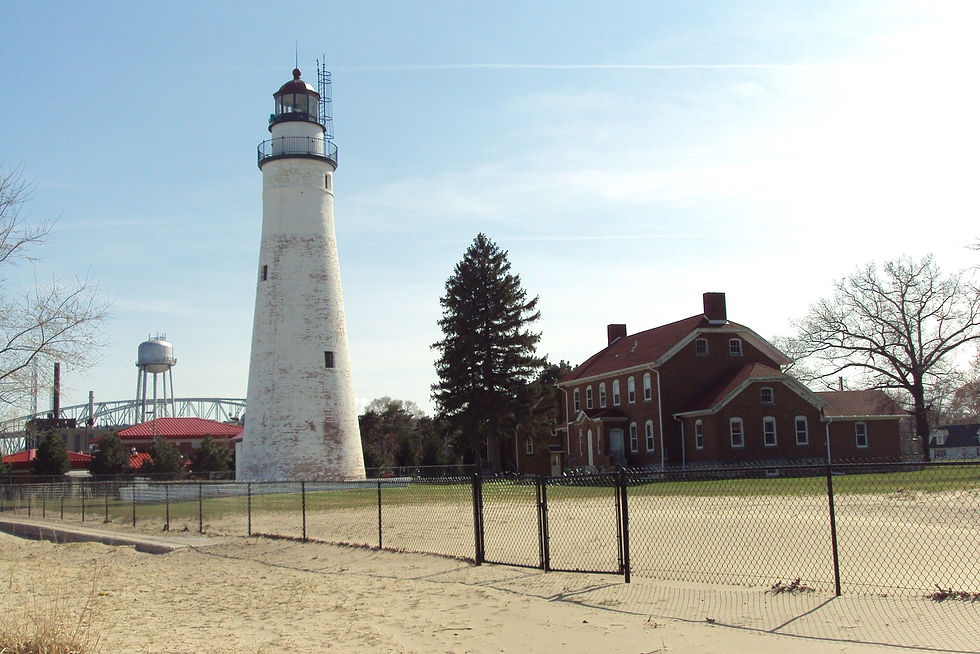
Port Huron, Michigan published a typical year of $12,482 on 54 listings for the August 2025 through July 2026 vintage. ADR is $185, and occupancy is 31.5 percent. RevPAR is $59. This is a modest, specific market, and a report on it should stay specific too — not mint a shore-wide figure out of a river mouth and a township beach that don't actually share one revenue year.
The published market year covers Port Huron and Lakeport, in St. Clair County, about 62 miles and one hour northeast of Detroit, where the St. Clair River meets Lake Huron at the Canadian border. Guests who search Port Huron specifically are not asking for a Detroit-adjacent cottage; the market's own identity, its own landmarks, and its own numbers are what this report describes.
Peak-3 is August, October, and June, and the peak month is August. February is the hole. January and May sit in the low stretch alongside it. Year over year is minus 25.9 percent, and supply is up 31.7 percent. Stay is 4.6 nights, and lead is 35 days. Seventeen listings have set a thirty-plus-night minimum stay. This report walks through what all of that means for a host, a buyer, or a lender working with this specific market. This is not legal advice.
$12,482 Is Port Huron's Own Year
$12,482 is the typical year on this market. ADR is $185, and occupancy is 31.5 percent. RevPAR is $59, and the vintage covers August 2025 through July 2026. Entire-home listings make up 96.3 percent of the sample, though houses specifically account for only about 37 percent of that total, with the balance made up of other entire-property configurations. Two-bedroom units are the most common size, and four guests is the most common listed capacity.
A buyer or lender packet that pastes $12,482 onto a Detroit letterhead is already working from the wrong assumption. A packet that lifts Lexington's $24,664 because both towns sit on Lake Huron is making the same kind of mistake in a different direction. Lexington's figure comes from its own 49-listing sample on the Thumb shoreline north of Lakeport, and Lakeport itself has no published year of its own in this sample.
Year over year on this vintage is minus 25.9 percent. Supply rose 31.7 percent over the same period, and the softest revenue month is February, with January and May forming the broader low stretch alongside it. Peak month is August, and peak-3 is August, October, and June. A broker memo that sells a broader shoreline story instead of naming these specific figures for this specific town hasn't actually described the market a buyer would be underwriting.
Fifty-Four Listings Is Not a Shore-Wide Average
Fifty-four listings is the Port Huron market, and that count is what the published market year is built on. It is not a rounding error against a broader Detroit metro figure, and it is not a reason to borrow Lexington's 49-listing sample and present the combined result as though it described this specific driveway.
Fifty-four listings, on their own, produced $12,482 with 31.5 percent occupancy, because this published market year describes a genuinely modest shoreline overnight market about one hour from Detroit, not a scaled-down version of that larger city's own short-term rental economy. Detroit shows up as the origin city on most booking-platform search data for this area, which describes where guests are traveling from, not the performance figure this market has actually published.
Two municipal halls sit inside this same 54-listing footprint: the City of Port Huron desk at 100 McMorran Boulevard, and Burtchville Township Hall at 4000 Burtch Road. A buyer or host cannot guess one shared license covering both jurisdictions, and that two-hall reality is part of the market, not a footnote sitting beneath a borrowed Detroit ADR figure.
Detroit Is One Hour Away, Not this sample's Identity
Detroit is the origin city on the extract's search data, and roughly 93.4 percent of this market's guests are domestic travelers. Those origin figures describe who drove to get here, not what this specific product actually is. The drive is about 62 miles and one hour northeast, which is geography worth naming honestly, not a license to fold Port Huron's identity into Detroit's own.
Distance from Detroit doesn't move the extract's actual numbers, and an hour's drive is a deliberate trip for most guests rather than a casual day-trip extension. A listing or a report that sells this published market year as though it were a Detroit product hasn't accurately described the market it's actually built on. Port Huron is also a genuinely different setting from Mackinac Island or other more northerly Michigan lake destinations, and borrowing that different region's identity misrepresents this specific southern Lake Huron border town.
If a packet still files this published market year as a Detroit-metro figure, that packet is wrong before the first rate gets set. Origin data is not occupancy, and it is not ADR. Keep the Detroit reference on the drive-time line, and keep $12,482 on the Port Huron revenue line, where it actually belongs.
August, October, and June Carry This Desk
The money months on this Port Huron market are August, October, and June. Peak month is August, and that's the confirmed AirROI peak-3 on the August 2025 through July 2026 vintage. It is not a leftover calendar assumption, and it is not a fall-color guess borrowed from a different kind of market.
February is the hole, and stay length across the sample is 4.6 nights with a 35-day lead time. A peak weekend in this sample tends to be a longer river stay booked with a moderate lead time, while a February weekend describes the market's clearest low point. The market's shoulder-season pattern is built from these actual extract months, not from a generic weekly percentage discount borrowed from a different shoreline town.
October carries real weight on this desk, alongside August and June, and that fact doesn't turn this shore into a leftover discount season once summer ends. Keep October priced with August and June rather than sliding it into a generic fall markdown, and keep June priced as a genuine peak month rather than a placeholder ahead of a July that isn't actually one of this market's own peak-three months.
City Certification and Burtchville's Ordinance Are Two Separate Programs
The City of Port Huron runs a rental certification program through its Planning and Rental Inspection function, reachable at 100 McMorran Boulevard. That program describes general rental-housing certification for city-limits properties. It is not proven to extend automatically onto a Burtchville Township parcel, and the city clerk's own office sits at that same hall for registration-level questions.
Burtchville Township runs its own short-term rental provisions under section 154.135, reachable through the township hall at 4000 Burtch Road. This section defines a township short-term rental as a stay of at least seven days and less than thirty days. Occupancy on this market is still 31.5 percent, and the typical year is still $12,482 regardless of which specific certification program applies to a given parcel — a certification requirement doesn't raise or lower the market's own published revenue figures.
Lakeport sits inside Burtchville Township as a census-designated place, without its own separate municipal hall, so a Lakeport-area parcel's compliance questions route through the township hall rather than through a Lakeport-specific desk. This is not legal advice; confirm the exact, current requirement directly with the relevant hall before relying on any summary of it, including this one.
Kirstyn Is on the Extract, Not a National Brand
The sample size is 54 listings, and professionally managed share is 9.3 percent. The leading property manager on the extract is Kirstyn, with two listings and roughly $17,616 in tracked revenue. A report that instead ranks a national brand like Vacasa, Avant Stay, or Evolve as though it led this specific market is describing a different extract than the one this market actually published.
Nine-point-three percent professionally managed is a sample composition fact, not a vacancy figure. The bigger competitive risk on this 54-listing market is generic, Detroit-adjacent listing copy that fails to name the town's actual landmarks, not a shortage of professional management capacity. Independent hosts still carry the majority of this market.
Seventeen listings on the sample have set a thirty-plus-night minimum stay. That's a real, verifiable calendar-setting fact, but it doesn't convert 4.6 nights of average stay into a filled February on its own, and a 35-day average lead time is a booking-window measure, not an occupancy guarantee for any specific slow month.
Lakeport Has No Published Year of Its Own
Marysville and St. Clair are two other nearby names that likewise returned no usable published figure in this research pass, and there is no Lakeport-specific year on this file either. A report shouldn't fill that gap with a guess or with leftover population figures treated as though they were revenue — the 2020 census counted 720 residents in the Lakeport census-designated place, with a later, unconfirmed estimate suggesting growth toward roughly 918, and neither number substitutes for an actual published AirROI year.
A report that borrows Lexington's language for a Lakeport parcel, or that sells Mackinac Island's lodging identity for this market, is making the same underlying mistake in two different directions: filling a genuine data gap with a number, or an identity, this specific market's own extract doesn't actually support. The Bayview Mackinac Race, whose fleet starts near Port Huron after leaving the Black River and finishes on Mackinac Island, is a real regional event worth naming with its actual dates, but it describes visitor traffic during a specific week, not this market's year-round revenue picture.
Any regulation summary that treats a generic 'low regulation' label as a blessing, rather than confirming the actual live picture — city rental certification plus Burtchville's own section 154.135 — is skipping a real diligence step. Confirm remittance and registration requirements at the actual hall, and don't treat a scrape-level summary label as a substitute for that direct confirmation.
How a Host or Buyer Should Read This Two-Hall Shore
Read the published market year as one Port Huron figure, clearly labeled, alongside a set of labeled neighbor figures that don't belong blended into it. Port Huron's own year is $12,482 on 54 listings, with an ADR of $185, occupancy of 31.5 percent, and RevPAR of $59, about 62 miles and one hour northeast of Detroit. Peak-3 is August, October, and June.
A remote-work or long-stay question is a separate desk question from the town's own headline revenue figure, not a costume monthly markdown to layer on top of it. Stay length is 4.6 nights, and seventeen listings have set a thirty-plus-night minimum — a setting already reflected in the extract, not evidence of a filled February. Who actually books this market: a boater or race spectator, a lighthouse guest, a Lakeport shoreline visitor, and a Detroit-area weekender planning a deliberate, hour-long drive.
If a packet still files this published market year as though it were a Detroit figure, the fix is straightforward: confirm the parcel's actual address, confirm the clerk at 100 McMorran Boulevard for a city-limits parcel or Burtchville Township at 4000 Burtch Road for a township parcel, and price the months the extract actually named. Sell the river mouth this market genuinely has, not a borrowed identity from a bigger, more familiar metro or a different, more northerly island destination entirely.
What This Report Does and Doesn't Claim
This report describes the AirROI extract for Port Huron as published for the August 2025 through July 2026 vintage: $12,482 typical revenue, $185 ADR, 31.5 percent occupancy, and $59 RevPAR across a 54-listing sample. It does not project next year's figures, and it does not assume the current year-over-year decline reverses on its own without evidence of a specific driver behind that recovery.
It also does not claim to describe every individual property's actual performance. A specific Port Huron listing can outperform or underperform this market-wide figure depending on its own photography, pricing discipline, and how accurately its copy names the town's real landmarks rather than leaning on generic or borrowed identity. The $12,482 figure is a market-wide typical year, not a guaranteed floor or ceiling for any one property.
This is not legal or financial advice. Any compliance, tax, or permitting claim referenced in this report should be confirmed directly with the relevant city, township, or county office before being relied on for a listing, a purchase, or a loan file. This report's role is to keep the market's own published figures straight, not to substitute for that direct confirmation.
Comparing This Report Against a Broader Michigan Thumb Coast Picture
Port Huron sits at the southern end of what's sometimes called Michigan's thumb coast, a stretch of Lake Huron shoreline running north from the St. Clair River. Lexington sits further up that same general coastline, and its own $24,664 figure, on a 49-listing sample with a $293 ADR and 30.1 percent occupancy, describes a genuinely stronger market by every headline metric this report tracks.
That gap is worth naming honestly rather than explaining away. Lexington's higher ADR and occupancy could reflect a more established vacation-rental identity, different property types, or a guest base seeking a different kind of experience than what Port Huron's working-waterfront, border-town character offers. This report doesn't attempt to explain that gap definitively — it simply keeps the two markets' figures on separate, clearly labeled lines rather than blending them into one coastal average.
A buyer weighing a purchase between the two towns should treat this report as one input among several: Port Huron offers a lower entry point and a specific, walkable identity built around real landmarks, while Lexington's stronger published numbers come with their own separate market dynamics worth investigating on that town's own terms, not assumed to transfer automatically to a Port Huron parcel or vice versa.
Neither town's figures should be compared against Mackinac Island's lodging market either, despite all three sharing a general Lake Huron identity in a very loose sense. Mackinac Island operates at an entirely different scale, price point, and seasonal pattern tied to its own status as a destination island rather than a working shoreline town, and folding its numbers or its visual identity into either Port Huron's or Lexington's report misrepresents what a guest will actually find at either location.
What a Complete Buyer or Lender File Should Carry Forward
A complete file built from this report should carry: $12,482 typical revenue, 54 listings, $185 ADR, 31.5 percent occupancy, $59 RevPAR, a 4.6-night average stay, a 35-day lead time, 9.3 percent professionally managed share, superhost share of 74.1 percent, entire-home share of 96.3 percent, the August-October-June peak-three, February as the confirmed hole, and the year-over-year figure of minus 25.9 percent alongside supply growth of plus 31.7 percent.
It should carry the confirmed municipal jurisdiction for the specific parcel — City of Port Huron or Burtchville Township — and that hall's contact information: 100 McMorran Boulevard for the city desk, or 4000 Burtch Road for the township hall. It should note explicitly if the parcel sits in Lakeport, where no separate published year currently exists, rather than filling that gap with a guessed figure.
It should not carry Lexington's $24,664 as a substitute figure, a borrowed Detroit-metro comparison, Mackinac Island's lodging identity, or race-weekend and Boat Week visitor traffic treated as booked revenue. A file built this way, naming only what this specific market's own extract actually supports, is the version most likely to survive a second look from a lender, a buyer's own diligence, or a guest comparing this listing against its neighbors.
Related Reading
More Port Huron and Lakeport, Michigan reading already live on Crest & Cove.
Frequently Asked Questions
What is the Port Huron short-term rental year for 2025 through 2026?
Port Huron published a typical year of $12,482 on 54 listings for August 2025 through July 2026, with an ADR of $185, occupancy of 31.5 percent, and RevPAR of $59. Lexington's separate $24,664 figure stays out of this market — that's a labeled neighbor figure, not a Port Huron number, and shouldn't be minted into a shore-wide average from a river mouth and a township beach.
Is this published market year a Detroit short-term rental market?
No. Port Huron and Lakeport sit about 62 miles and one hour northeast of Detroit — a real drive, but geography, not identity. Detroit is the origin city on the extract's search data, telling you where guests traveled from, not what this market actually is. Keep the Blue Water Bridge, Fort Gratiot Light, and the St. Clair River as this town's own identity, with metro language left on the other side of the drive.
When does Port Huron actually peak?
Peak-3 is August, October, and June, with January and May sitting in the low stretch alongside February, the market's clearest hole. This is the confirmed vintage on the August 2025 through July 2026 extract. Don't dress February as a lake weekend expecting the fifty-four-listing sample to follow, and don't apply a leftover winter-destination calendar this genuine Great Lakes shoreline market's data doesn't support.
Does city certification replace Burtchville's section 154.135?
No. The City of Port Huron runs rental certification at 100 McMorran Boulevard, while Burtchville Township runs its own short-term rental provisions under section 154.135 at 4000 Burtch Road, which defines a township short-term rental as at least seven days and less than thirty. These are two separate programs for two separate jurisdictions, and neither should be assumed to cover a parcel governed by the other.
Can Lexington's dollars be used for this published market year?
No. Lexington shows $24,664, an ADR of $293, and occupancy of 30.1 percent on its own 49-listing sample, while Port Huron shows $12,482 and 31.5 percent occupancy on its own 54-listing sample. Lakeport has no published year of its own in this sample either. None of these three desks cancel into one shared shoreline total — underwrite the specific market the parcel actually sits in.
How professionally managed is the Port Huron sample?
Professionally managed share is 9.3 percent on 54 listings, with Kirstyn as the leading property manager, holding two listings and roughly $17,616 in tracked revenue. Superhost share runs 74.1 percent, and entire-home listings make up 96.3 percent of the sample, with seventeen listings having set a thirty-plus-night minimum-stay setting on their calendars this specific vintage.
Should a buyer packet treat 54 listings as a shore-wide average?
No. Fifty-four listings is the Port Huron market specifically, and it isn't a footnote sitting beneath a Detroit figure or Lexington's separate $24,664 year. Fifty-four listings and $12,482 travel together with this specific deed. Lexington's own numbers belong on their own labeled line and shouldn't get folded into a Port Huron underwriting file or a buyer's revenue projection.
What does the market's year-over-year change and rising supply mean together?
Revenue on this vintage moved minus 25.9 percent year over year, while active supply grew 31.7 percent over the same window — more competing listings chasing a smaller revenue pool. This combination belongs stated plainly in any report or underwriting file rather than hidden behind landmark photography, and it shouldn't be assumed to reverse itself automatically without further evidence.
Is there a published typical-year figure for Lakeport?
No. Lakeport, the shoreline community within Burtchville Township, doesn't have its own published AirROI year in this sample, and neither its 2020 census population of 720 nor a later, unconfirmed estimate near 918 substitutes for one. A report covering a Lakeport-area parcel should disclose that gap directly rather than borrowing Port Huron's or Lexington's figure.
What should a host, buyer, or lender take from this market report overall?
Port Huron's own $12,482 year, its 54-listing sample, its August-October-June peak calendar, and its two separate municipal halls are the market's real, specific facts. None of them should get replaced by a borrowed Detroit identity, a blended Lexington figure, or a guessed Lakeport number. Confirm the parcel's actual town and jurisdiction before citing any figure from this report in a listing, a purchase, or a loan file.
Work with Crest & Cove Creative
Port Huron's real year is $12,482 on 54 listings, not a shore-wide average pasted onto a Detroit letterhead. Two halls, one town, one honest report — read it before the next packet gets built on the wrong figure.
We help Port Huron-area hosts keep this market's revenue lines honest against what the driveway can deliver, not a borrowed Detroit or Lexington figure. Send us the address. Start at crestcove.co/audit or call (256) 998-7502. Send the live listing draft and the facts you can actually cite.
Reach out at crestcove.co or (256) 998-7502.


Comments