
Buying a Port Huron Rental: $12,482 Is the Real Year

Updated: Aug 28

Port Huron's own published year is $12,482 across 54 listings for the August 2025 through July 2026 AirROI vintage — a modest, specific number that shouldn't get inflated by borrowing a stronger neighbor's figure or averaged into a shoreline-wide guess. Lexington, a separate town further up the same general shoreline, publishes its own $24,664 on 49 listings over the same window. That's a real number, but it belongs to Lexington's deed, not Port Huron's.
This page is the buyer packet for a Port Huron-area parcel: what the market actually supports, which of two possible municipal desks — the City of Port Huron or Burtchville Township — governs a given address, and what a supply increase alongside a revenue decline actually means for underwriting this specific year rather than a hoped-for future rebound that the current data doesn't yet actually support. This is not legal or financial advice; confirm jurisdiction and compliance requirements directly with the relevant municipal office before closing.
Port Huron sits about 62 miles and roughly an hour northeast of Detroit, at the point where the St. Clair River meets Lake Huron at the Canadian border. That drive matters as context for who's likely to book the property, not as license to underwrite Detroit-metro numbers on a Port Huron driveway. Detroit shows up as the origin city on most booking-platform search data for this area, which tells a buyer where guests are traveling from, not what performance figure this specific market has actually published. This is not legal advice.
Plan around $12,482, Not a Larger Neighbor's Year
Port Huron's typical annual revenue on the current 54-listing sample is $12,482, with an ADR of $185, occupancy of 31.5 percent, and RevPAR of $59. Average stay runs 4.6 nights with a 35-day booking lead time, and about 9.3 percent of the sample is professionally managed, led by a host named Kirstyn holding two listings and roughly $17,616 in tracked revenue.
Lexington's separate $24,664 figure, on its own 49-listing sample with a $293 ADR and 30.1 percent occupancy, describes a genuinely different market a short drive up the shoreline. A buyer underwriting a Port Huron parcel using Lexington's stronger year is proposing a debt-service or return calculation the Port Huron property itself hasn't shown any evidence of supporting.
The rule for a buyer packet is simple: if the deed says Port Huron, the year is $12,482. If the deed says Lexington, that's a different note entirely, on that town's own published figures. There is no shared shoreline average that legitimately applies to both.
The property mix behind that $12,482 figure is also worth noting for a buyer comparing this market to a different kind of shoreline town. Entire-home listings make up 96.3 percent of the sample, houses specifically about 37 percent, and a two-bedroom configuration is the most common size on the extract, with four guests as the typical listed capacity. That's a market built around whole-home family and small-group stays rather than shared rooms or large group houses, and a buyer's own property should be sized with that pattern in mind rather than against a bigger coastal market's typical unit.
Superhost status runs at 74.1 percent across the sample, a genuinely high share that suggests the hosts currently operating here have built solid guest-facing track records, even on a modest revenue base. A new buyer entering this market is competing against operators who've already earned that status, which argues for treating the listing setup, photography, and guest communication with real care from day one rather than assuming a thin market means low competition for guest attention.
A Down Year and Rising Supply Both Belong in the File
Port Huron's year-over-year change on this vintage is minus 25.9 percent, while active listing supply on the same extract grew by 31.7 percent. More listings competing for a shrinking revenue pool is a combination worth taking seriously in underwriting rather than assuming next year automatically rebounds to a prior, stronger figure.
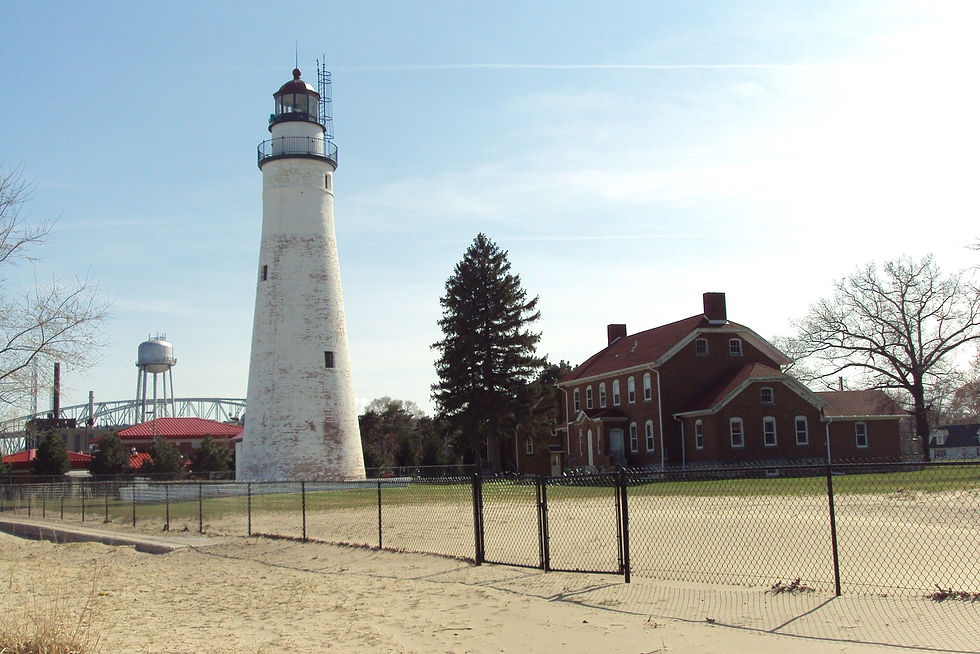
Neither number should get hidden behind the market's genuine tourism draws — the Blue Water Bridge, Fort Gratiot Light, or a dated event like Boat Week — none of which are debt-service inputs. A buyer packet that leads with landmark photography and buries the year-over-year decline is a packet that hasn't actually confirmed what the current market supports.
The seasonal shape hasn't moved along with the decline: peak-three months remain August, October, and June, and February is still the clear hole, with January and May sitting in the low stretch alongside it. A revenue decline changes the size of the pie, not the calendar it gets earned across.
A buyer modeling next year's cash flow off this file should treat the minus 25.9 percent move as the starting point for a conservative projection, not as a floor the market has already hit and will now rebound from automatically. Rising supply in a shrinking-revenue market usually means more price competition among listings before it means a return to prior highs, and a buyer's own pricing and positioning plan should account for that dynamic directly rather than assuming it away.
Two Municipal Halls Travel With the Deed
A Port Huron-area parcel answers to one of two separate municipal desks depending on its exact location: the City of Port Huron, whose clerk and rental inspection offices both sit at 100 McMorran Boulevard, or Burtchville Township, whose hall sits at 4000 Burtch Road and governs its own short-term rental ordinance, including the Lakeport community as a census-designated place within the township.
These are two entirely separate jurisdictions with their own separate requirements, and a listing or a buyer packet that assumes one set of city rules covers a township parcel — or the reverse — is working from the wrong compliance framework before a single form gets filed. Confirming which hall actually governs the specific parcel is a diligence step, not a formality, and it should happen before an offer goes in, not after closing.
The St. Clair County Clerk's office, separately, handles county-level vital records rather than short-term rental permitting itself. A buyer looking for the actual permit or inspection path for a specific parcel should go to the City of Port Huron desk or Burtchville Township hall directly, not the county clerk.
The City of Port Huron also runs a rental certification program through its Planning and Rental Inspection function, a general rental-housing certification distinct from any single ordinance section, while Burtchville Township's own short-term rental provisions are addressed under its section 154.135, which defines a township short-term rental as a stay of at least seven days and less than thirty. Neither program should be assumed to mirror the other, and a buyer should confirm the specific requirement that applies to the parcel's actual jurisdiction directly with that hall rather than assuming one town's rule describes the other's.
Lakeport Has No Published Year of Its Own
Lakeport, the shoreline community inside Burtchville Township, does not have its own published typical-year AirROI figure in this sample — the 2020 census counted 720 residents there, with a later, unconfirmed estimate suggesting growth to around 918. Neither population figure is a substitute for an actual revenue year, and a buyer packet for a Lakeport-area parcel should disclose that gap honestly rather than filling it with Port Huron's $12,482 or Lexington's $24,664.
A handful of other nearby names on this same shoreline — Fort Gratiot, Marysville, St. Clair, Marine City — likewise returned no usable published figure in this research pass. That's worth stating plainly to a buyer or lender: no published year for a town means exactly that, not a stand-in borrowed from whichever nearby extract happens to have data.
If the specific parcel sits in Lakeport, the honest underwriting approach treats it as its own unproven micro-market: real shoreline access, genuine proximity to Port Huron's amenities, but no confirmed revenue track record of its own to underwrite against yet.
That doesn't make a Lakeport purchase a bad idea by default — it makes it a different kind of underwriting problem than a Port Huron city parcel. A buyer comfortable pricing a purchase around the Port Huron extract's overall pattern, while treating the specific revenue number as unconfirmed for that exact address, can still make a reasoned decision. What doesn't hold up is a packet that quietly assigns Lakeport a number pulled from a neighboring town's extract and presents it as though it were confirmed.
Professionally Managed Share Is a Comp, Not a Closed Field
Kirstyn's two-listing, roughly $17,616 book represents the leading professionally managed presence on the current Port Huron extract, out of a 9.3 percent professionally managed share across the full 54-listing sample. That's a real competitor worth knowing about, not evidence that the market is saturated or that an independent buyer can't compete.
Occupancy still sits at 31.5 percent and the typical year still sits at $12,482 regardless of any single manager's book. A buyer shouldn't underwrite a brand premium the extract doesn't actually print, and shouldn't assume that one manager's presence closes the field to a new independent listing built around the town's actual landmarks and identity rather than a generic coastal template.
Seventeen listings in the sample have set a thirty-plus-night minimum stay, which is a calendar-setting choice by other hosts, not proof of filled long-stay demand. A buyer weighing a similar pivot should treat that number as a signal some hosts are testing the approach, not as confirmation the market has already proven it out.
Minimum-stay settings split further across the shorter end too: about 18.5 percent of the sample runs a one-night minimum, and 44 percent runs a two-night minimum, the single most common setting on the extract. Combined with the market's 4.6-night average stay, that points to a buyer whose property is set up to capture a genuine long-weekend or week-shaped booking pattern, rather than one built primarily around single-night turnover.
What a Buyer Packet Should Actually Carry
A complete Port Huron buyer packet carries: $12,482 typical revenue, 54 listings, $185 ADR, 31.5 percent occupancy, $59 RevPAR, 4.6-night average stay, 35-day lead time, 9.3 percent professionally managed, the August-October-June peak-three, February as the hole month, and the year-over-year minus 25.9 percent alongside the plus 31.7 percent supply growth. It carries the confirmed municipal jurisdiction — City of Port Huron or Burtchville Township — and that hall's contact information.
It should not carry Lexington's $24,664 as a stand-in figure, a guessed Lakeport number where none has been published, Boat Week or race-weekend visitor traffic treated as booked revenue, or a Detroit-metro comparison applied to a market that sits an honest hour's drive away. Visitor landscape and tourism draws belong in the marketing conversation, not the underwriting one.
Confirming the parcel's actual municipality and its own labeled figures, before the deposit rather than after, is the difference between a packet built to survive a second look and one that has to get rewritten once the actual jurisdiction and revenue picture come into focus. Port Huron's $12,482 year is a real, modest, honest number to underwrite. It just has to stay Port Huron's, not get quietly swapped for a larger neighbor's figure because the towns share a shoreline.
Related Reading
More Port Huron and Lakeport, Michigan reading already live on Crest & Cove.
Frequently Asked Questions
What year should a Port Huron short-term rental purchase be underwritten against?
$12,482 in typical annual revenue across the current 54-listing AirROI sample, for the August 2025 through July 2026 vintage. Don't substitute Lexington's separate $24,664 figure or any guessed Lakeport number for this town's own published year. A lender or buyer packet requesting a larger, blended rent roll is effectively asking for a year this market hasn't actually shown.
Should Lexington's revenue figure be used for a Port Huron property?
No. Lexington publishes its own distinct $24,664 typical year across 49 listings, with a $293 ADR and 30.1 percent occupancy — genuinely different numbers describing a separate market a short drive up the shoreline. Averaging or substituting Lexington's stronger figure into a Port Huron underwriting file overstates what this specific property's market has actually demonstrated it can earn.
How should a buyer read Port Huron's year-over-year decline and rising supply together?
Seriously. Revenue on this vintage is down 25.9 percent year over year, while active listing supply grew 31.7 percent over the same period — more competition chasing a shrinking pool. This combination belongs in the underwriting file explicitly, not hidden behind landmark photography or tourism talking points, and shouldn't be assumed to reverse itself without evidence.
Which municipal office governs a Port Huron-area parcel's short-term rental compliance?
It depends on the exact location. City of Port Huron parcels fall under the city clerk and rental inspection offices, both at 100 McMorran Boulevard. Burtchville Township parcels, including the Lakeport community, fall under Burtchville Township Hall at 4000 Burtch Road. These are two separate jurisdictions with their own requirements, so confirm which one actually governs the specific address before making any compliance assumption.
Does the St. Clair County Clerk issue short-term rental permits?
No. The county clerk's office handles vital records and general county documentation rather than rental licensing. A buyer looking for the actual permit or inspection path for a specific Port Huron-area parcel should go directly to the City of Port Huron desk or Burtchville Township hall, not the county clerk's office, which won't have jurisdiction over that specific question.
Is there a published typical-year revenue figure for Lakeport specifically?
No. Lakeport, a shoreline community within Burtchville Township, doesn't currently have its own published typical-year figure in this sample, and neither the 2020 population count of 720 nor a later, unconfirmed estimate near 918 is a substitute for one. A buyer packet for a Lakeport-area parcel should disclose that gap directly rather than quietly substituting Port Huron's $12,482 or Lexington's $24,664 as though either figure described Lakeport's own unproven micro-market.
Does Kirstyn's presence on the extract mean the Port Huron market is already saturated?
No. Kirstyn is the leading property manager on the current extract, with two listings and roughly $17,616 in tracked revenue, out of a 9.3 percent professionally managed share across 54 total listings. That's a real competitor to know about, not evidence the field is closed to a new independent buyer building a listing around the town's own specific landmarks and identity.
Do the seventeen listings with a thirty-plus-night minimum indicate proven long-stay demand?
No. Seventeen listings in the 54-listing sample have set a minimum stay of thirty nights or more, which reflects a calendar-setting choice made by other hosts, not a confirmed record of month-long bookings actually happening. A buyer weighing a similar long-stay pivot should treat this as a signal some hosts are testing the approach, not proof the market has already validated it.
What should a Port Huron buyer packet explicitly avoid carrying?
Lexington's $24,664 figure used as a stand-in for Port Huron's own number, a guessed revenue figure for Lakeport where none has been published, Boat Week or race-weekend visitor traffic treated as booked occupancy, and any Detroit-metro revenue comparison applied to a market that sits an honest hour's drive from that city. None of these belong in the underwriting line.
How far is Port Huron from Detroit, and does that distance matter for underwriting?
About 62 miles and roughly an hour by car. That drive is worth noting as context for who's likely to book the property, but it isn't permission to underwrite Detroit-metro revenue figures onto a Port Huron parcel. Origin city on booking search data tells a host where guests are traveling from, not what performance figure the property itself has actually published.
Work with Crest & Cove Creative
Port Huron's real year is $12,482, not Lexington's $24,664 a few miles up the shoreline — a buyer packet that borrows the stronger neighbor's number is underwriting a driveway that doesn't exist. Name the failure mode the guest can check.
We help buyers and hosts write Port Huron listing copy anchored to this town's own published figures, not a stronger neighbor's year. Send us the address and current listing text. Start at crestcove.co/audit or call (256) 998-7502.
Reach out at crestcove.co or (256) 998-7502.


Comments