
How to Market a Port Huron Rental: Bridge, Not Detroit

Updated: Aug 28

Port Huron sits where the St. Clair River meets Lake Huron directly at the Canadian border, roughly 62 miles and about an hour's drive northeast of Detroit. That drive time is useful context for who might realistically book a stay here — it's not permission to market the property as though Detroit itself were the actual destination.
The current extract puts Port Huron at roughly $12,482 in typical revenue across 54 listings for the August 2025 through July 2026 window, with ADR near $185, occupancy near 31.5 percent, and RevPAR around $59. Peak-3 in this sample is August, October, and June, and February is the clear hole. This is the market a listing is actually competing in, and the marketing task is to earn the strongest share of it, not to guess a bigger one.
Port Huron marketing genuinely fails specifically when a generic coastal or Detroit-adjacent template replaces what this particular driveway and its own actual, specific house rules can actually deliver. Guests deserve the stay the gallery and the house rules genuinely support — the Blue Water Bridge, Fort Gratiot Light, and the St. Clair River, described specifically enough that a guest knows exactly what they're actually booking before they even arrive. This is not legal advice.
Stop Writing Generic Cottage-Near-Detroit Copy
A listing that leads with 'cottage near Detroit' or similar generic framing undersells the actual, specific draw of a Port Huron stay: the Blue Water Bridge, the St. Clair River, and Fort Gratiot Light. Those are name-worthy, photographable, walkable landmarks, and guests searching specifically for Port Huron have already moved past the 'is this near Detroit' question.
What they need from the listing is confirmation of what's actually here — the bridge view, the river, the lighthouse — described specifically enough to picture before booking. This isn't a case against ever mentioning Detroit at all; the drive-time context is fair to include briefly. It's a case against leading with it, or letting it substitute for the town's own specific identity in the title, the first photo, or the about section.
If the current listing copy leans heavily on Detroit-adjacency language, that's a same-week fix: rewrite the opening to name the bridge, the light, or the river specifically, and let the drive-time reference sit further down as useful but secondary context for a guest planning their route. A quick audit of the first three sentences a guest sees is usually enough to catch the pattern.
This same discipline applies to the property title, not just the description body. A title built around 'near Detroit' is competing in a search category the property doesn't actually win — a genuinely Detroit-adjacent listing closer to the metro will always out-position it there. A title built around the bridge, the river, or the lighthouse is competing in the category Port Huron's own extract shows guests are actually searching, with 93.4 percent of that guest base already coming from domestic search traffic looking for exactly this kind of specific, named shoreline stay.
Photograph the Bridge and the Light You Can Actually Reach
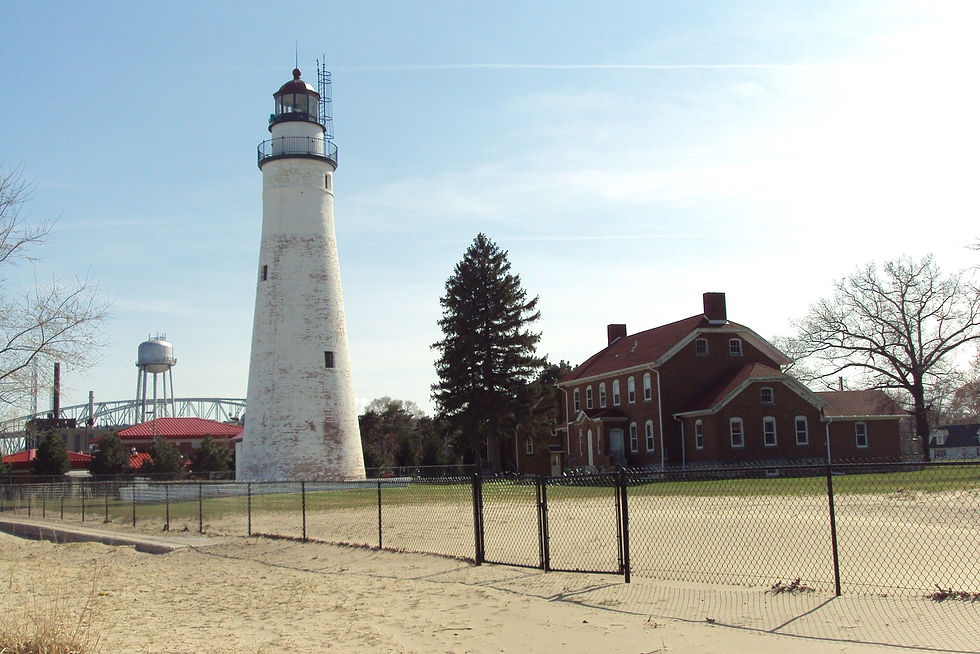
Keep the Blue Water Bridge in frame if it's genuinely visible or reachable from the property, and keep Fort Gratiot Light if it's genuinely walkable. These are specific, verifiable landmarks — naming them accurately does more for a guest's trip planning than a paragraph of enthusiastic but vague lake-town language.
If the property can't actually offer a bridge view or a walk to the lighthouse, don't imply otherwise through photo selection or cropping. Accuracy about what's genuinely reachable from this specific address matters more than borrowing a landmark's visual identity a guest won't actually experience from the property itself.
Name the St. Clair River specifically rather than defaulting to a generic 'waterfront' or 'harbor' description. A guest choosing Port Huron over a nearby lake town likely has a specific reason — the river, the bridge, the shipping traffic — and specificity in the photos and captions is what confirms the listing actually delivers that reason. Leave downtown Detroit's specific attractions on the other side of the hour-long drive in the copy; they're a legitimate day-trip mention, but shouldn't compete with Port Huron's own landmarks for space in the listing's opening.
Fort Gratiot Light, at 2802 Omar Street, is Michigan's first lighthouse, originally built in 1825 and still operating today — a genuinely historic detail worth naming precisely rather than describing loosely as 'a nearby lighthouse.' If a listing promises a walk to the lighthouse or a specific viewing spot, confirm those details are still current before publishing, since seasonal attraction hours can shift, and a guest who arrives expecting an open landmark that's temporarily closed is a guest writing a disappointed review about a gap between the listing and reality.
Boat Week and the Bayview Mackinac Race Are Dated Hooks, Not the Tile
Blue Water Fest and Boat Week, running July 15 through 18, 2026, is a real, dateable local event worth mentioning if it overlaps with a guest's stay — but it shouldn't be allowed to steal the listing's main tile or override the actual published peak-3 months of August, October, and June. July itself isn't one of those three peak months on the current extract.
A dated event hook works best as a specific, time-bound mention — useful for a guest checking dates around that window — rather than as the organizing theme of the entire listing. The listing's year-round identity should rest on the bridge, the light, and the river, not on a single week's festival energy. The same caution applies to the Bayview Mackinac Race, whose fleet starts near Port Huron after leaving the Black River and finishes on Mackinac Island: name it specifically, with dates, when relevant, but don't let a single week's marketing energy overwrite the actual seasonal pattern the published data shows for the rest of the year.
If a listing's current photo set or copy over-indexes on a single dated event, that's worth rebalancing. The property needs to read well for the majority of the calendar, not just the week of a specific race or festival that most guests won't actually be booking around.
Do Not Market Mackinac Island as This Shore
Port Huron sits at the southern end of Lake Huron, in a genuinely different setting from Mackinac Island or other more northerly Michigan lake destinations. Borrowing that different region's visual or marketing identity for a Port Huron listing misrepresents what a guest will actually find on arrival.
Guests who search specifically for Port Huron are choosing this specific southern Lake Huron setting — the border-town character, the shipping channel, the bridge — not a proxy for a different, more northerly island destination with an entirely different feel and price point. This distinction matters most in photo selection and in any broader regional description language; if a stock photo or a borrowed description could apply equally to a different Michigan lake town, it's not doing the job a Port Huron-specific listing needs it to do.
Sell the start: the specific border-town, river, and bridge identity Port Huron actually has, and leave any island-specific framing on the island it actually describes. A listing that photographs the shipping channel honestly, freighter traffic and all, is telling a more accurate and ultimately more memorable story than one trying to look like a generic Great Lakes postcard borrowed from somewhere else entirely.
Two Halls, One Underwriting Line: Keep Neighbor Figures Labeled
Lexington, a nearby town, shows its own figure of roughly $24,664 on the local dataset — a real number, but a labeled neighbor figure, not a Port Huron figure. Any packet or listing description referencing it should keep it on its own explicitly labeled line, never blended into a claim about what a Port Huron property itself earns.
Kirstyn is the leading property manager on the current Port Huron extract, with two listings and roughly $17,616 in tracked revenue. That's useful competitive context for understanding the local professionally-managed segment, but it's a specific data point about one operator's book, not a claim about the whole market's typical earnings.
If a property sits near a municipal boundary — for instance, near Burtchville Township lines — confirm the specific local ordinance or contact for that exact parcel before making any regulatory claim in marketing copy. A generic 'Port Huron rules' statement doesn't necessarily describe a Burtchville parcel, and the City of Port Huron clerk at 100 McMorran Boulevard and Burtchville Township Hall at 4000 Burtch Road are two separate desks. Confirming both, where relevant, only lowers friction for a host after both have actually been called and confirmed, not by assumption based on the mailing address alone.
This is not legal advice, and marketing copy shouldn't attempt to summarize either hall's compliance requirements in a house-rules caption. What marketing copy can honestly do is state that the property is compliant, without guessing the specific ordinance language, and point a curious guest toward the fact that Port Huron and Burtchville handle their own registration processes separately rather than under one shared shoreline rule.
What Independent Hosts Can Still Own
Independent, single-property hosts in Port Huron can credibly own the specific, walkable identity the current professionally-managed segment — about 9.3 percent of the market on the current extract — doesn't always emphasize: the exact view, the exact walk, the exact captions naming the bridge and the light.
At roughly $185 ADR and 31.5 percent occupancy, this is a market that rewards accurate, specific marketing more than aggressive pricing experiments. The occupancy ceiling suggests demand exists but isn't unlimited, so converting the guests who do search Port Huron specifically into a booking matters more than trying to out-discount a competitor.
The practical marketing task for most Port Huron hosts is narrow: confirm the listing's title, first photo, and about section name the bridge, the light, or the river specifically; confirm any dated event references, Boat Week or race weekend, sit as secondary mentions rather than the organizing theme; and confirm the property's actual jurisdiction before making any regulatory claim. None of this requires a large marketing budget — it requires rewriting a handful of specific sentences so they describe Port Huron accurately, rather than describing a more generic, interchangeable Great Lakes rental that could be almost anywhere on the map.
The market's 4.6-night average stay and 35-day booking lead time both suggest a guest who plans ahead and stays for more than a weekend, which argues for listing copy that rewards a longer read rather than a single punchy tagline. A guest deciding thirty-five days out has time to research the bridge, the lighthouse, and the river before they book — specific, accurate copy gives that research something real to find, rather than a vague promise the stay may or may not deliver once they arrive.
None of this is a large undertaking. A single afternoon spent rewriting the title, the first photo caption, and the opening two sentences of the about section, so all three name Port Huron's actual landmarks instead of Detroit's proximity, is usually enough to move a listing from generic and forgettable to genuinely competitive in this specific, modest, honest market.
Related Reading
More Port Huron and Lakeport, Michigan reading already live on Crest & Cove.
Frequently Asked Questions
What is Port Huron's published short-term rental revenue?
About $12,482 typical revenue across 54 listings for August 2025 through July 2026, with ADR near $185, occupancy near 31.5 percent, and revPAR around $59, per the live extract. Use this as the market's own underwriting and pricing baseline rather than a Detroit-adjacent assumption or a neighboring town's stronger figure when setting rates or projecting a season.
What are Port Huron's peak months?
August, October, and June make up peak-3 on the current extract, not the simple July-heavy pattern a generic lake-town assumption might suggest. Price and caption the calendar around that actual shape rather than a stock summer-lake seasonality guess, since October in particular carries real demand this market's own data actually supports, and February is the clear low point to plan around.
Should a Port Huron listing lead with its distance from Detroit?
No. Guests searching for Port Huron specifically have already moved past that question. The listing should lead with the Blue Water Bridge, Fort Gratiot Light, or the St. Clair River instead, with the roughly hour-long Detroit drive mentioned briefly further down as useful, secondary trip-planning context rather than the property's core identity or its title's opening line.
Is Boat Week a good reason to restructure the whole listing?
It's a real, dateable event, running July 15 through 18, 2026, worth mentioning for guests checking that window, but it shouldn't override the property's year-round identity or the actual peak-3 months shown in the data. Treat it as a specific, time-bound mention rather than the organizing theme for the entire listing's photos, title, and captions.
Should a Port Huron listing borrow Mackinac Island's identity?
No. Port Huron is a distinct southern Lake Huron border town with its own bridge, river, and shipping-channel character. Borrowing a more northerly island destination's identity misrepresents the actual drive and the actual experience a guest will get, and it's the kind of mismatch a guest notices quickly once they arrive at a very different shoreline setting than what the photos implied.
Who is the leading property manager on the Port Huron extract?
Kirstyn, with two listings and roughly $17,616 in tracked revenue on the current extract — useful competitive context for the local professionally-managed segment, not a claim about the whole local market's typical earnings. Professionally managed listings overall make up about 9.3 percent of the current 54-listing sample, leaving most of the market independently operated by hosts running one or two properties.
Should Lexington's figures be used for a Port Huron listing?
No. Lexington's roughly $24,664 figure is a labeled neighbor-town number on the local dataset and should stay on its own clearly labeled line, not blended into Port Huron-specific marketing copy or pitched as this town's own performance. The two towns have different ADR, occupancy, and revenue figures that shouldn't be treated as interchangeable for pricing or positioning purposes.
What should a host near a township boundary confirm before marketing?
The specific local ordinance or contact for their exact parcel — for example, near Burtchville Township lines — rather than assuming a generic 'Port Huron rules' statement applies to every nearby address. A mailing address alone does not confirm which of the two separate municipal desks, City of Port Huron or Burtchville Township, actually governs a given parcel's compliance requirements.
What role should photography play in marketing a Port Huron rental accurately?
Photography should show what's genuinely reachable from the specific property: the Blue Water Bridge if it's actually visible, Fort Gratiot Light if it's actually walkable, and the St. Clair River named specifically rather than a generic 'waterfront' caption. Cropping or selecting photos to imply a view the property doesn't actually have sets a guest expectation the stay can't deliver, which shows up in reviews.
How should the Bayview Mackinac Race factor into a Port Huron listing's marketing?
As a specific, dated mention only. The race fleet starts near Port Huron after leaving the Black River and finishes on Mackinac Island, and it brings real visitor traffic during that window, but the event isn't one of the market's actual peak-three months on the published extract. Name the race with its dates when relevant, but keep the listing's core identity built around the bridge, the light, and the river year-round rather than around one race weekend.
Work with Crest & Cove Creative
Port Huron sits an hour from Detroit, and that's the least interesting fact about it. The Blue Water Bridge and Fort Gratiot Light are the actual reason guests search for this town specifically.
We help Port Huron hosts rewrite listings that lean on Detroit-adjacency instead of the bridge, the light, and the river. Send us your current listing. Start at crestcove.co/audit or call (256) 998-7502. Send the live listing draft and the facts you can actually cite.
Reach out at crestcove.co or (256) 998-7502.


Comments