
DIY vs. Hire in Port Huron: Photograph the Bridge, Not Detroit

Updated: Aug 27

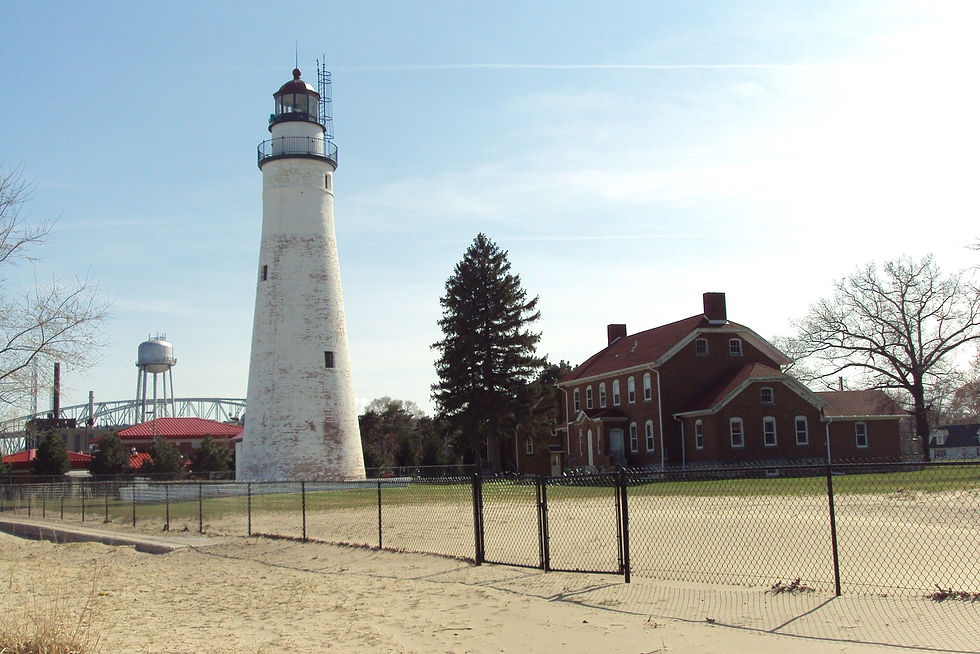
Port Huron sits at the mouth of the St. Clair River, under the Blue Water Bridge, and that geography is the whole marketing argument in a single image. Yet a surprising number of listings in this market still lean on language that could describe any cottage an hour outside Detroit, never naming the bridge, the river light, or anything that actually separates a Port Huron stay from a generic Michigan lake rental.
The AirROI extract covering August 2025 through July 2026 shows 9.3 percent of the market's 54 active listings carry professional management, which means the overwhelming majority of hosts here are running their own calendars, writing their own descriptions, and taking their own photographs. That low managed share is not a red flag; it is simply the current shape of this specific market, and it means the real hire-or-DIY decision comes down to whether a host can produce photography and copy that actually proves the bridge, not whether outside management is somehow the norm elsewhere.
This piece keeps Port Huron's own numbers on their own line, separate from nearby Lexington's very different figures, and walks through what a typical host year here actually looks like, when hiring outside help for photography or copy genuinely pays for itself, and what an agency proposal should be required to show before a host pays for it. This is not legal advice.
What Port Huron's Own Numbers Say
Port Huron's AirROI extract for the trailing twelve months, August 2025 through July 2026, shows a typical annual figure of $12,482 across 54 active listings. The average nightly rate runs $185, occupancy sits at 31.5 percent, revenue per available night comes out to $59, and the average stay length is 4.6 nights. Those five numbers belong together whenever this market gets quoted; pulling the ADR out on its own without the occupancy rate paints a far rosier picture than the market actually supports.
That $12,482 typical figure is a real, current baseline, not a promise for any specific property. A well-photographed listing that clearly shows the bridge and the river light, priced correctly for the town's actual peak months, can outperform this baseline. A listing that reads as a generic Michigan cottage is more likely to land below it, regardless of how nice the house itself actually is.
The 31.5 percent occupancy figure in particular deserves attention: it means roughly two out of every three available nights in this market go unbooked. That is the number any hire-or-DIY conversation should start from, since it points squarely at demand generation, not turnover logistics, as the market's central challenge.
Nine Point Three Percent Managed, Most Hosts Independent
Professional management covers just 9.3 percent of the 54 active listings in this sample. That is a small enough share that a host considering whether to hire a manager should not assume outside management is simply the standard practice here; it plainly is not. Most of Port Huron's rental stock is run by owner-operators handling their own photography, pricing, and guest communication.
One operator, listed on the extract as Kirstyn, holds two of those managed listings, with combined gross revenue of $17,616 across the pair. That figure describes one operator's specific book on this specific sample; it is not evidence of a franchise-scale management presence taking over a 54-listing market, and it should not be cited as if it represents what management generally delivers here.
The practical read for a host weighing outside help: this is not a market where independent listings are being squeezed out by professional competitors. It is a market where the biggest lever available to any host, managed or not, is whether the listing itself proves the town's actual identity instead of defaulting to generic lake-cottage language.
Photograph the Bridge and the Light
The Blue Water Bridge and the St. Clair River light are Port Huron's genuine visual identity, and a listing that could pass for any generic cottage near Detroit is losing to competitors who name and photograph the bridge specifically. This is not a subtle distinction to a guest actively comparing several Michigan shoreline listings at once; it is the difference between a listing that reads as researched and one that reads as copy-pasted.
Photography is a reasonable first hire for a host who genuinely cannot produce a shot that shows the bridge or the light well, whether because of equipment, timing, or simple lack of comfort behind a camera. That is a specific, bounded, and honestly worthwhile expense. It is a very different thing from hiring a full management service to write generic "Michigan shore" copy that never actually mentions the landmark guests are searching for.
A host testing whether their own listing clears this bar should ask a blunt question: could this description and photo set be swapped onto a listing in a different Michigan lake town without anyone noticing? If the honest answer is yes, that is the actual gap to close, and it usually does not require an ongoing management contract to fix.
Do Not Blend This Market Into a Detroit-Area Average
Lexington, Michigan posts $24,664 across 49 listings on the same extract — a genuinely different market from Port Huron's $12,482 across 54 listings, and one that should stay on its own clearly labeled line in any comparison. An agency proposal that quotes a blended shoreline or Detroit-area average instead of Port Huron's own specific figure is pricing a host against the wrong market entirely.
This distinction matters in both directions. A Port Huron host should not expect Lexington-level revenue from a Port Huron listing regardless of how good the photography gets, since the two towns' guest bases and demand profiles are simply different. And a Lexington host should not accept Port Huron's lower typical figure as a ceiling for their own, separate market.
Any agency pitch that cannot cite Port Huron's own $12,482 typical year, $185 ADR, and 31.5 percent occupancy specifically — rather than a rounded regional average — should be treated as a warning sign that the pitch was not actually built for this town.
When Hiring Outside Help Actually Pays Off
Outside help earns its cost here in a few specific, testable situations: when a host genuinely cannot produce photography that proves the bridge and the light, when pricing has sat static through the August-October-June peak stretch because there is no time to adjust it, or when guest messages keep repeating the same town-confusion question because the listing itself is unclear about where the property actually sits.
A manager or freelancer worth hiring should be able to point to something concrete they would change: a specific new photo set, a rewritten description that drops generic "Michigan cottage" language in favor of naming the bridge and the river, or a pricing calendar built around this market's actual peak and hole months rather than a generic Great Lakes summer assumption.
What outside help should not be asked to do, and should not claim to deliver, is a promise of specific booking lifts or occupancy gains this town's own AirROI extract does not support. Any number offered beyond the $12,482 typical baseline, the $185 ADR, and the 31.5 percent occupancy figure is a guess dressed up as a projection, not a sourced claim.
What a Host Can Still Do Without Paying for It
A hands-on Port Huron host retains real advantages that no outside agency can fake without genuinely spending time in the town: knowledge of exactly where the best bridge view sits, which months actually bring guests versus which months just feel like they should, and the specific local detail that separates this listing from a neighbor's. That knowledge is difficult to buy convincingly from a template.
With occupancy sitting at 31.5 percent, the highest-leverage move most independent hosts can make without paying for outside help is a single honest public edit: photos that show the bridge and the light clearly, a description that names Port Huron specifically rather than describing it as "near Detroit," and house rules and an about section that match what the property can actually deliver on arrival.
That kind of rewrite is finished when guest messages stop repeating the same town-confusion question and the listing reads as clearly, specifically Port Huron rather than a generic lake cottage. Beyond that point, additional descriptive language is polish, not a fix for an underlying accuracy problem, and it is reasonable for a host to stop there rather than keep paying for more copy.
What an Agency Proposal Should Be Required to Show
Before paying for outside marketing help, a host should require the proposal to cite Port Huron's own numbers by name: the $12,482 typical annual figure, the $185 ADR, the 31.5 percent occupancy rate, and the 4.6-night average stay — not a blended St. Clair River, Great Lakes, or Detroit-metro average that smooths over what makes this specific market different from its neighbors.
The proposal should also be specific about seasonality. August, October, and June are the stronger months in this sample, with February the clearest hole in the calendar. A pricing strategy that ignores that specific shape in favor of a generic Michigan-summer assumption is applying a playbook that does not match this town's actual demand pattern.
Finally, the proposal should draw a clear line between what it will change, specific photography, specific copy edits, a specific pricing calendar, and what it cannot promise, namely a guaranteed occupancy or revenue lift beyond what this sample's own numbers support. A pitch unwilling to make that distinction is not being straight with the host.
Seasonality: August, October, and June, With a February Hole
August, October, and June stand out as the stronger months in this Port Huron sample, a somewhat less predictable pattern than a pure summer-beach-town calendar, and one that rewards a host who actually adjusts pricing and marketing around these specific months rather than defaulting to a June-July-August assumption borrowed from a different kind of market.
February is the clearest hole in the calendar, which is worth planning around directly rather than treating as an unavoidable dead month. A host or a hired manager who can point to a specific plan for that stretch, whether pricing adjustments, extended-stay positioning, or simply accepting lower occupancy as the honest tradeoff, is showing more actual market understanding than one offering generic year-round positioning.
This seasonal shape is also a useful test for any outside pitch: a manager whose plan genuinely accounts for the August-October-June pattern and the February hole is offering something concrete and checkable against the town's own data. A manager whose pitch ignores this shape entirely and talks only about a generic summer season has not actually looked at Port Huron's own numbers.
How to Decide Without a Costume Year
The honest way to decide is to separate two different questions rather than treat hire-or-DIY as one single call. First: can the listing's own photography and copy already prove the bridge and the river light clearly, or does it currently read as a generic Michigan cottage? That is usually fixable by the host directly, in an afternoon, without an ongoing contract.
Second: is a specific, bounded task, professional photography, a pricing calendar built around the August-October-June pattern, genuinely beyond what the host can produce themselves given time and equipment constraints? If so, that specific task is a reasonable, worthwhile hire, evaluated on what it concretely delivers rather than on a vague promise of more bookings.
Hosts and buyers evaluating a Port Huron listing should keep the $12,482 typical figure on 54 listings, the 31.5 percent occupancy rate, and the 9.3 percent managed share on their own clearly labeled lines, separate from Lexington's very different $24,664 figure on 49 listings, and treat any proposal that blends the two towns into one number as a proposal that has not done its homework.
Related Reading
More Port Huron and Lakeport, Michigan reading already live on Crest & Cove.
Frequently Asked Questions
How much of the Port Huron short-term rental market is professionally managed?
Professional management sits at 9.3 percent of the market's 54 listings, per the AirROI extract covering August 2025 through July 2026. That leaves most of the market run by independent owner-operators, so the real decision is about photography and copy, not joining a franchise.
What did a typical Port Huron listing earn in the trailing twelve months?
A typical listing earned about $12,482, with an average nightly rate of $185, 31.5 percent occupancy, revenue per available night of $59, and an average stay of 4.6 nights. Keep this figure on its own line rather than blending it with a neighboring town's revenue year.
Does one operator dominate the Port Huron market?
No. An operator named Kirstyn appears on the extract with two listings and combined gross revenue of $17,616. That is her book on this specific sample, not evidence of a franchise takeover of a 54-listing market where most hosts still self-manage.
Should I compare Port Huron numbers to nearby Lexington, Michigan?
No. Lexington posts $24,664 across 49 listings in the same data, a meaningfully different figure from Port Huron's $12,482 across 54 listings. Keep the two towns on separate labeled lines; a proposal that blends them into one shoreline average is pricing you against the wrong market.
Which months should I price as peak season in Port Huron?
August, October, and June are the stronger months in this sample, with February the clearest hole in the calendar. Price and word the listing for that specific pattern rather than a generic Michigan-shore summer assumption that does not match the actual seasonality here.
What should an agency proposal for a Port Huron listing be required to show?
A proposal should cite Port Huron's own $12,482 typical year, $185 ADR, and 31.5 percent occupancy rather than a blended Great Lakes or Detroit-metro average. Any claim about booking lifts or occupancy gains this town's own AirROI extract does not support should be treated as a guess, not a promise.
What should photos for a Port Huron listing actually prove?
The Blue Water Bridge and the St. Clair River light are the town's visual identity; a listing that could pass for any generic cottage near Detroit is losing to competitors who name the bridge specifically. Photography is a reasonable first hire when a host cannot produce that proof themselves.
When is a Port Huron listing rewrite actually finished?
When the public about section, photos, and house rules match what the property can actually deliver, and guest messages stop repeating the same town-confusion question. Beyond that point, additional generic copy changes are optional polish, not a fix for an underlying accuracy problem.
Is 31.5 percent occupancy a sign of low demand or just a small sample?
It is the market's actual occupancy figure on a real 54-listing sample, not a rounding artifact. It means roughly two out of three available nights go unbooked market-wide, which points to demand generation, specifically photography and copy that actually prove the town, as the central challenge here.
How long does the typical Port Huron guest stay?
Average stay length in this sample is 4.6 nights, a short-to-mid-length booking pattern consistent with a Great Lakes weekend or bridge-town getaway rather than a long remote-work stay or a single-night stopover.
Why shouldn't Port Huron listing copy describe the town as near Detroit?
Guests searching for a Port Huron stay have already looked past generic Detroit-area or Michigan-lake language; naming the Blue Water Bridge and the St. Clair River specifically signals a host who actually knows the property, while a vague near-Detroit description reads as interchangeable with dozens of other listings.
Work with Crest & Cove Creative
Port Huron runs 90.7 percent independent, and the listings that win are the ones that photograph the bridge instead of describing a generic Michigan cottage near Detroit. Specificity is the whole lever here.
We help Port Huron hosts write listing copy and photography that prove the bridge and the river light instead of a costume coastal packet. Start at crestcove.co or call (256) 998-7502. Send the live listing draft and the facts you can actually cite.
Reach out at crestcove.co or (256) 998-7502.


Comments