
Underwrite Port Huron Rental: The $12,482 Year, Named

Updated: Aug 30

Port Huron, Michigan published a typical annual short-term rental revenue of $12,482 across 54 listings for the trailing vintage of August 2025 through July 2026. The average daily rate is $185, occupancy is 31.5 percent, and RevPAR is $59. This is a modest, specific market figure, and a DSCR file built on it should stay specific too.
Lexington, Michigan, a separate market further up the same general shoreline, published its own distinct figure of $24,664 across 49 listings over the same period, with an ADR of $293 and occupancy of 30.1 percent. These are two genuinely different markets on two separate desks, and a lender packet that quietly substitutes one town's figure for the other is proposing a debt-service calculation neither property has actually demonstrated it can support.
This piece is specifically about what a DSCR lender packet for a Port Huron property should actually carry: the market's own published $12,482 figure, the two separate municipal halls that may govern a specific parcel, and an explicit refusal to substitute a stronger neighbor's number or a region's visitor traffic for actual booked revenue. This is not legal or financial advice; confirm zoning, permitting, and tax treatment directly with the relevant municipal office. This is not legal advice.
Start a Port Huron DSCR File With $12,482, Not a Borrowed Number
A DSCR file for a Port Huron property should start with this market's own published typical annual revenue of $12,482, based on a 54-listing sample covering August 2025 through July 2026. This is not a Lexington median, and it's not any kind of Detroit-metro figure. The fuller picture from this same data: an ADR of $185, occupancy of 31.5 percent, and RevPAR of $59. Peak months are August, October, and June, while February is the market's clearest low point.
Average stay is 4.6 nights, with a booking lead time of 35 days. A lender computing an actual debt-service coverage ratio still needs standard inputs beyond this market figure — PITI, taxes, insurance, and a vacancy assumption that genuinely accounts for February's softness rather than assuming August-level performance holds steady across all twelve months.
If a loan officer requests trailing twelve months of actual performance data for a specific subject address, that request should be honored directly with that address's own data. If a loan officer instead requests or suggests using a Lexington-based or Detroit-based comp, the correct response is to name the market-wide $12,482 figure as the honest baseline and explain why the substitute figure doesn't describe this specific property's actual market.
Don't Blend Lexington's Stronger Figures Into a Port Huron Note
The most common mistake in a shoreline-area financing packet is averaging two genuinely separate markets together to produce a single blended figure. Port Huron and Lexington have different occupancy rates, different sample sizes, and different year-over-year trajectories, and treating them as one shared shoreline year misrepresents both.
Port Huron's occupancy is 31.5 percent across 54 listings; Lexington's is 30.1 percent across 49 listings, with a notably higher ADR of $293 compared to Port Huron's $185. Both markets happen to name February as a seasonal low point, but sharing that one seasonal fact doesn't mean the two revenue figures can be shared too.
There is currently no published typical-year figure for Lakeport specifically, a small community within Burtchville Township along this same general shoreline. If a parcel sits in Lakeport, there's no legitimate substitute figure to use — guessing one, or borrowing Port Huron's or Lexington's, misrepresents an unconfirmed micro-market as a proven one. The clean rule for any financing packet touching this shoreline: if the parcel is in Port Huron, use $12,482. If the parcel is in Lexington, use that market's own $24,664 figure. If the parcel is in Lakeport, disclose that no published typical-year figure currently exists for that specific community.
Two Municipal Halls Travel With a Port Huron-Area Deed
Confirming which specific municipal jurisdiction governs a parcel is a necessary step before underwriting, since two distinct halls may apply depending on the property's exact location. The City of Port Huron Clerk's office is located at 100 McMorran Boulevard, alongside the city's rental inspection function and its rental certification program, run through Planning and Rental Inspection.
For a property in Burtchville Township, which includes the Lakeport community as a census-designated place without its own separate city desk, the relevant office is Burtchville Township Hall, located at 4000 Burtch Road, governed by the township's own section 154.135, which defines a township short-term rental as a stay of at least seven days and less than thirty.
The St. Clair County Clerk's office, at 201 McMorran Boulevard, Room 1100, handles vital records and general county documentation — it is not a short-term rental permitting desk, and it shouldn't be treated as a substitute for either the city or township office. A financing packet should carry the correct hall's contact information based on the parcel's confirmed jurisdiction, rather than defaulting to whichever office happens to be more familiar. Filing city certification requirements against a township parcel, or the reverse, is the wrong compliance framework attached to the wrong address.
Year-Over-Year Direction Belongs in the Packet Too
Port Huron's short-term rental data shows a year-over-year change of minus 25.9 percent across the 54-listing sample, while active listing supply grew by 31.7 percent over the same window. This combination — declining revenue alongside meaningfully growing supply — is a fact a lender should see directly rather than have obscured behind landmark photography or a headline occupancy figure.
This year-over-year decline shouldn't be treated as justification for substituting a stronger neighboring market's figure. Lexington's own year-over-year change runs at minus 25.6 percent across its 49-listing sample, showing that market experienced a broadly similar directional move over the same window — a real point of comparison, not a reason to borrow Lexington's higher dollar figure.
Professionally managed listings account for about 9.3 percent of Port Huron's sample. This composition detail doesn't change or offset the underlying vintage figures, and it shouldn't be used to justify layering additional assumed revenue onto the published $12,482. If actual trailing-twelve-month performance data exists for the specific subject property being financed, that data should take precedence over the market-wide typical-year figure. Absent that, $12,482 remains the correct published figure to carry in the file.
Visitor Events and Landmarks Are Not Debt-Service Inputs
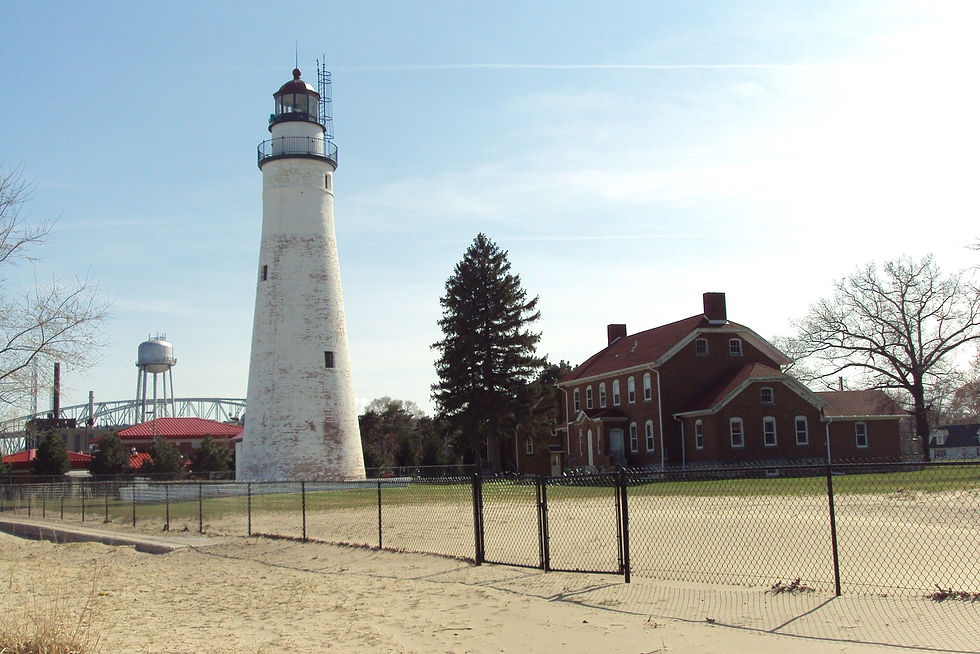
The Bayview Mackinac Race, with its 2026 race day confirmed for Saturday, July 18, and the associated Blue Water Fest and Boat Week running July 15 through 18, 2026, bring real visitor traffic to the Port Huron area, with the racing fleet starting near Port Huron after leaving the Black River and finishing on Mackinac Island. Similarly, Fort Gratiot Light, located at 2802 Omar Street and recognized as Michigan's first lighthouse, built in 1825 and still operating today, is a genuine visitor attraction worth mentioning in marketing content.
But neither the race weekend nor the lighthouse's visitor hours belong in a debt-service calculation. The Blue Water Bridge itself, an international crossing connecting the United States and Canada, is a practical geographic landmark and a reasonable stop for visitors — it is not a revenue figure, and its existence doesn't inflate or otherwise change what the property's own booking calendar actually shows.
A lender packet can reasonably include narrative context about why guests are drawn to this specific area — race weekend, the lighthouse, the bridge — but that narrative belongs after the actual revenue number, not as a substitute for it. Visitor dollars spent on tastings, restaurants, and attractions across the broader region describe a tourism economy, not a specific rental unit's booking revenue.
Long-Stay Settings Don't Fill Port Huron's February Hole
Seventeen listings in Port Huron's 54-listing sample — about 31.5 percent — are currently set to a minimum stay of thirty nights or longer. This is a real, verifiable setting-level fact, but it's not the same thing as a filled February, which remains one of the market's clearest low points alongside January and May.
A thirty-night minimum-stay toggle doesn't close that seasonal gap on its own, and assuming a monthly discount rate to make a financing packet's winter months look better-covered would be guessing rather than underwriting. It's worth noting separately that about 44 percent of listings in this sample use a standard two-night minimum stay — a filter on who can book, not itself evidence of higher or lower occupancy.
Michigan's short-term lodging tax framework generally treats stays of thirty days or more differently from shorter stays, and Burtchville Township's own ordinance similarly exempts stays of thirty days or longer from certain provisions of section 154.135. This is not legal advice, and a host or buyer relying on that distinction for tax planning should confirm the exact threshold and remittance requirement directly with the relevant municipal or county office before treating any stay-length strategy as a tax-savings plan.
What a Port Huron DSCR Packet Should Actually Carry
A complete, defensible packet should carry: the specific property address and confirmed municipality — Port Huron city or Burtchville Township — St. Clair County as the broader jurisdiction, the correctly matching hall's contact information, and the market's own $12,482 typical-year figure alongside its ADR, occupancy, and RevPAR.
It should also carry the year-over-year figure as published, minus 25.9 percent, alongside the supply growth figure of plus 31.7 percent, February identified as the seasonal low point, and August, October, and June identified as the three strongest months. The packet should explicitly avoid carrying Lexington's $24,664 figure as a stand-in for Port Huron, a guessed Lakeport figure where none has been published, race-weekend visitor traffic treated as booked revenue, or Fort Gratiot Light's visitor hours treated as an occupancy input.
A packet that states the correct market figure, the correct hall, and the correct seasonal pattern, and stops there without embellishment or borrowed numbers from a stronger neighboring market, is a packet built to survive a loan officer's second look rather than one that has to be rewritten once the actual figures get checked against the source.
Why Getting the Municipality Wrong Is a Financing Problem, Not Just a Marketing One
Marketing copy that fudges a boundary line is a brand problem — a guest arrives at the correct address either way. A financing packet that fudges the same boundary line is a different kind of problem, because the compliance framework, the applicable ordinance, and the correct desk to confirm remittance with all change depending on which side of that line the parcel actually sits.
A Port Huron address that gets filed against Burtchville Township's section 154.135 ordinance, or a Burtchville Township address that gets filed against the city's rental certification program, isn't a cosmetic mismatch. It's the wrong compliance framework attached to the wrong parcel, and it can surface as a problem well after closing rather than before. The same logic applies to the revenue figure itself — a packet that quietly uses Lexington's $24,664 for a Port Huron parcel isn't being optimistic, it's proposing a debt-service coverage calculation built on a number that specific property's own market hasn't actually produced.
The fix is straightforward and doesn't require guesswork: confirm the parcel's municipality before pulling any comparable figure, use that municipality's own published number, and note plainly when no published figure exists yet for a smaller community like Lakeport rather than filling the gap with an assumption.
Related Reading
More Port Huron and Lakeport, Michigan reading already live on Crest & Cove.
Frequently Asked Questions
What revenue figure should a DSCR lender use for a Port Huron short-term rental?
Use the published Port Huron typical annual revenue of $12,482 across 54 listings, for the August 2025 through July 2026 vintage, with an ADR of $185 and occupancy of 31.5 percent. If actual trailing-twelve-month data exists for the specific subject property, that data should take precedence; absent that, $12,482 remains the correct, honest published market figure to carry in the file.
Can Lexington, Michigan's revenue figures be used for a Port Huron property?
No. Lexington is a separate market with its own distinct published figure of $24,664 across 49 listings, a different ADR of $293, and a different occupancy rate of 30.1 percent. Blending or averaging the two markets produces a number that accurately describes neither Port Huron nor Lexington, and substituting the stronger figure inflates the apparent debt-service coverage on a property that hasn't actually shown it can generate that revenue.
Is there a published typical-year revenue figure for Lakeport?
No. Lakeport, a community within Burtchville Township, doesn't currently have its own published typical-year figure in this sample. A financing packet for a Lakeport-area property should disclose that gap directly to the lender rather than quietly substituting Port Huron's or Lexington's figure as though either one described Lakeport's own unconfirmed micro-market. Treat Lakeport as its own market until an actual published figure exists for it specifically.
Which municipal offices govern short-term rental compliance near Port Huron?
It depends on the parcel's location. City of Port Huron properties fall under the City Clerk and Rental Inspection offices at 100 McMorran Boulevard. Burtchville Township properties, including Lakeport, fall under Burtchville Township Hall at 4000 Burtch Road, governed by the township's own section 154.135. A financing packet should carry the hall matching the parcel's confirmed jurisdiction, not the more familiar of the two.
Does the St. Clair County Clerk's office issue short-term rental permits?
No. The County Clerk's office, at 201 McMorran Boulevard, Room 1100, handles vital records and general county documentation rather than rental licensing. It isn't a short-term rental permitting desk and shouldn't be treated as a substitute for the correct city or township office when confirming compliance requirements for a specific Port Huron-area parcel. Call the City of Port Huron or Burtchville Township hall instead for an actual permitting answer.
How should year-over-year change be presented in a Port Huron financing packet?
Port Huron's year-over-year change is minus 25.9 percent, with supply up 31.7 percent over the same period, for the current vintage. This directional information should be disclosed alongside the $12,482 typical-year figure, not hidden behind a headline occupancy number or landmark photography, since declining revenue paired with rising supply is directly relevant to a lender's own risk assessment.
Can visitor events like the Bayview Mackinac Race support debt-service projections?
No. Race weekend, lighthouse tourism, and bridge crossing traffic are genuine visitor demand context, but they aren't occupancy data for the 54-listing short-term rental sample and shouldn't be used as a substitute for or addition to the published $12,482 revenue figure. Visitor spending across the broader region measures a tourism economy, not a specific rental unit's actual booking revenue.
Do the seventeen listings with 30-plus night minimums indicate a filled February?
No. About 31.5 percent of listings in this sample use a thirty-plus-night minimum stay setting, but this is a policy detail, not evidence of actual booked performance. February remains the market's clearest low point regardless of how many listings offer a longer minimum, and a financing packet shouldn't assume a monthly discount rate closes that seasonal gap without actual booking data to support it.
Does Michigan tax stays of thirty days or more differently from shorter stays?
Generally yes, and Burtchville Township's own ordinance exempts stays of thirty days or longer from certain provisions of section 154.135. This is not legal advice — a host or buyer should confirm the exact threshold and remittance requirement directly with the relevant municipal or county office before treating a long-stay strategy as a confirmed tax-planning approach rather than a question still needing verification.
Why does getting the wrong municipality in a financing packet matter more than a marketing mismatch?
Because the compliance framework, applicable ordinance, and correct desk for confirming remittance all change depending on jurisdiction. A Port Huron parcel filed against Burtchville Township's ordinance, or the reverse, is the wrong compliance framework attached to the wrong address, and that mismatch can surface as a real problem well after closing rather than as a cosmetic marketing error.
Work with Crest & Cove Creative
Port Huron's real listing story is a $12,482 year on 54 active rentals, not the $24,664 figure Lexington posts a few miles up the same shoreline. Copy that borrows the stronger neighbor's number sets guest and lender expectations this market.
We help Port Huron hosts write listing copy anchored to this town's own AirROI figures, not a neighboring market's stronger year. Send us your address and current listing text. Start at crestcove.co/audit or call (256) 998-7502.
Reach out at crestcove.co or (256) 998-7502.


Comments