
870 Listings and a $44,929 Year: Portland ME Report

Updated: Aug 27
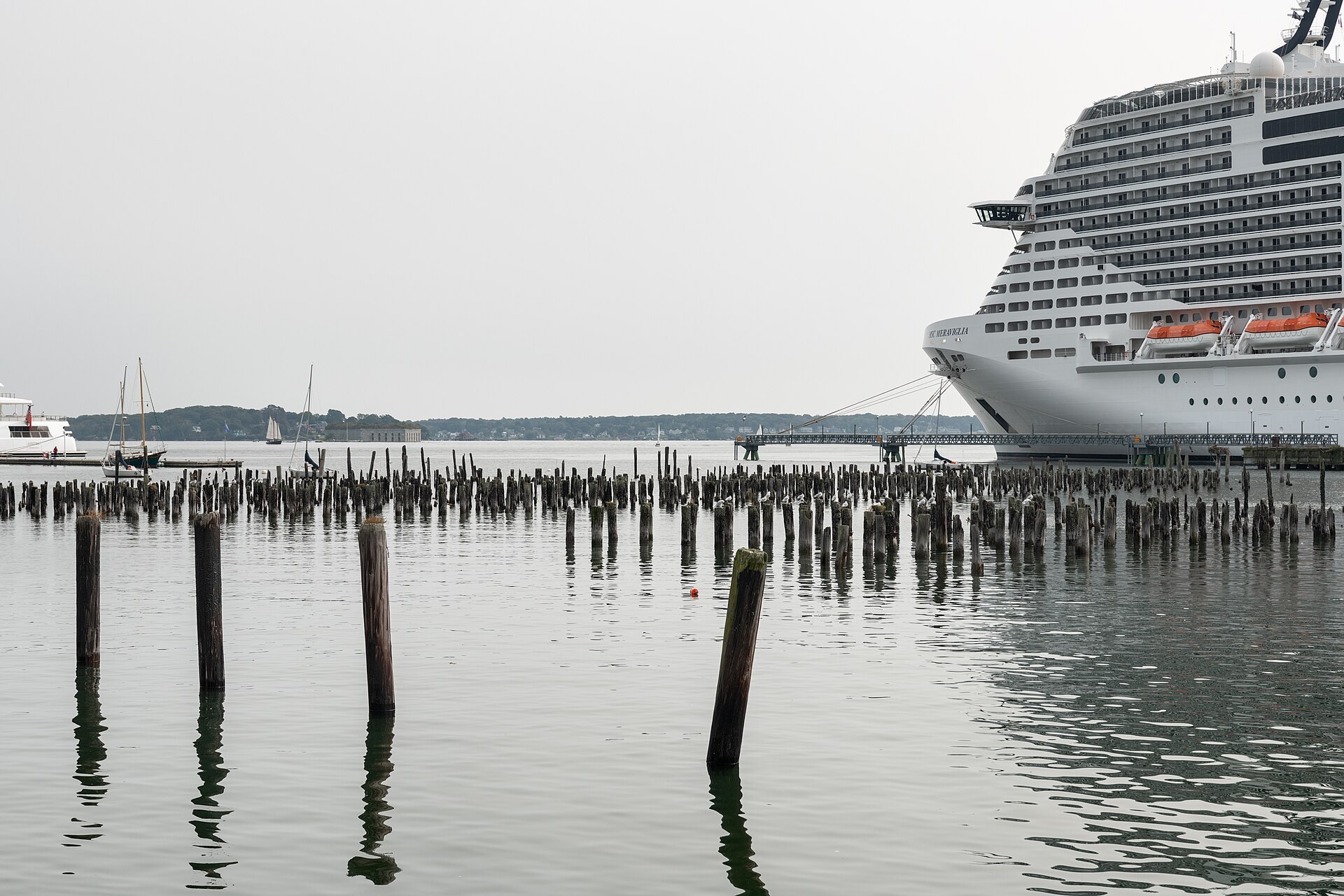
Portland, Maine is an eight-hundred-seventy-listing city cell on the AirROI extract dated 2026-08-08. the published market year is the City of Portland marketplace, not a Chapter 6 listings and not a South Portland clerk file. Old Port, Munjoy Hill, the West End, and Deering Oaks sit inside Portland. Peaks Island sits inside the city with its own clerk categories. South Portland is a different city. Portland Head Light sits in Cape Elizabeth, not on this bed. Annual revenue for a typical active unit lands at $44,929 on a watch line, with a median month of $3,887, an ADR of $370, occupancy of 46.2 percent, and RevPAR of $173.
Hosts who invent a leftover $46,968 to $49,127 year, or a leftover July-through-September-only peak, will underwrite a calendar this pull does not print. Peak revenue month is August. The three strongest months are August, September, and October. The hole is January, February, and March. February is the lowest revenue month. Occupancy is lowest in January and highest in August. ADR peaks in July and is lowest in February. AirROI prints Moderate regulation and a 24.3 percent licensed share. That badge is not a Chapter 6 listings and it is not a 293-file.
This report names what the numbers say, how the Portland calendar runs, what the product looks like, and what this extract is not. The Chapter 6 map, the 293 mainland Non-Owner Occupied file, and the closed Tenant Occupied path get a full clerk treatment later. If you need the ordinance path before you list, start with therules file. If you are underwriting a purchase against these figures, use theinvestment underwrite.
What the Portland extract says
The AirROI Portland page, updated 2026-08-08, reports eight hundred seventy active listings. Average daily rate sits at $370, and occupancy is 46.2 percent. RevPAR is $173. Annual revenue for the typical active unit lands at $44,929, and the median month prints $3,887. Cite both figures, and do not annualize an August screenshot. The year sits on a watch line under the forty-five-thousand floor this shop prefers. Those figures are the locked inputs for every later post. They are not Greater Portland visitor spend, and they are not a single operator's portfolio year.
Superhost share sits at 71.4 percent, and professional management is 7.1 percent. Cohost share is 38.4 percent, and instant Book is 11.6 percent. Thirty-plus-night minimums already cover 39.9 percent of the set. Two-night minimums are 21.3 percent, and entire homes are 88.6 percent. Apartment and condo stock is 66.9 percent, and houses are 22 percent. Cleaning fees show a median of $100. Guests come from New York first and Boston second. Revenue moved minus 5.9 percent while supply held steady. Treat the extract as a competitive set, not a promise.
AirROI Moderate is a product label, not City of Portland Chapter 6. The 24.3 percent licensed share is the same vendor field. Neither object is a 293-file, a Peaks 40-listings, or an Owner Occupied mainland house. The ordinance path is a clerk map, not a badge. The extract is the marketplace path. The numbers below assume an active, bookable unit in the current set. a published market year is not that paper. Permitting and Inspections is when the question is the listings, not the year.
$44,929 is a watch year; $3,887 is the month
A $44,929 year is real money in an eight-hundred-seventy-listing cell and it sits on a watch line because it lands under the forty-five-thousand floor this shop prefers. The median month of $3,887 is the same sentence in monthly form. Do not annualize an August screenshot and call it a year. Do not round the watch year up because an Old Port weekend looked busier. Build the base case on $44,929 and $3,887 for one active unit, then decide whether the expense stack still stands when January, February, and March go dark.
South Portland's $27,535 on 113 listings is a comparison cell only. It is not a Portland year and it is not permission to invent a Casco Bay average. This cluster will not blend those extracts. Keep the neighbor year in thecomparison fileonly as comparison, and $44,929 is a host year, not visitor spend. Leave out unverified a Portland-only visitor dollar and do not divide Greater Portland's $2.7 billion 2023 visitor-spend line by eight hundred seventy. The.tourism fileowns that sentence.
The year is watch. The month is the file you take to a lender. Peak-season averages sit near $7,855 at 63.2 percent occupancy. Low-season averages sit near $2,703 at 36.9 percent occupancy. Those two seasons are not a leftover $46,968 year. They are the same $44,929 split across a city. Stress $3,887, and cite $370 ADR beside it. Occupancy for the year is 46.2 percent. That is the month the note has to survive, not an August Saturday you liked.
August, September, and October carry this cell
The seasonal spine of this cell is simple and locked. Peak month is August. The three strongest months are August, September, and October. The three weakest months are January, February, and March. February is the lowest revenue month, and occupancy is lowest in January. Occupancy is highest in August, and aDR peaks in July. That order is not a marketing suggestion. It is the calendar hosts should price against when they build a year of rates and minimum stays. Late summer into October carries the year. Winter into early spring is the reserve season you fund.
Notice that October is a peak month, not a discounted afterthought, and that August and September sit with it. March is a low even when the waterfront still feels busy. Hosts who price March like August will watch the extract prove them wrong. Hosts who treat October as leftover summer will miss a peak. Peak-season averages sit near $7,855 at 63.2 percent occupancy. Low-season averages sit near $2,703 at 36.9 percent occupancy. Leave out unverified a weekly or remote cut to paper over the January-February-March hole.
For a deeper cut on the soft months, use theshoulder-season calendar. This market report only needs you to lock the peak-three and low-three labels before you Keep a rate card. Leave out unverified a second August in February, and Leave out unverified a leftover July-September-only spine. Old Port light, a planned trip from New York, and the waterfront as a named walk are honest August, September, and October products.
Occupancy at 46 percent is a city, not a 70 percent resort
Forty-six point two percent occupancy means well under half the available nights clear and more than half do not, on average, across the year. In a year-round resort with conference demand, operators often underwrite toward the high sixties or low seventies. The Portland cell is not that product. Old Port, the waterfront walk, and New York then Boston as origin cities pull strong August, September, and October weeks. They do not fill every midweek night in January at the same rate. City stay with a real January-February-March hole is the honest frame.
RevPAR of $173 is the bridge between ADR and occupancy. At $370 ADR and 46.2 percent occupancy, the math fits a market that earns real money on booked nights and leaves real gaps on the rest. Annual revenue of $44,929 and a median month of $3,887 describe a blended year, not twelve Augusts. The year sits on a watch line. The median is the month. If your expense stack assumes full-year resort occupancy, the model will break in February.
Read Superhost at 71.4 percent next to occupancy, not instead of it. Quality share is already high for an eight-hundred-seventy-listing set. Guests who do book still have options that look polished, including a 6.9 percent hotel and boutique slice. Instant Book is only 11.6 percent, and lead time averages sixty-three days. Average stay is 4.5 nights. Those cadences explain why one August Saturday is not twelve months of coverage, and why a leftover July-September-only rate card will miss October.
Product mix: 40 percent already set 30-plus
Thirty-nine point nine percent of the set already shows a thirty-plus-night minimum. That is three hundred forty-seven listings. Two-night minimums are 21.3 percent, or one hundred eighty-five listings. One-night stays are 27.9 percent, or two hundred forty-three listings. Those shares are listing settings, not booked winter occupancy. A monthly gate does not mean half of February nights are filled. It means a large slice of hosts have already decided the product is a month, not a Saturday.
Chapter 6 still defines the products the clerk will listings. A thirty-plus listing setting and a mainland Owner Occupied house are different objects.remote-stay fileowns that split. This market report only needs you to see the mix: nearly two in five listings already run a monthly gate. Entire homes dominate at 88.6 percent, and apartment and condo stock is 66.9 percent. Houses are 22 percent, and average guests sit at 4.1. The volume product is a one- or two-bed city stay, not a lighthouse house in Cape Elizabeth.
Cleaning sits at a $100 median, and use the median. The average of $297 is an outlier pull and this cluster will not treat that average as the turn you should model. Lead time is sixty-three days, and new York books first. Boston books second, and domestic share is 94.2 percent. Average stay is 4.5 nights, and average guests sit at 4.1. The set already looks finished next to a 71.4 percent Superhost bar and a 4.87 rating floor.
Superhost 71 percent and named local books
Superhost share sits at 71.4 percent, and guest Favorite share sits at 65.4 percent. Average rating is 4.87, and instant Book is only 11.6 percent. The set already looks finished. A new host who uploads eight phone frames and a leftover lighthouse paragraph will sit next to that bar, not under it. That 4.87 floor is the listing you join, not a score you inherit by opening an account on a published market year this week in Portland.
Professional management is 7.1 percent. That is not a franchise vacuum and it is not a monopoly. Katrina shows twenty-four listings and $1,326,814 combined, and michael shows four listings and $1,132,150 combined. East Coast Retreat shows seven listings and $960,276 combined. Evolve shows three listings and $257,475 combined, and those totals are their books. They are not your year. They are not permission to invent a vacant-brand story. This market report only needs you to see that named local books already sit on the extract and that most listings still run without a full-service manager.
Cohost share is 38.4 percent. That is a helper layer, not a second twenty-four-home brand. If you hire help, hire it for the photograph and the listing, not because you thought the cell had no professionals. Print the names. Do not treat their combined books as transferable income. A 4.87 rating bar and a 65.4 percent Guest Favorite share mean the guest already has polished options. Your year is still $44,929, not their combined book. Vacasa is not on the AirROI top-PM table for this extract.
AirROI Moderate is not a Chapter 6 listings
AirROI prints Moderate regulation and a licensed share of 24.3 percent. That is a vendor product Keep on the extract. It is not Chapter 6. It is not a 293 mainland Non-Owner Occupied file. It is not a Peaks Island 40-unit cap. It is not an Owner Occupied mainland house or condo. It is not a Tenant Occupied renewal, and it is not a South Portland clerk listings. A live Airbnb published market year inside Portland is not a license. A published market year on a Peaks house is not a license until the island clerk says it is.
The City of Portland requires a Chapter 6 registration to operate the products that ordinance names. New Tenant Occupied files are closed in 2026. Mainland Non-Owner Occupied is a 293-file. A mainland single-family home or condo can only be licensed if it is Owner Occupied. A mainland ADU can be licensed for up to five years from the Certificate of Occupancy. This market report only needs one sentence: do not budget 44,929 on an unlicensed lot, and do not treat AirROI Moderate as permission to advertise.
Supply held steady while revenue moved minus 5.9 percent. Name the drop. Leave out unverified a crash verdict. The extract already has eight hundred seventy active units. Your job is to decide whether one more legal house can stand next to that set on a $3,887 month after Chapter 6 has named the product the parcel can actually hold this week. A Moderate badge does not answer that clerk question and it does not Keep the listings itself.
What this extract is not
This extract is not a Chapter 6 license, and it is not a 293-file. It is not a Peaks 40-listings, and it is not a new Tenant Occupied nightly. It is not Greater Portland's $2.7 billion 2023 visitor-spend line. It is not Katrina's $1,326,814 book, and it is not East Coast Retreat's $960,276. It is not Evolve's $257,475, and it is not South Portland's $27,535. It is not twelve Augusts. It is not a leftover $46,968 to $49,127 year. October is a peak, and february is the hole. Portland Head Light is Cape Elizabeth.
It is an eight-hundred-seventy-listing marketplace path dated 2026-08-08. Use $44,929 and $3,887, hold 46.2 percent occupancy and $370 ADR, and keep the August-September-October spine. Then open the clerk. If the parcel is Portland and the product cannot list under Chapter 6, stop the unlicensed nightly underwrite. If the parcel is a legal Owner Occupied house, a live 293-file, or a Peaks house that can still hold a listings, the lodging tax and the Room 307 file are the next objects, not a waterfront postcard.
Thestartup fileprices that stack without inventing a purchase price. Thefinance fileowns the note after the listings exists. Thehow-to fileowns the listing language. Do not treat an Old Port photograph as a rate card. Do not treat a Head Light walk as a Portland bed. Photograph the stay you can sell, and Keep the license number next to that sentence.
Related Reading
More Portland, Maine reading already live on Crest & Cove.
Frequently Asked Questions
How much do Airbnb hosts make in Portland, Maine?
The AirROI extract dated 2026-08-08 prints $44,929 as the typical active-unit year on 870 listings. ADR is $370, occupancy is 46.2 percent, and RevPAR is $173, with a median month of $3,887. Use one unit against those figures rather than annualizing a single August screenshot. Do not import a separate operator's $46,968 to $49,127 range as if it were the market year.
Can I blend Portland with a South Portland year?
No. $44,929 and $3,887 belong to the Portland cell. South Portland is $27,535 on 113 listings, with $265 ADR and 42.9 percent occupancy. Print Portland's numbers only, and keep the neighboring cell in a labeled comparison rather than blending it into a single Casco Bay average.
What is the occupancy rate for Portland, Maine vacation rentals?
Occupancy on the 870-listing extract is 46.2 percent. That is a city figure, not a seventy-percent resort curve, and it is highest in August and lowest in January. Nights that book carry a $370 ADR and $173 RevPAR. Underwrite the blended $44,929 year and the $3,887 median month, not twelve Augusts back to back.
When is peak season for a Portland, Maine Airbnb?
Peak revenue month is August, and the three weakest months are January, February, and March, with February posting the lowest revenue of the three. Peak-season average revenue sits near $7,855. Price September and October alongside August rather than treating them as a leftover, July-through-September-only rate card, since that framing misses October's genuine peak-season strength.
Does AirROI Moderate mean I can skip Chapter 6?
No. AirROI Moderate and a 24.3 percent licensed share are vendor labels on the market extract, not a Chapter 6 listing, a 293-file, or the Peaks Island 40-unit cap. The city still requires its own licensing paperwork, and new Tenant Occupied files remain closed in 2026. A live Airbnb listing is not a substitute for that city paper.
What does a 40 percent thirty-night minimum mean in Portland?
It is a listing setting, not booked winter occupancy. 39.9 percent of the 870 listings, or 347 doors, already show a thirty-plus-night minimum, while two-night minimums sit at 21.3 percent. A monthly gate does not mean half of February is filled, and it does not replace a Chapter 6 license. Keep the gate that actually matches the house.
Why not treat an individual operator's totals as my Portland year?
Named operator totals are that operator's books, not transferable income for a single unit. One tracked operator shows 24 listings and $1,326,814 combined; another shows 7 listings and $960,276 combined. A typical underwrite is one unit against $44,929 and $3,887, not a multi-property portfolio total. Professional management across the whole cell covers only 7.1 percent of listings.
What does Greater Portland's $2.7 billion figure measure?
It measures 2023 visitor spend across Greater Portland generally, not a single host's year. It is not $44,929 and not $3,887, and it should not be divided by the 870 listings in the extract. Keep visitor-spend dollars on the tourism desk's side of the ledger and keep the AirROI year tied to one legal listing.
What does the Portland AirROI extract actually cover?
It is an eight-hundred-seventy-listing market snapshot dated 2026-08-08, sourced from the AirROI Portland page updated the same day. Quality share on that extract is already high for a set this size. The $44,929 typical year is real money inside that eight-hundred-seventy-listing cell, though it carries an internal watch flag because it lands under the shop's preferred $45,000 floor.
What isn't included in the Portland extract's figures?
The extract does not include Greater Portland's $2.7 billion 2023 visitor-spend total, and it is not any single operator's portfolio year. Those are separate figures measuring separate things, and mixing them into the $44,929 host-year number would misstate what a typical Portland listing actually earns. Soft months still need their own rate plan built from the extract's own labeled year.
Work with Crest & Cove Creative
Portland's 870 listings clear about $44,929 a year, but nearly all of it comes from August through October — a listing that markets itself the same in February as in September is leaving the shoulder season empty.
We help Portland hosts write listing copy and photos that shift with the calendar instead of repeating the same August pitch in the off months. Send us your listing and we will show you where the seasonal story is missing.
Reach out at crestcove.co or (256) 998-7502.


Comments