
Waynesville Recovery: What Tourism Dollars Actually Measure
- Thomas Garner

- May 9
- 8 min read
Updated: 17 hours ago
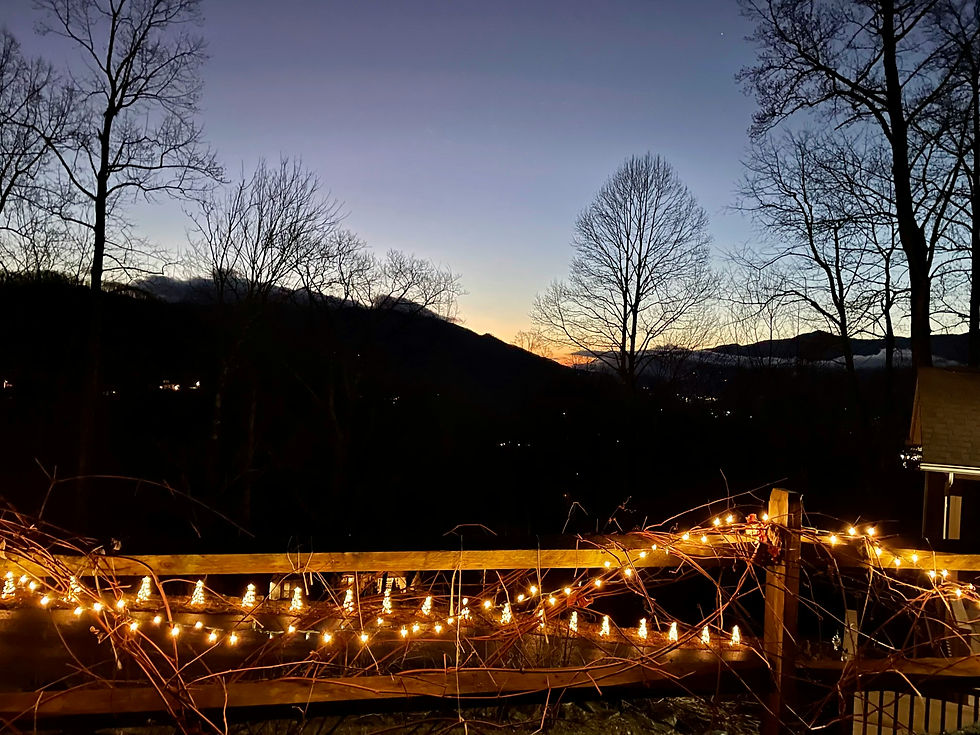
Waynesville's tourism economy ran on a slightly different recovery curve than Asheville's, and the patterns now visible in 2025 and into 2026 carry implications for STR hosts and small-business operators that the broader Western NC narrative doesn't quite capture. The Haywood County town benefits from proximity to Cataloochee Ski Area, the Pisgah National Forest, the Blue Ridge Parkway, and the broader Smokies-region visitor draw — and that mix of anchors has produced a more diversified recovery shape than markets dependent on a narrower set of demand drivers.
This is a directional read on what Waynesville hosts and small-business operators should plan around. We're cautious with precise figures — public visitor and revenue data for a town this size carries real measurement noise quarter to quarter, and operator-level benchmarking varies by sub-segment. Treat the patterns below as a planning context.
Why Waynesville's Recovery Looks Different
Waynesville, about 30 minutes west of Asheville, has a different demographic mix than its larger neighbor. The visitor profile skews older on average, leans more toward couples and multi-generational families, and includes a meaningful contingent of retirees and second-home owners. Downtown has continued to develop during the recovery period, and the broader Haywood County tourism mix benefits from the Cataloochee Ski Area, which provides a structurally distinct winter demand layer.
Compare this to Asheville's recovery, which is more dependent on the food, drink, brewery, and event economy. Both recoveries are real, but they run on different mechanics. Waynesville's was supported by ski-anchored winter demand and the diversified outdoor-recreation mix during shoulder seasons; Asheville's accelerated faster as event and dining economies came back online.
This difference matters for hosts. Marketing and pricing decisions made on Waynesville-specific patterns will perform better than decisions imported from Asheville's curve.
Demand Mix: Outdoor Recreation Strengthened, Ski Stable
Through 2025 and into 2026, Waynesville's outdoor recreation share of demand has held and, in some cases, strengthened relative to baseline. Pisgah-anchored hiking and waterfall travel, Blue Ridge Parkway leisure visits, and Cataloochee Valley wildlife-and-elk-viewing tourism have all returned at meaningful rates.
Cataloochee Ski Area's winter demand has remained stable. Ski tourism in the Southern Appalachians is genuinely weather-dependent year over year, but Cataloochee's proximity advantage for Atlanta and Knoxville drivers and its early- and late-season operating capability give Waynesville a structural winter demand layer that comparable WNC mountain towns don't have.
The combined effect is a calendar that distributes more evenly than the average WNC market. Fall remains the peak; summer is steady; winter softens but doesn't go dormant; spring picks up reliably. This evenness has held through the recovery period and is a meaningful structural advantage.
Stay Length Has Lengthened
One of the clearer patterns since late 2024 is the lengthening of average stay across the broader Western NC region, and Waynesville is no exception. Where the pre-2020 norm was heavily weighted toward 2- and 3-night weekend stays, 2025 and into 2026 have seen a meaningful share of stays land in the 4–7 night range.
The shift favors STRs over hotels structurally, particularly for the older demographic that dominates Waynesville's visitor mix. Properties enforcing aggressive 2-night minimums during shoulder seasons may be leaving revenue on the table. Properties using 3- and 4-night minimums in higher-demand windows are doing better than they would have under pre-2020 demand patterns.
Would you like a free audit of your listing's visibility? Get your free visibility score to see exactly where your property stands.
Visitor Spending Per Trip Has Risen
Public economic-impact reports for Haywood County and the broader region suggest visitor spending per trip is running higher than pre-pandemic baselines. Older travelers spending more per trip on dining, food and drink, gear shops, and small-attraction experiences is a meaningful detail.
For STRs, this reframes the value of an in-town or near-town stay. Listings that articulate connections to Waynesville's downtown food economy, the brewery cluster, and the surrounding outdoor-experience economy convert better than listings focused only on the property itself.
The Cataloochee Ski Area Effect
Cataloochee Ski Area produces a structurally meaningful winter-demand layer for Waynesville STRs that comparable WNC mountain markets don't. Cabins within a 20–30 minute drive of the slopes capture meaningful winter demand that other markets sit empty for.
Operators in this cluster who price aggressively into ski peak windows (Christmas-NYE, MLK weekend, Presidents weekend, weekend stretches in mid-winter) and accept softer midweek calendars typically do better on full-year P&L than operators who try to flatten ski-week pricing for steady occupancy. The pricing-power asymmetry during these windows is real and should be priced for explicitly.
Downtown Waynesville Has Strengthened
Downtown Waynesville has continued to develop through the recovery period — restaurant openings, retail expansion, and the broader walkability story have improved rather than weakened. This is a meaningful advantage for nearby STR properties, which can credibly market 'walkable to downtown' in a way that adds genuine value.
Small-business operators in downtown Waynesville have benefited from the longer-stay guest mix. Visitors staying 5+ nights are eating multiple dinners locally, browsing shops repeatedly, and engaging with the town in ways that day-trippers don't. The feedback loop strengthens both STR positioning and the broader downtown economy.
Hotel and STR Have Recovered Differently
Hotel inventory in Waynesville is meaningful but not large, and STRs make up a substantial share of total visitor lodging. The recovery has accentuated the STR-specific patterns — walkable-downtown STRs and ski-adjacent cabins are pulling demand at meaningful rates while suburban hotel inventory has run softer than the leisure STR side.
This split matters for hosts. Reading hotel performance reports as a proxy for STR behavior in Waynesville specifically is misleading because the two products serve overlapping but different demand pools and recover on different schedules.
Real Estate and Investor Behavior
Waynesville real estate has tightened through 2025 and into 2026 as buyers from out of state, retirees relocating from Florida and the Midwest, and Asheville-overflow buyers have all increased acquisition activity. STR investors should price in entry-cost pressure into pro formas — the cost basis for an acquisition today is meaningfully higher than the pre-2020 baseline.
Several investor patterns have emerged. Couples and retirees buying second homes that are short-term rented part-time. STR managers expanding from Asheville. Local operators are converting older inventory to higher-positioning STR products. Each pattern has different time horizons.
Regulatory and Town Sentiment
Waynesville and Haywood County have historically been workable for STR operators. Town and county discussions have touched on STR regulation periodically, but no major restrictions have been publicly proposed as of this report. Investors and existing hosts should track town meeting agendas as a routine matter — sentiment in mountain towns can shift, and being early on regulatory awareness matters.
What Hosts and Small Businesses Should Take Away
First, the recovery isn't restoring the prior market — it's reshaping it around durable diversified demand drivers. Plan around the current shape rather than nostalgic ones.
Second, lean into specificity in marketing. Generic mountain-town framing is meaningfully less effective than concrete attraction-anchored framing — Cataloochee Ski Area, Pisgah trail proximity, Blue Ridge Parkway access, downtown walkability.
Third, treat the ski demand layer as a real pricing event. Premium pricing during ski peak windows is supported by demand structure, not by guest tolerance — the trips happen because they were always going to happen. Pricing for the demand-supply imbalance during these windows is one of the highest-ROI pricing decisions of the year.
Fourth, the longer-stay shift is real and not reversing. Minimum-stay logic should reflect it where seasonality permits.
Ready to reposition? Start with our free visibility audit — a complete read on where your listing wins and where it leaves money on the table.
Frequently Asked Questions
How does Waynesville's tourism recovery differ from Asheville's?
Waynesville's recovery has been driven by outdoor recreation and stable ski demand rather than the food, drink, brewery, and event economy that has powered Asheville's rebound. The two markets run on different mechanics, so pricing and marketing decisions imported from Asheville's curve tend to underperform in Waynesville. Marketing and pricing decisions made on Waynesville-specific patterns will perform better than decisions imported from Asheville's curve.
What's driving Waynesville's demand structure?
Pisgah-anchored hiking and waterfall travel, Blue Ridge Parkway leisure visits, Cataloochee Valley elk-viewing tourism, and Cataloochee Ski Area's stable winter demand all combine to keep occupancy distributed across the calendar rather than concentrated in one season. Pisgah-anchored hiking and waterfall travel, Blue Ridge Parkway leisure visits, and Cataloochee Valley wildlife-and-elk-viewing tourism have all returned at meaningful rates.
Is visitor spending per trip rising in Waynesville?
Public economic-impact reports for Haywood County suggest visitor spending per trip is running higher than pre-pandemic baselines, with older travelers spending more on dining, food and drink, gear shops, and small-attraction experiences. Public economic-impact reports for Haywood County and the broader region suggest visitor spending per trip is running higher than pre-pandemic baselines. Older travelers spending more per trip on dining, food and drink, gear shops, and small-attraction experiences is a meaningful detail.
How has downtown Waynesville changed during the recovery?
Downtown Waynesville has continued to develop through the recovery period, with restaurant openings, retail expansion, and improved walkability, giving nearby STR properties a credible 'walkable to downtown' selling point. Downtown Waynesville has continued to develop through the recovery period — restaurant openings, retail expansion, and the broader walkability story have improved rather than weakened. Downtown has continued to develop during the recovery period, and the broader Haywood County tourism mix benefits from the Cataloochee Ski Area, which provides a structurally distinct winter demand layer.
Are there STR regulations to watch in Waynesville or Haywood County?
As of this report, no major restrictions have been publicly proposed, though town and county discussions have touched on STR regulation periodically. Investors and hosts should track town meeting agendas as a routine precaution. Town and county discussions have touched on STR regulation periodically, but no major restrictions have been publicly proposed as of this report. Keep going on Crest & Cove: the Waynesville AirROI market file, Waynesville and Maggie Valley against AirROI, the Crest & Cove intro, local SEO keywords that actually book, what Maggie Valley recovery actually measures, Waynesville versus Ocoee budget profit against AirROI, the five elements of a converting hero, and how to compare STR marketing.
Why Waynesville's Recovery Looks Different?
Waynesville's tourism economy ran on a slightly different recovery curve than Asheville's, and the patterns now visible in 2025 and into 2026 carry implications for STR hosts and small-business operators that the broader Western NC narrative doesn't quite capture. Listings that articulate connections to Waynesville's downtown food economy, the brewery cluster, and the surrounding outdoor-experience economy convert better than listings focused only on the property itself.
What Hosts and Small Businesses Should Take Away?
Waynesville's tourism economy ran on a slightly different recovery curve than Asheville's, and the patterns now visible in 2025 and into 2026 carry implications for STR hosts and small-business operators that the broader Western NC narrative doesn't quite capture. This is a directional read on what Waynesville hosts and small-business operators should plan around. Marketing and pricing decisions made on Waynesville-specific patterns will perform better than decisions imported from Asheville's curve.
How should a host read this: Demand Mix: Outdoor Recreation Strengthened, Ski Stable?
Demand Mix: Outdoor Recreation Strengthened, Ski Stable. Through 2025 and into 2026, Waynesville's outdoor recreation share of demand has held and, in some cases, strengthened relative to baseline. Waynesville real estate has tightened through 2025 and into 2026 as buyers from out of state, retirees relocating from Florida and the Midwest, and Asheville-overflow buyers have all increased acquisition activity.
Related Reading
Keep reading in the Waynesville and Haywood County spine first, then neighbor western North Carolina desks: Maggie Valley, Black Mountain, Hendersonville, and Asheville, so startup costs stay on labeled local lines.
Work with Crest & Cove Creative
Write this town's year. Do not file another market's number as this stay.
Reach out at crestcove.co or (256) 998-7502.


Comments