
Algoma, WI Short-Term Rental License: What the City Actually Requires

Updated: Aug 27
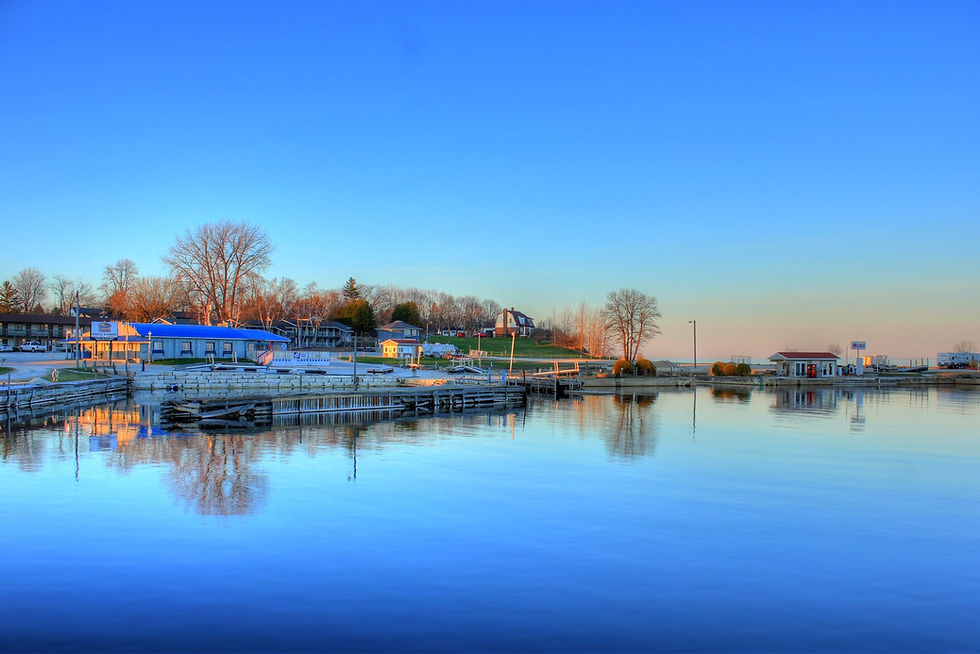
Algoma, Wisconsin is a small city on the Lake Michigan side of Kewaunee County, and its short-term rental ordinance is more specific than a lot of hosts assume before they list a property here. The city license requirement doesn't kick in on night one - it kicks in at ten nights within the license year - and the rule lives in the city's own municipal code, Chapter 28 Article V, not in a county-wide or state-wide catch-all.
Before any of that matters, though, there's a more basic question worth settling first: is the property actually inside the City of Algoma? There's a Town of Algoma that's a separate governmental unit, and Kewaunee, the county seat, is a different city with its own hall and its own numbers entirely. Confirming which jurisdiction a parcel sits in is the first step, because the ordinance, the fee, and the desk you call all depend on getting that right. This is not legal advice.
Confirm You're Actually Inside City of Algoma Before Anything Else
City Desk for the City of Algoma sits at 416 Fremont Street, and the clerk and treasurer's line, (920) 487-5203, is the desk that handles both roles for this city. That's the number to call to confirm your parcel is inside city limits before you build a listing or a compliance plan around City of Algoma's specific ordinance.
This distinction matters because there are two other jurisdictions with similar names nearby, and each has its own separate revenue figures and its own separate rules: Kewaunee, the county seat a few miles away, and the Town of Algoma, which despite the shared name is a different governmental unit entirely. A short-term rental market extract shows City of Algoma at roughly $15,882 across 41 listings, while Kewaunee's figure runs around $18,551 and the Town of Algoma's around $17,316 - three different numbers belonging to three different halls. None of those other two figures, or their rules, apply to a City of Algoma parcel, and the reverse is equally true.
The Core Rule: Ten Nights Without a License Is the Line
Wisconsin defines a short-term rental, in the sense this city's ordinance uses, as a residential dwelling offered for rent for a fee for fewer than 30 consecutive days - that's the state definition City of Algoma builds its own rule on top of. Within that framework, the city's specific threshold is ten nights: once a property crosses ten nights of short-term rental use within its license year, the city requires the operator to hold a license. The first stay itself cannot be six nights or fewer without a license already in place before that stay happens - in other words, the license needs to be secured ahead of any qualifying booking, not applied for retroactively after the fact.
This is a meaningfully different structure than a flat 'get licensed before your first guest' rule. It's tied to a cumulative night count within a defined license year, which means a host renting occasionally and staying well under ten nights annually is in a different compliance position than a host running a full calendar - but the moment that ten-night line is crossed, the license requirement applies, and the ordinance is explicit that the triggering stay can't be a short one taken without a license already on file.
The License Year Runs July 1 Through June 30
City of Algoma's short-term rental license year doesn't follow the calendar year - it runs July 1 through June 30. That matters for two practical reasons. First, it means your ten-night count resets on July 1 each year, not January 1, so a host tracking compliance on a calendar-year spreadsheet is tracking the wrong window. Second, it means license renewal timing and any annual paperwork should be planned around a July start, not a New Year's deadline.
The posted application fee for the license is $100. That's the figure named in the city's own ordinance material behind this article, and it's the number to budget for the license itself - separate from any tax obligation, which is addressed below.
DATCP Licensing Sits on Top of the City Requirement
Wisconsin's Department of Agriculture, Trade and Consumer Protection (DATCP) handles tourist-rooming-house licensing at the state level, and that requirement sits statewide - it applies before night one, independent of whichever city or town the property sits in. DATCP's line is (608) 224-4923. A City of Algoma short-term rental operator needs to think about both layers: the state's tourist-rooming-house license through DATCP, and the city's own ten-night-triggered license through City Desk. One doesn't substitute for the other, and confirming DATCP requirements directly with that office is worth doing before you assume the city license alone covers you.
Room Tax Is a Separate 6 Percent Obligation Under Ordinance 856
Apart from the license itself, City of Algoma imposes a room tax of 6 percent under the city's Ordinance 856. That's a distinct obligation from the $100 license application fee - one is a one-time (or annual) license cost, the other is an ongoing tax on rental income that needs to be collected and remitted according to the city's process. Confirm the current remittance schedule and process directly with the clerk and treasurer's office at (920) 487-5203, since that's the same desk that handles both the license and, likely, room tax administration for the city.
What Happens If You Skip the License
The ordinance carries real financial teeth for noncompliance: penalties run from $200 to $2,500 per offense, and each day a violation continues counts as a separate offense. That structure means a host who crosses the ten-night threshold without a license isn't looking at a single flat fine - the exposure compounds daily until the license is in place, which turns a $100 application fee into a much more expensive problem if it's ignored past the point of discovery. Even at the low end of that range, a violation left unresolved for a couple of weeks can outpace the entire cost of the license itself several times over, which is the practical argument for treating the $100 fee as a rounding error next to the cost of getting caught unlicensed.
A Worked Timeline: What Ten Nights Looks Like in Practice
It helps to walk through an actual license year rather than just reading the rule in the abstract. Say a host lists a property starting in July, right at the start of a new license year. If that host books four separate weekend stays across July and August - each running two or three nights - they could reach eight or nine cumulative nights before Labor Day without yet crossing the ten-night line. The tenth night, whenever it lands, is the trigger point, and the ordinance requires the license to already be in place before that booking happens, not applied for the week after.
This means a host tracking bookings casually in a personal calendar rather than a running nightly tally could cross the threshold without noticing until after the fact - at which point they're already out of compliance and the per-day penalty clock is a live risk rather than a hypothetical one. A simple running count, checked before confirming any new reservation, is a low-effort way to avoid finding out about the threshold retroactively.
How This City's Rule Differs From a Flat Licensing Requirement
Some Wisconsin municipalities require a short-term rental license before the very first paid night, full stop. City of Algoma's rule is structurally different - it's a cumulative threshold tied to a specific license year rather than a first-night trigger. That distinction cuts both ways for a host. On one hand, an occasional host who rents out a property a handful of times a year, staying comfortably under ten nights, may never need to obtain the license at all under this specific ordinance. On the other hand, a host who assumes the ten-night cushion gives them room to operate loosely for a while before 'eventually' getting licensed is misreading the rule - the moment the count crosses ten, the license needs to already be in place, and the ordinance's language about the first stay not being six nights or fewer without a license suggests the city expects proactive compliance, not a grace period after the fact.
Given that ambiguity is exactly where hosts get into trouble, the safest practical approach for anyone planning to rent more than a handful of times per year is to obtain the license before the first booking of the license year, regardless of whether the ten-night threshold feels far off. That removes the need to track a running count precisely and removes any risk of an early-year booking accidentally becoming the noncompliant tenth night.
What Ten Nights Doesn't Fix
It's worth being clear about what the ten-night license threshold is and isn't. It's a compliance line, not a demand signal - crossing it or staying under it says nothing about occupancy, which sits around 31.1 percent on this market, and it doesn't do anything to fill a slow February or push the roughly $244 average daily rate higher. A host shouldn't treat the licensing conversation as a substitute for a pricing or calendar strategy, and a host shouldn't treat calendar strategy as a substitute for handling the license. They're two separate problems that happen to both apply to the same property.
Why the July 1 Reset Catches Hosts Off Guard
Most hosts default to thinking in calendar years, because tax season, annual budgets, and most personal record-keeping run January to December. City of Algoma's license year running July 1 through June 30 breaks that habit deliberately, and it means a host who books heavily in the back half of a calendar year - say, a strong October and a strong December - is actually splitting that activity across two different license years under the city's own accounting: the tail end of one license year and the start of the next. A host who doesn't track the July reset explicitly could end up thinking they're nowhere near ten nights for 'the year' when, measured the way the city actually measures it, they've already crossed the line in the current license year.
The fix is straightforward once you know to look for it: mark July 1 on your own calendar as the actual reset date for your Algoma compliance tracking, separate from any calendar-year or tax-year tracking you're doing for other purposes. Two different clocks, both real, and only one of them is the one City Desk is watching.
Building Your Compliance Checklist
For a City of Algoma short-term rental, the checklist looks like this: confirm the parcel is inside city limits by calling (920) 487-5203; understand that the license requirement triggers at ten nights within a July 1-June 30 license year, and that the first qualifying stay can't happen before the license is in place; budget the $100 posted application fee; confirm your DATCP tourist-rooming-house obligation separately at (608) 224-4923, since that applies statewide regardless of city rules; and account for the 6 percent room tax under Ordinance 856 as an ongoing obligation distinct from the license fee. Skipping any one of these doesn't just risk a fine - the per-day penalty structure means the cost of noncompliance grows the longer it goes unaddressed.
None of these steps require guesswork, and none of them should be handled from a secondhand summary, including this one. City Desk at 416 Fremont Street and the clerk and treasurer's line are the authoritative source for the current fee, the current ordinance language, and the current room-tax remittance process - confirm the specifics directly before you finalize a listing, a purchase, or a management agreement built around this city's rules. If you're buying an existing short-term rental in City of Algoma rather than starting one from scratch, ask the seller directly whether the current license is active, when it's due for renewal under the July-to-June cycle, and whether room tax remittances are current - a lapsed license or unpaid room tax becomes your problem the moment the deed transfers, not the seller's.
Related Reading
More Algoma, Wisconsin reading already live on Crest & Cove.
Frequently Asked Questions
What exactly counts as a 'night' toward the ten-night threshold in City of Algoma?
The ordinance ties the threshold to nights of short-term rental use within the license year, consistent with Wisconsin's state definition of a short-term rental as a dwelling offered for a fee for stays under 30 consecutive days. If you're unsure whether a specific booking pattern counts toward your running total, confirm directly with the clerk and treasurer's office at (920) 487-5203 before assuming.
If I only rent my property a handful of times a year, do I still need a license?
It depends entirely on whether your cumulative nights within the July 1-June 30 license year cross the ten-night line. A property that stays under that threshold may not trigger the requirement, but the ordinance is specific that the first stay itself cannot be six nights or fewer without a license already secured - so don't assume a short first booking is automatically exempt without confirming the full rule with the city.
Is the $100 application fee a one-time cost or does it renew annually?
The fee is posted as the application cost for the license; confirm with the clerk and treasurer's office whether renewal for each new license year (July 1 through June 30) requires a fresh $100 payment or a different renewal structure, since the ordinance material behind this article names the application fee but a host should verify the renewal cadence directly before budgeting a multi-year plan.
Does the DATCP tourist-rooming-house license replace the need for a City of Algoma license?
No. These are two separate requirements at two separate levels of government - DATCP's licensing is a statewide obligation that applies independent of city rules, while City of Algoma's ten-night-triggered license is specific to operating inside this city. A host needs to satisfy both, not choose one over the other.
How is the 6 percent room tax under Ordinance 856 different from the $100 license fee?
The license fee is the cost of obtaining permission to operate as a short-term rental once you cross the ten-night threshold. The 6 percent room tax is an ongoing tax on rental revenue that gets collected from guests and remitted to the city, functioning more like a sales tax than a one-time permitting cost. They're both real obligations, but they serve different purposes and get paid on different schedules.
What happens if I get licensed partway through a license year - does my ten-night count reset?
The license year itself runs July 1 through June 30 regardless of when you personally get licensed within it, so getting licensed in, say, October doesn't create a new twelve-month window starting from your license date. Confirm with the city clerk's office exactly how mid-year licensing interacts with the existing ten-night count for that same license year.
Why do Kewaunee and Town of Algoma numbers keep showing up next to City of Algoma in search results?
Because the names are similar and the towns sit close together in Kewaunee County, a lot of general market research bundles them together even though they're governed separately. Kewaunee's roughly $18,551 figure and the Town of Algoma's roughly $17,316 belong to different halls with different ordinances - neither applies to a City of Algoma parcel, and City of Algoma's own $15,882 figure shouldn't be blended into either of theirs.
Does having a 30-plus night minimum on my listing get me out of the ten-night city license requirement?
No. A minimum-stay setting on a booking platform is a business decision about how you rent the property, not a change to the city's licensing threshold. The ordinance is concerned with cumulative nights of short-term rental use within the license year, and it isn't structured as something a platform setting can route around.
What's the actual daily penalty exposure if I operate past ten nights without a license?
Penalties run from $200 to $2,500 per offense, and the ordinance treats each day of continued noncompliance as a separate offense. That means the cost isn't capped at a single fine - it accumulates daily, which is a strong argument for getting licensed proactively rather than waiting to see if noncompliance gets noticed.
Is Chapter 28 Article V the only part of the city code a host needs to read?
It's the section that holds the short-term rental licensing path specifically, but a host should also confirm room tax administration under Ordinance 856 and any general business licensing or zoning provisions that might separately apply to a rental property. The clerk and treasurer's office is the right first call to make sure you have the complete, current picture rather than just the licensing chapter alone.
Work with Crest & Cove Creative
Algoma, WI Short-Term Rental License: What the City Actually Requires only works when the listing shows operable facts guests can check. Cut soft slogans that hide the real stay.
If you're setting up a short-term rental inside City of Algoma and want help building a listing and compliance plan that actually matches this city's ordinance instead of a neighboring town's, Crest & Cove Creative can help. Reach out at crestcove.co or (256) 998-7502.
Reach out at crestcove.co or (256) 998-7502.


Comments