
Market Algoma, WI for the Guest Who Actually Books

Updated: Aug 30
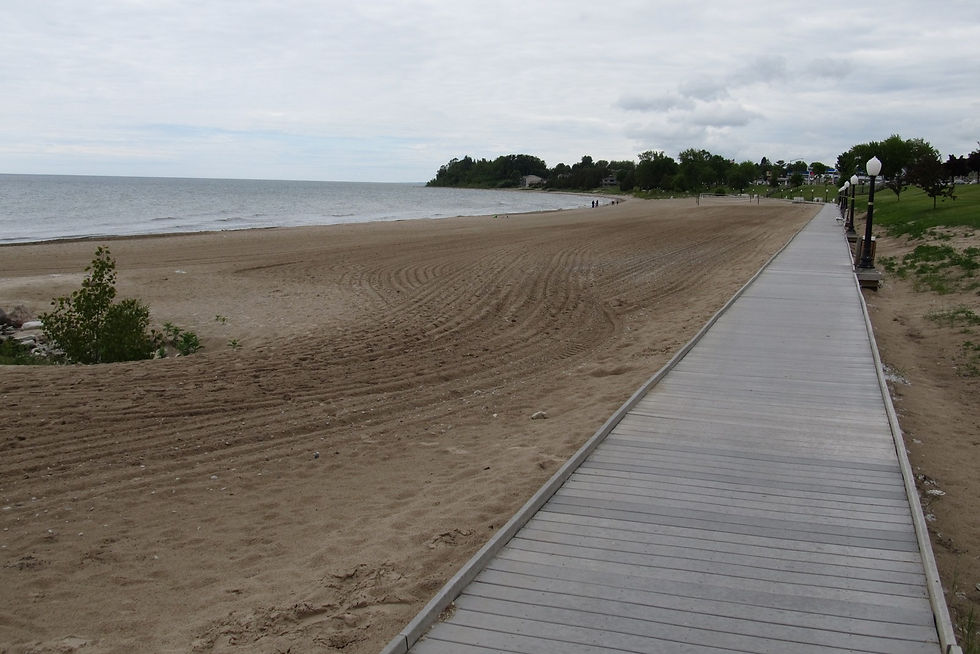
Algoma, Wisconsin shows a confirmed typical year of about $15,882 across 41 listings, with ADR at $244, occupancy at 31.1 percent, an average stay of 3.7 nights, and an average booking lead time of 57 days — a genuine Kewaunee County harbor town with its own specific identity worth marketing accurately rather than dressing up as somewhere else on the peninsula.
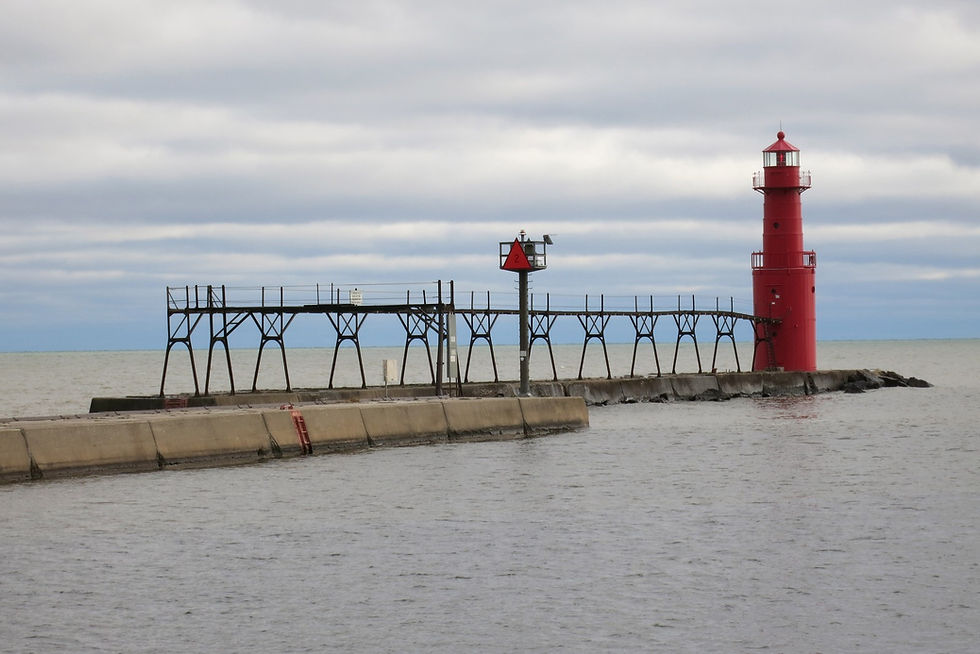
Guests who specifically chose Algoma were looking for something distinct from generic Door County peninsula imagery: the Algoma Pierhead Light, Crescent Beach, or a genuine harbor walk directly from a property's door. Marketing copy should reflect this specific harbor-town identity rather than borrowed peninsula costume that could just as easily describe Sturgeon Bay or any other Door County town.
This is a practical marketing guide built around what an Algoma host can actually verify: which landmarks to photograph honestly, why the gallery should balance landmark shots against the real 3.7-night stay experience, why this town's genuinely unusual August-October-July peak stretch deserves its own pricing logic, and why Kewaunee's separate $18,551 figure and Sturgeon Bay's marina frame belong nowhere near an Algoma listing. This is not legal advice.
Market the Pierhead Light, Crescent Beach, and a Harbor Walk — Honestly
The Algoma Pierhead Light, Crescent Beach, and a genuine harbor walk are all specific, real Algoma landmarks worth featuring prominently, but each should be described in terms of what a guest staying at a specific property can actually reach, not what looks best in a wide-angle drone shot taken from somewhere else in town. A listing that features the Pierhead Light without the property genuinely offering reasonable proximity sets an expectation a guest can't fulfill, creating a real gap between the marketing promise and the lived experience once they arrive and discover the walk they pictured is actually a fifteen-minute drive.
A host whose property does sit within reasonable distance of Crescent Beach or the harbor can honestly describe that specific proximity — the actual walk, the actual distance in minutes — giving a guest concrete, verifiable information rather than an implied but unconfirmed connection. The practical rule: feature the Pierhead Light, Crescent Beach, or a harbor walk only when a guest staying at that specific property could realistically reach and experience it, and name the honest distance whenever you do.
Retire Door County Peninsula Costume From an Algoma Gallery
Door County's broader peninsula identity — its own distinct cottage aesthetic, its own well-funded tourism branding — represents a genuinely different regional experience from Algoma's specific Kewaunee County harbor-town character. An Algoma listing shouldn't borrow that peninsula costume language or imagery just because it's more widely recognized within Wisconsin coastal tourism. A guest who specifically chose Algoma was looking for this town's own distinct harbor character, not the peninsula's broader, more generic cottage branding that dominates search results for the wider region.
A host who retires the Door County-borrowed framing and instead builds content around Algoma's own genuine Pierhead Light and harbor identity creates a listing that more accurately serves the guest who actually searched for and chose this specific town over its more famous neighbor. That discipline extends past the photos into guest-facing messages too — a pre-arrival note that casually refers to 'your Door County trip' instead of naming Algoma and Kewaunee County specifically reinforces the exact blur this whole approach is built to prevent.
Never Caption Kewaunee's Lighthouse or Sturgeon Bay's Marina as This Pier
Kewaunee's own lighthouse and Sturgeon Bay's marina scene are genuine, specific landmarks belonging to those separate towns. An Algoma listing shouldn't caption either as though it represents Algoma's own Pierhead Light or harbor setting, however similar the two harbor towns might look in a quick photo. This kind of image-borrowing misrepresents the actual property's setting to a prospective guest, who deserves accurate photography of the town and landmarks their booked property is genuinely near, not a more photogenic substitute pulled from a nearby town's tourism material.
A host with genuine, accurate Algoma-specific photography — even if less dramatically composed than a borrowed Kewaunee or Sturgeon Bay shot — is building the kind of trust a stolen or borrowed image ultimately undermines the moment a guest actually arrives and the harbor doesn't match the photo.
The Gallery Rule: Two Actual-Stay Photos for Every Landmark Frame
For every landmark-focused photograph in an Algoma listing's gallery — the Pierhead Light, Crescent Beach — a host should include at least two photographs showing the actual stay experience: the interior, the room setups, the genuine day-to-day reality of the 3.7-night booking a guest is actually purchasing when they hit confirm. A gallery overly weighted toward landmark imagery, without adequate representation of the actual living space, creates a mismatch between marketing emphasis and what the guest is genuinely paying for once they see the house in person.
A well-balanced gallery following this roughly two-to-one ratio gives a prospective guest both the landmark context that drew them to search for Algoma specifically, and the genuine, accurate picture of the property itself where they'll spend the majority of their actual stay — kitchen table meals and evening downtime included, not just the harbor view.
Crescent Beach and Shanty Days Are Scenery — They Don't Fill February
Crescent Beach and the Shanty Days festival are genuine, appealing local features worth mentioning honestly, but they function as scenery and seasonal mood rather than evidence that this market's confirmed 31.1 percent occupancy or February hole month gets meaningfully altered by their presence. A host shouldn't imply that Crescent Beach's beauty or Shanty Days' local popularity translates into filled bookings during the confirmed February hole — these features exist within their own specific seasonal windows and don't extend their appeal into an unrelated soft month several months removed.
The same discipline applies to charter fishing, a genuine, real seasonal visitor draw worth mentioning honestly for its actual viable season, roughly late spring through early fall on Lake Michigan. A fully booked August charter, however popular and photogenic, provides no meaningful evidence about January or March demand. A host genuinely positioned near good charter access can market that feature honestly to the guests who'd value it, during the season it actually applies, without implying the appeal carries into unrelated colder months.
Kewaunee's $18,551 and Milwaukee's Drive-Origin Color — Labeled, Never Blended
Kewaunee, a neighboring Wisconsin town, shows its own confirmed figure of about $18,551 across 33 listings, with its own April soft month and Chicago as its confirmed origin market — three distinct data points genuinely separate from Algoma's own $15,882 figure. A host or marketer covering this broader Kewaunee County area shouldn't blend Kewaunee's stronger figure, its April softness, or its Chicago-origin pattern into Algoma's own marketing content, even though the two towns sit within the same county and share general regional character as small Lake Michigan harbor towns.
Milwaukee, meanwhile, functions as helpful drive-origin travel-planning color for guests road-tripping from that direction, but it isn't a confirmed primary occupancy-driving origin market for Algoma specifically. A host shouldn't build primary marketing messaging around a Milwaukee-origin narrative without confirming that pattern actually applies here, rather than assuming a larger nearby city automatically drives the bulk of demand simply because of relative proximity on a map.
Pricing the August-October-July Peak With an Honest Gradient
This market's confirmed peak stretch spans August, October, and July — a somewhat unusual pattern extending into fall, worth understanding specifically rather than assuming a typical summer-only peak the way many other coastal Wisconsin markets show on a simpler June-through-August calendar. A host should price each of these three months on its own genuine strength within this confirmed pattern, recognizing that October's inclusion likely reflects fall charter fishing and harvest-season visitor interest distinct from the summer beach appeal driving July and August bookings.
This nuanced peak pattern gives a host a genuine opportunity to differentiate pricing strategy from generic Wisconsin coastal assumptions that might otherwise treat only July and August as peak, potentially underpricing a genuinely strong October the way a host might if they simply copied a neighboring beach town's calendar wholesale. Photography should follow the same discipline: an October gallery that still shows only summer beach shots undersells the fall charter and harvest-season guest actively booking during that stretch, and a few honest autumn images of the harbor go further toward converting that guest than another July sunset photo.
Guests Booked This Place — So Market This Place
The core discipline underlying this entire guide: guests who booked an Algoma property specifically chose this Kewaunee County harbor town's identity, not a peninsula-wide Door County brand or a neighboring town's more photogenic landmark. Marketing content should honor that specific choice rather than quietly substituting a more famous nearby identity because it's easier to source stock imagery for.
A host who consistently markets 'this place' — the actual Pierhead Light, the actual harbor walk, the actual property's genuine setting — builds a more trustworthy, differentiated listing than one relying on interchangeable regional or borrowed content a guest could find attached to a dozen other listings up and down the coast. Permit and registration information belongs on a dedicated Algoma rules resource, kept entirely separate from this guest-facing marketing content built to sell the harbor experience itself.
Writing the Description Around a 3.7-Night Guest
With an average stay of 3.7 nights and a 57-day booking lead time, the typical Algoma guest is planning a real but compact trip — long enough to want a genuinely comfortable, well-equipped property, but not long enough to spend a full day getting oriented. A listing description that leads with arrival logistics — where to park, how the harbor walk actually works, what's within walking distance versus a short drive — serves that guest better than a paragraph of atmospheric adjectives about the water and the sunset.
'A four-minute walk to the harbor, with the Pierhead Light visible from the porch' does more for a 3.7-night guest's booking decision than 'a charming retreat on Lake Michigan,' even though the second phrase reads more like traditional vacation-rental copy. Specificity, not warmth for its own sake, is what separates a listing that reads as genuinely known by its host from one that reads as a template with a new address dropped in. The same applies to check-in and departure logistics — naming a realistic drive time to charter-fishing docks or the Shanty Days festival grounds gives a short-stay guest something concrete to plan an already-tight itinerary around, rather than leaving them to guess how much of their 3.7 nights will actually go toward driving.
Where Reviews Reinforce the Harbor-Town Pitch
Once a listing accumulates a stay history, guest reviews become one of the most credible pieces of marketing available — more persuasive to a prospective guest than anything the host writes directly, because they come from someone who actually experienced the harbor walk, the Pierhead Light proximity, or the charter-fishing access this piece has emphasized throughout. A host can treat the first several stays as an opportunity to specifically ask, in a post-stay follow-up, whether the harbor distance and landmark access matched what the listing described.
That kind of targeted feedback does double duty: it surfaces any gap between the listing's claims and the lived reality before it costs a future booking, and it tends to produce exactly the specific language — real walk time, real harbor view, real charter-dock proximity — that a guest scanning reviews before booking an Algoma stay is actually looking to confirm. A handful of specific, practical reviews does more for a listing's credibility than a larger volume of generic five-star praise with no concrete detail attached.
Related Reading
Related reading for Algoma, WI hosts: same-town spine first, then nearby geo lines. Skip costume national dumps that do not underwrite this driveway.
Frequently Asked Questions
What's the confirmed typical year for an Algoma listing?
About $15,882 across 41 listings, with ADR at $244 and occupancy at 31.1 percent, average stay 3.7 nights, average lead time 57 days. That's Algoma's own confirmed AirROI figure — keep any neighboring town's figures on a separate, clearly labeled line rather than blended into this town's own performance story.
What should I actually market for an Algoma stay?
The Pierhead Light, Crescent Beach, or a genuine harbor walk, each only if your specific property genuinely offers reasonable, walkable or short-drive access. Name the landmark you can honestly deliver, state the real distance, and let the actual house photos carry the rest of the pitch.
Can I use Door County peninsula branding for my Algoma listing?
No. Retire generic Door County cottage costume entirely and build instead around Algoma's own specific harbor identity. A guest who searched Algoma specifically was avoiding the more generic, more crowded Door County peninsula search results, and borrowed peninsula language undermines the exact reason they chose this smaller town.
Can I use Kewaunee's lighthouse or Sturgeon Bay's marina photos on my listing?
No. Never caption a neighboring town's landmark as though it represents Algoma, even when the two harbor towns look similar in a quick photo. Use only real, current Algoma-specific images, even if a borrowed shot would look more dramatic in the gallery.
How should I balance my listing's photo gallery?
Include at least two actual-stay photos — interior shots, room setups, kitchen and living space — for every single landmark-focused frame like the Pierhead Light or Crescent Beach. A gallery over-weighted toward scenery creates a mismatch between what the marketing emphasizes and what the guest is actually paying to experience.
Does Shanty Days or Crescent Beach imply that February books well?
No. Both are genuine scenery and real seasonal mood worth mentioning honestly, but neither overrides the confirmed February hole or this market's overall 31.1 percent occupancy baseline. Market February honestly as a quieter month rather than borrowing warmer-season imagery to imply demand the data doesn't support.
Does a packed August charter fishing trip mean January books well too?
No. Charter fishing is genuine in-season color for its own viable window, roughly late spring through early fall, and it says nothing reliable about winter demand months removed from that season.
Is Kewaunee's $18,551 the same figure as Algoma's typical year?
No. Kewaunee is a separate neighboring market with its own confirmed $18,551 figure across 33 listings, its own April soft month, and Chicago as its confirmed origin city — three data points genuinely distinct from Algoma's own $15,882 figure and different seasonal pattern.
Is Milwaukee a confirmed occupancy driver for Algoma specifically?
No. Milwaukee functions as helpful drive-origin travel-planning color, worth a brief mention for guests road-tripping from that direction, but it isn't a confirmed primary occupancy-driving origin market for this specific town.
How should I price the August-October-July peak stretch?
Price each of the three months on its own confirmed strength rather than treating only July and August as peak. October's inclusion in this confirmed peak stretch likely reflects fall charter fishing and harvest-season interest distinct from summer beach appeal, and underpricing it out of habit is a real, avoidable revenue loss.
Where should permit and registration information go?
On a dedicated Algoma rules resource built specifically for that purpose, kept entirely separate from guest-facing marketing content built to sell the Pierhead Light, Crescent Beach, and harbor-walk experience.
Work with Crest & Cove Creative
The Algoma listings that actually convert aren't dressed up in Door County peninsula costume — they name the Pierhead Light, the real harbor walk, and the honest distance from the door. Name the failure mode the guest can check on.
Rebuild your Algoma gallery around this town's own confirmed landmarks and the real August-October-July peak, and retire any borrowed Door County or Kewaunee imagery from the listing entirely. Start at crestcove.co/audit or call (256) 998-7502. Send the live listing draft and the facts you can actually cite.
Reach out at crestcove.co or (256) 998-7502.

Comments