
Algoma Visitor Guide: Pierhead Light, Not Door County

Updated: Aug 27

Guests who type "Algoma" into a search bar are looking for the pierhead light, Crescent Beach, and a walk they can actually name — not a Door County itinerary with the noun swapped, and not Kewaunee's restaurant list pasted onto an Algoma driveway. The numbers behind this guide: $15,882 in typical annual host revenue across 41 active listings, a $244 average daily rate, and 31.1 percent occupancy. Peak season runs August, October, and July, with August the strongest month and February the slow stretch.
The average stay here is 3.7 nights, booked about 57 days out, and Milwaukee is the leading origin market, with Madison close behind. This guide is the visitor-facing walk, not the revenue file — Shanty Days 2026 runs August 14 through 16 at Legion Park, a festival weekend that changes foot traffic for a few days, not the year-round occupancy number.
Before anyone plans the stay, confirm which town the address is actually in. Algoma, neighboring Kewaunee, and the unrelated "Town of Algoma" township near Oshkosh get mixed up more often than hosts expect, and each carries its own separate figures, its own separate desk, and its own separate identity. This is not legal advice.
Arrive on the Harbor on Purpose
Drive to the harbor actually booked. Algoma sits at the mouth of the Ahnapee River, one county south of the Door County peninsula. Park where the parcel really has parking — city code calls for one on-site, off-street space per four occupants — and a guest who can't park won't care that the market's occupancy runs 31.1 percent. Write down the driveway and the walk from that driveway to the water.
Don't arrive as if Sturgeon Bay were the first stop, or as if Kewaunee city were the same desk. Two harbors share a shoreline and split the town desks. Confirm Algoma versus Kewaunee before packing the weekend, and know who typically books an Algoma rental so the listing greets that guest correctly. A guest who typed Algoma should see Algoma on the first screen, not a leftover peninsula paragraph and not a Kewaunee restaurant list.
That distinction matters because the three towns share a shoreline but not a downtown. A guest who searched for Algoma wants Algoma's harbor, not a placeholder paragraph that could describe Sturgeon Bay or Kewaunee just as easily. Arrival is the first place that identity gets tested — get the city right before the guest even unlocks the door, since a wrong-town first impression is nearly impossible to undo by the time the review gets written.
Walk Crescent Beach Before You Promise a Surf Day
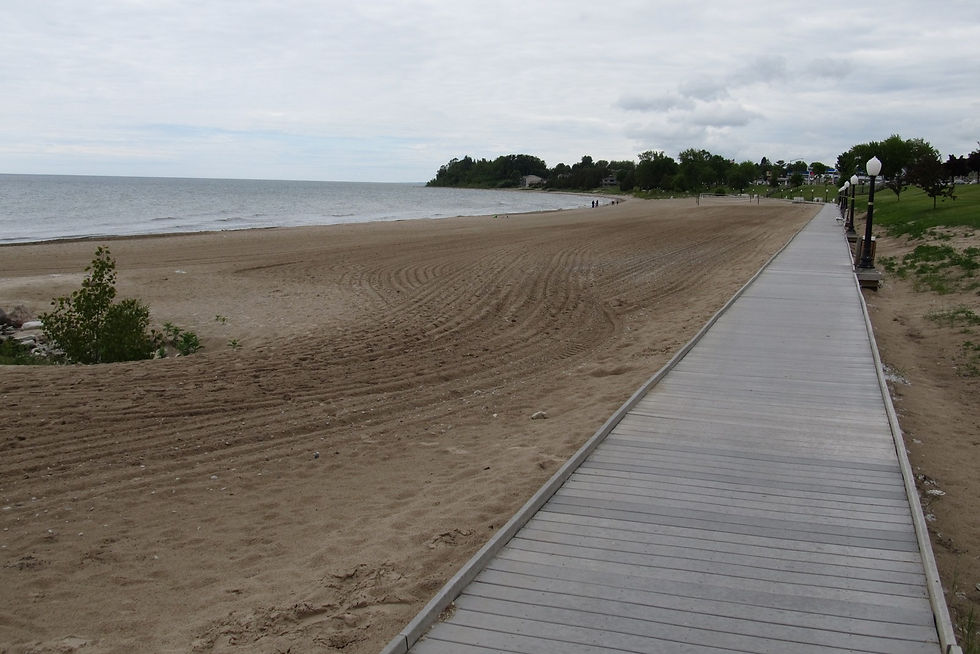
Crescent Beach is Algoma's sand. Walk it before promising a surf day. Lake Michigan doesn't owe anyone a swimming week just because the boardwalk photographs well — wind, water temperature, and season decide the afternoon, not the calendar. July and August, the peak months, make a beach walk an easy sell, but they don't guarantee open water. February is the hole, and it should never be written up as a beach month.
Photograph the boardwalk that's actually reachable from the listing, and name the beach on the first screen if the parcel can walk to it. If a host hasn't personally walked from the driveway to the sand, don't describe it as a private beach, and don't borrow a peninsula beach photo to stand in for this one. October can still deliver a good beach walk here, but a costume version of "surf" checked against the lake on arrival day won't hold up, no matter how well the marketing copy read on paper.
Name the Pierhead Light as a Separate Stop
Algoma Pierhead Light is a stop, not the entire weekend. Name it separately from Crescent Beach and from Legion Park rather than collapsing the harbor into one postcard sentence. Guests who want the light still need a parking plan and a walk timed to the hour.
Stand on the pier that's actually walkable, and confirm wind conditions before promising a photo-perfect visit. Charter fishing out of the harbor is real demand, but it's not a private tour bundled with the listing. This is Kewaunee County's Algoma — leave any borrowed Door County lighthouse loop out of the copy, and put the pierhead light on its own line in the house book instead of burying it inside a longer itinerary a guest has to dig through to find the one stop they actually came for.
Confirm Algoma Versus Kewaunee
Confirm the city before eating, walking, or sleeping. Algoma runs $15,882 in typical annual revenue across 41 listings, with February as the slow month, Milwaukee as the top origin market, and a 3.7-night average stay. Kewaunee runs $18,551 across 33 listings, with April as its slow month, Chicago as its top origin market, a 4.5-night average stay, and 12.1 percent professionally managed. City Desk for Algoma sits at 416 Fremont Street; Kewaunee's is a different building entirely.
A third name adds to the confusion: the separate "Town of Algoma" township is actually near Oshkosh, well inland and hours from this harbor, and its own figure, $17,316, has nothing to do with this listing. If the address on the booking doesn't sit near 416 Fremont, this guide's copy doesn't apply.
If the listing address is Kewaunee, stop using this guide as the walk; if it's Algoma, stop using Kewaunee restaurant copy for the first meal. The clerk desk is the reference for hosts sorting out which city a parcel sits in. Guests need the simpler version: two harbors, two downtowns, two sets of rules. A Saturday that starts with breakfast in Algoma and lunch in Kewaunee is a fine itinerary — it just isn't permission to merge $15,882 and $18,551 into one number.
Eat in a Place of 41 Listings
Eat in the town that actually holds the pillow. Forty-one listings is the host sample, not a restaurant census, but it still signals a small harbor rather than a peninsula-sized dining scene. Name a table the guest can walk to from the listing, and don't paste Sturgeon Bay or Kewaunee dining lists onto an Algoma first night unless the guest is driving there on purpose.
Shanty Days weekend will change the sidewalk for a few days in August; it won't change the ADR the rest of the year. A 3.7-night average stay is a few meals, not a food-tour year, so name what's actually open, confirm hours, and keep the recommendation inside this city.
Do Not Treat This as Door County
Door County is a north drive, not Algoma. Guests who searched for the peninsula want a different overnight than guests who searched for Algoma; a guide that opens with Door County and then drops the guest on Crescent Beach has already blended the two together. Sturgeon Bay's rules don't apply at 416 Fremont, and this market's numbers — 31.1 percent occupancy on 41 listings, peak season in August, October, and July, February as the hole — are enough on their own without borrowing a peninsula frame.
Kewaunee County is not Door County, and the City of Algoma is not a peninsula village. City STR rules exist because the licensing hall is local, though guests don't need the ordinance — they need the identity. If a sentence in a listing description could sit unchanged on a Door County page, cut it. Photograph this light, name this beach, and leave any leftover peninsula calendar off the walk. Guests who wanted Door County will keep driving north; guests who wanted Algoma will stay if the listing told the truth, and that honesty is worth more to repeat bookings than a borrowed peninsula reputation ever would be.
Confirm Hours Before You Promise a Trail
The Ahnapee State Trail is demand, not a guarantee of occupancy. Confirm hours, surface conditions, and season before promising a ride or a walk — a trail that looks open on a map can still be a rough February afternoon, and February is this market's slow month. That's a host fact as much as a guest warning: don't sell a trail day nobody has actually checked, and don't write off October as empty just because some other calendar goes quiet then. October sits inside this market's peak-three months.
Write the trail as a stop the guest can verify, and apply the same rule to charter fishing — confirm the operator, the weather, and the month before promising it. With bookings landing about 57 days out, guests planning that far ahead still need live hours confirmed the week they arrive, not a status frozen at the moment the reservation was made.
Photos Should Match the Actual Walk
A listing's photo selection should mirror the actual guest experience: the harbor, Crescent Beach, the pierhead light, and whatever specific stretch of downtown sits closest to the property. A stock Lake Michigan sunset that could have been taken anywhere on the shoreline does nothing to help a guest understand what makes this specific harbor town distinctive.
That matters more for a smaller, quieter destination like Algoma than it might for a heavily marketed peninsula town, because the actual character here — small harbor, walkable core, a named light rather than a generic lighthouse silhouette — is a selling point in its own right for the right guest. Generic beach photography actively obscures that character rather than highlighting it, and a guest comparing several similarly worded Lake Michigan listings notices which one actually shows the real pier.
Seasonal Honesty: August Peak, February Hole
Algoma's character shifts meaningfully between its August-October-July peak stretch and its February low point, and a listing that photographs and describes the town only during peak season risks setting an inaccurate expectation for a guest booking during the quieter months. A February guest deserves an honest picture of a working harbor town in its off-season rhythm, not a repurposed August beach photo with different text underneath it.
This same seasonal honesty applies to Shanty Days specifically. The festival is three real dates in August, not evidence of an extended summer tourist season, and a listing shouldn't imply that festival-weekend energy extends across the whole peak stretch. A guest booking a quiet October week, even though October sits inside the peak-three months in this sample, deserves accurate expectations about what that particular week will actually feel like on the ground.
Write the Walk Without Costume Copy
Use Algoma as a harbor overnight with a named light, a named beach, and a named town desk. Sleep in the City of Algoma, walk Crescent Beach when the lake allows it, and stop at the pierhead light on purpose. Eat in this town of 41 listings. Drive north to Door County or over to Kewaunee only if that's a day trip the guest actually wants — don't let the copy pretend the three places are one.
Hosts should keep this visitor-facing copy separate from the $15,882 revenue file, and guests should keep the same split in mind: Shanty Days is three dates in August, not the whole season, and a 3.7-night average stay is a long weekend, not a filled month. If a sentence could sit unchanged on Kewaunee, Sturgeon Bay, or Algoma copy, cut it — name the city, name the month, then write the walk.
Related Reading
More Algoma, Wisconsin reading already live on Crest & Cove.
Frequently Asked Questions
How should a guest arrive on this Algoma town?
Drive to the City of Algoma at the mouth of the Ahnapee River, not to a Door County stop or Kewaunee by default. City code sets parking at one on-site space per four occupants, so confirm which town actually holds the booking before a guest arrives. Sleep in the town they actually typed into search.
Can I promise a Crescent Beach surf day from the listing?
Not as a guarantee. Walk the beach personally before promising surf conditions, since Lake Michigan's wind and water change day to day regardless of how good the boardwalk photographs. July and August are this market's strongest months and make a beach walk an easy sell, but that's a seasonal tendency, not a promise — confirm conditions the morning of the visit.
Is the Algoma Pierhead Light the whole Algoma weekend?
No. The Pierhead Light is a separate stop from Crescent Beach and Legion Park, each worth naming on its own in a listing. Charter fishing out of the harbor is real, standalone demand, not a private tour bundled with the light, so stick to what's actually walkable from the property.
How do I tell Algoma from Kewaunee on a visitor weekend?
Algoma runs about $15,882 across 41 listings, slow in February, with Milwaukee as the top origin market and a 3.7-night average stay. Kewaunee runs about $18,551 across 33 listings, slow in April, with Chicago as its top origin market and a 4.5-night average stay. Algoma City Desk sits at 416 Fremont Street; if a booking address is actually Kewaunee, this guide's copy doesn't apply.
Where should guests eat in a town this size?
Eat in the town that actually holds the booking. Forty-one listings is the host sample size, not a restaurant census, meaning a small harbor scene rather than a peninsula-sized dining district. Name a table within walking distance of the listing rather than pasting in a Sturgeon Bay or Kewaunee dining list; Shanty Days, August 14-16, 2026, changes the sidewalk for one weekend only.
Is this visitor guide a Door County guide?
No. Door County is a separate drive north with its own rules, and Sturgeon Bay's tourism material doesn't apply at an Algoma address. Guests who specifically searched for Algoma want this harbor, this light, and this beach, so any sentence that could sit unchanged on a Door County listing doesn't belong in Algoma copy.
Can I promise the Ahnapee State Trail without checking hours?
No. Confirm hours, surface conditions, and season before promising a ride or a walk on the trail. A trail that looks open on a map can still be a rough outing in February, this market's slowest month, while October, despite feeling like off-season elsewhere, actually falls inside Algoma's three peak months.
How should this guide be used without writing costume copy?
Walk Crescent Beach when the lake allows it, stop at the Pierhead Light on purpose, and recommend eating within this town of 41 listings rather than borrowing a peninsula-wide dining scene. Save Door County or Kewaunee for a specifically named day trip, and keep revenue figures like $15,882 on the host-side planning file, not in guest-facing copy.
What are people actually trying to do when they search this town?
Guests typing "Algoma" want the Pierhead Light, Crescent Beach, and a walk they can name, not a generic peninsula overnight. The City of Algoma is its own municipality with its own licensing rules, not a Door County village, because the city desk issuing those permits is local rather than regional.
How should I name the Pierhead Light in guest-facing copy?
Name it as its own stop, separate from the beach and from Legion Park, and pair it with practical details — where to park and roughly what hour the light and harbor look their best. Guests here book about 57 days out on average, so those details still need confirming the week they actually arrive, not assumed from a map months earlier.
Work with Crest & Cove Creative
An Algoma visitors guide fails when Door County costume copy replaces the pierhead light and Crescent Beach overnight. Guests who typed Algoma deserve this Lake Michigan driveway.
We help independent Algoma hosts keep pier, beach, and Ahnapee River facts on the listing without borrowing a peninsula average — neighbor towns stay labeled. Send the live listing if the about block still could sit anywhere on Door County. Reach out at crestcove.co or (256) 998-7502.
Reach out at crestcove.co or (256) 998-7502.


Comments