
Algoma Shoulder Season: Price August, October, and July as Peak-3

Updated: Aug 27

Algoma, Wisconsin's AirROI sample shows a peak-3 of August, October, and July, with August as the single strongest month - a genuinely specific seasonal pattern, notable for including October alongside the two more expected summer months.
This market's actual typical year is $15,882 across 41 listings, with occupancy near 31.1 percent, ADR near $244, and a year-over-year figure of minus 21.8 percent - figures worth citing directly alongside any seasonal pricing discussion, rather than assumed away.
This is not legal advice. It's a practical shoulder-season pricing guide for an Algoma host: how to price the confirmed August-October-July peak-3 deliberately, how to price the named February hole honestly, and why a thirty-plus-night minimum-stay setting doesn't itself convert a soft month into a filled one.
August Is the Single Strongest Month
August stands alone as this market's single busiest month according to the published extract - the clearest, most confident pricing decision available to an Algoma host, worth reflecting in a meaningfully higher rate than any other point in the calendar.
This market's Shanty Days festival, scheduled for August 14 through 16, 2026, at Legion Park, falls within this already-strongest month - a genuine, dated reason a specific guest might choose that particular weekend, distinct from what makes August strong overall.
A host who prices August at the same flat rate as a shoulder month is leaving revenue on the table during the exact weeks this market's own data shows demand is strongest - a straightforward, low-risk pricing adjustment worth making immediately.
The practical rule: build a meaningfully premium rate specifically for August, treat Shanty Days weekend as a further, smaller premium within that already-elevated month, and confirm current festival dates before finalizing that specific weekend's pricing.
October's Presence in the Peak-3 Is Worth Noticing
October's inclusion in this market's peak-3, alongside the more expected summer months of August and July, is a genuinely specific and useful finding - many hosts default to treating fall as an automatic shoulder-season discount period without checking whether their own market's data actually supports that assumption.
This fall strength likely ties to some combination of fall color, quieter harbor scenery, fishing season, or a general late-season lake-town appeal - worth naming specifically in marketing copy for guests planning an autumn trip, rather than assumed to be a slow month by default.
A host who discounts October under a generic "off-season" assumption is working against this market's own actual data, which places October within its top three months rather than in its slower stretch.
The practical rule: price October at or near peak-3 levels rather than a standard fall discount, and market this specific month's genuine local appeal - harbor scenery, trail conditions, fishing season - directly to the guest actually planning an autumn stay.
July Rounds Out the Peak-3
July completes this market's confirmed peak-3, alongside August and October - a genuinely useful full picture for a host planning rate changes across an entire calendar year rather than guessing at which specific weeks deserve premium pricing.
This market's average lead time of 57 days and average stay of 3.7 nights suggest July guests, like guests throughout the year, are typically planning a multi-night harbor weekend a couple of months ahead rather than booking spontaneously.
A host should photograph and market July specifically for its own genuine appeal - warm-weather harbor walks, beach time at Crescent Beach, charter fishing - rather than relying on generic "summer in Wisconsin" stock imagery that could describe any lake town.
The practical rule: treat July as a confirmed peak-3 month deserving premium pricing on par with August and October, built around this specific market's own genuine summer landscape rather than a generic regional summer pitch.
February Is the Hole - Not a Hidden Second Peak
February is this market's clearly named seasonal low point, sitting within a broader January-through-March low stretch - the direct, honest counterpart to the confirmed August-October-July peak-3 discussed above.
A thirty-plus-night minimum-stay setting is a booking-policy filter choice, not evidence that January or February have quietly become filled months - this market's overall 31.1 percent occupancy figure already reflects the named winter softness, regardless of any specific listing's minimum-stay setting.
Any winter visitor attraction - open-water photography at the pierhead light, an ice-fishing opportunity, or any other seasonal draw - is genuine demand-landscape content worth mentioning in a guest guide, but it doesn't convert February from a named hole into a filled month on its own.
The practical rule: price February, January, and March honestly below peak-3 levels, market this stretch specifically for the right guest (a quiet off-season getaway), and never imply winter demand strength this market's own 31.1 percent full-year occupancy figure doesn't actually support.
Keep Kewaunee's Calendar Labeled, Not Blended
Kewaunee, a separate nearby harbor city, publishes its own distinct peak-3 (August, July, June) and its own separately named hole (April) - genuinely different from Algoma's own confirmed August-October-July peak-3 and February hole, despite the geographic proximity.
A host or marketing packet that borrows Kewaunee's June strength, or its April softness, to describe Algoma's own calendar is applying the wrong town's seasonal pattern - a mistake worth actively avoiding when building a pricing calendar.
This distinction matters directly for calendar-building: Algoma's own June sits within its low stretch, while Kewaunee's own June sits within its peak-3 - two genuinely opposite seasonal signals for the same calendar month, tied to two separate markets.
The practical rule: build an Algoma-specific pricing calendar strictly from Algoma's own confirmed August-October-July peak-3 and February hole, and treat Kewaunee's genuinely different seasonal pattern as clearly labeled neighbor-comparison context only.
Why a Thirty-Plus-Night Setting Doesn't Fix the Hole
A host considering a longer minimum-stay setting specifically to address February's softness should understand that this setting changes a listing's booking-policy filter, not the underlying seasonal demand this market's own data shows for that month.
This market's actual average stay length is 3.7 nights - a genuinely short-trip pattern - suggesting most current demand here is for multi-night weekend getaways rather than month-long stays, regardless of what minimum-stay setting a specific listing adopts.
A host genuinely interested in testing a longer-stay strategy for the winter months should treat it as a distinct, separately measured strategic experiment, tracking actual results carefully rather than assuming the strategy alone will reverse this market's named seasonal softness.
The practical rule: don't rely on a minimum-stay change alone to solve February's softness. Combine honest off-season pricing, targeted marketing for the quiet-getaway guest, and (if pursued) a carefully measured longer-stay test, rather than assuming any single lever fixes the hole.
Photographing Each Tier for the Right Guest
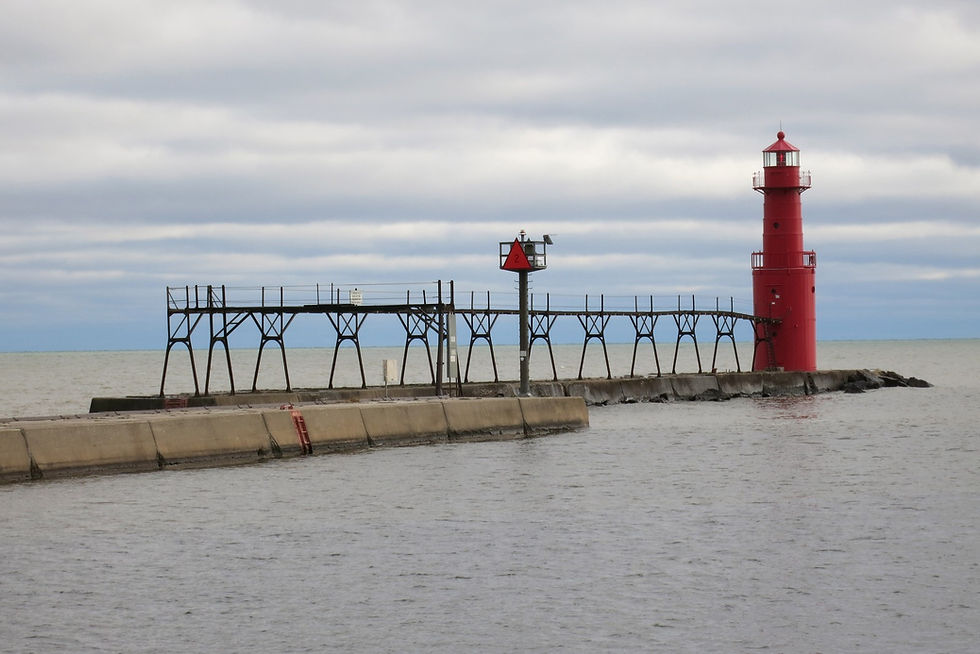
August photography should feature warm, sunny harbor scenes - the pierhead light in full summer light, Crescent Beach at its busiest, and Legion Park if a property genuinely sits within reach of Shanty Days weekend specifically.
October photography should lean into fall color and quieter harbor scenery - a genuinely different visual pitch from August's summer energy, worth its own distinct photo set rather than recycled summer images with a caption change.
July photography can share some visual territory with August, but should still emphasize whatever specific local activity a property is best positioned for - a fishing charter departure point, a walkable beach stretch, or a quiet porch view of the harbor.
The practical rule: build a genuinely distinct photo set for each pricing tier - summer-peak August, fall-strong October, and quiet-getaway February - rather than a single generic photo set reused with different seasonal captions across all twelve months.
Setting Guest Expectations Honestly by Month
A guest booking August should be told, accurately, that they're arriving during this market's single busiest month - crowds at Crescent Beach, a fuller harbor, and potentially a bustling Shanty Days weekend if their dates align with the festival.
A guest booking October should understand they're arriving during a confirmed peak-3 month with genuinely strong fall appeal - worth setting expectations for cooler weather and quieter crowds than August, while still conveying that this remains one of the market's strongest months.
A guest booking during the February-centered hole should be told honestly that they're choosing this town's genuine off-season character - a quieter harbor town experience, potentially at a meaningfully lower rate, rather than an implied festival-season atmosphere.
The practical rule: set accurate, month-specific guest expectations in pre-arrival communication, matching what a guest can actually anticipate finding in Algoma during their specific booked dates, rather than a single generic "lake town getaway" message sent regardless of season.
Cross-Checking Against a Live Booking Calendar
A host should periodically compare their own actual booking pace for August, October, and July against this confirmed peak-3 pattern - if these months aren't booking meaningfully ahead of the calendar's other months, that's worth investigating directly rather than assumed away.
Similarly, a host should check whether their own February bookings, if any, come primarily from guests genuinely seeking the honest quiet off-season experience described above, rather than guests who may have been misled by overly optimistic winter marketing copy.
This ongoing comparison between the market-wide seasonal pattern and a specific property's own actual results gives a host the clearest, most direct signal about whether their current pricing and marketing approach genuinely fits this market's confirmed calendar.
The practical rule: revisit actual booking data against this four-tier calendar structure at least once each season, adjusting specific rates or marketing messages where a property's own real results diverge meaningfully from the market-wide pattern.
Building the Full-Year Calendar
A complete Algoma pricing calendar should reflect four distinct tiers: a premium rate for August (this market's single strongest month), a strong secondary rate for October and July (rounding out the confirmed peak-3), a moderate rate for the remaining months, and a clearly discounted rate for the January-through-March low stretch centered on February.
This calendar should be built and documented before the season starts, giving a host time to plan targeted marketing pushes for each tier - festival-specific marketing for the August Shanty Days weekend, fall-color and fishing-season marketing for October, and honest quiet-getaway marketing for the February stretch.
A host should revisit this calendar structure periodically against actual booking results, since a specific property's own real performance may reveal nuances - a particular weekend that consistently outperforms its tier, for instance - worth incorporating into future pricing decisions.
The practical rule: treat this four-tier structure (August premium, October-July peak-3, moderate shoulder, discounted February-centered hole) as the starting framework for an honest Algoma pricing calendar, refined over time by a specific property's own actual booking data.
A host managing multiple properties in this market can also use this same four-tier structure as a consistent baseline across their portfolio, adjusting each individual listing's specific rate within each tier based on that property's own size, location, and amenity mix rather than building an entirely separate calendar logic for each unit.
Avoiding the Most Common Seasonal Mistakes
The most common mistake in this market is treating fall as an automatic discount period without checking whether October specifically falls within the confirmed peak-3 - a generic regional assumption that directly contradicts this market's own actual data.
A second common mistake is assuming a long minimum-stay setting alone will fill the February-centered hole, when this market's own 3.7-night average stay and 31.1 percent occupancy figure suggest the underlying seasonal softness runs deeper than a booking-policy filter can address.
A third common mistake is borrowing a neighboring market's calendar - treating Kewaunee's June strength or April hole as though they applied here - when Algoma's own confirmed pattern runs on a genuinely different schedule.
The practical rule: check every seasonal pricing assumption against this market's own specific, confirmed data before applying it, rather than defaulting to a generic regional shoulder-season template that may not actually describe this particular harbor town's calendar.
Related Reading
Related reading for Algoma Wi Shoulder, WI hosts: same-town spine first, then nearby geo lines. Skip costume national dumps that do not underwrite this driveway.
Frequently Asked Questions
What are Algoma's actual peak-3 months?
August, October, and July, with August standing alone as the single strongest month according to the published extract. October's inclusion alongside the two more expected summer months is a genuinely specific, worth-noticing seasonal pattern many hosts would overlook if they priced only against the obvious June-August summer block.
Should October be discounted as a shoulder month?
No. October sits within this market's confirmed peak-3, not its slower stretch, so pricing it as a standard fall discount month works against this market's own actual data. A host who treats October like a generic autumn shoulder is leaving real peak-season revenue on the table.
Is February really this market's hole?
Yes. February sits within a broader January-through-March low stretch, the direct counterpart to the confirmed August-October-July peak-3. This market's minus 21.8 percent year-over-year figure and 31.1 percent occupancy make more sense once the calendar is read as one real peak and one real hole, rather than a flat year.
Does a thirty-plus-night minimum fix the February hole?
No. That's a booking-policy filter, not evidence of underlying winter demand. This market's average stay remains 3.7 nights, and its 31.1 percent occupancy already reflects the named winter softness, so a longer minimum-stay setting doesn't by itself convert a soft month into a filled one.
Can Kewaunee's calendar describe Algoma's seasons?
No. Kewaunee's own peak-3 (August, July, June) and hole (April) are genuinely different from Algoma's own confirmed pattern — even June falls in opposite seasonal categories between the two towns. Algoma's own August-October-July peak and January-through-March low should stay on their own labeled line, not borrowed from a neighboring harbor city.
Does Shanty Days create August's peak-month status?
No. August was already this market's strongest month before Shanty Days' specific dates (August 14-16, 2026, at Legion Park) are factored in. The festival is a genuine, dated reason to choose that particular weekend, not the underlying cause of the month's overall strength across the whole 41-listing sample.
What's a reasonable pricing tier structure for Algoma?
Four tiers: premium for August, strong secondary for October and July, moderate for the remaining months, and discounted for the January-through-March low stretch centered on February. That structure prices the confirmed peak-3 deliberately instead of treating the whole year as one flat rate.
Does winter visitor interest fill the February hole?
No. Open-water photography or ice-fishing interest is genuine demand-landscape content worth naming in a guest guide, but it doesn't convert this market's actual 31.1 percent occupancy or named February hole into filled nights. Interest in a topic isn't the same as a booked calendar.
What's Algoma's typical guest stay length and lead time?
3.7 nights average stay, with 57 days average lead time — suggesting most demand is for multi-night weekend trips planned a couple of months ahead, not spontaneous bookings or the month-long stays a thirty-night minimum might otherwise imply.
Should a host test a longer-stay strategy for winter?
It can be tested, but as a distinct, carefully measured strategic experiment tracked against its own real results — not assumed to independently reverse this market's named seasonal softness. A host trying it should compare actual February bookings before and after, not just hope the setting alone changes demand.
Work with Crest & Cove Creative
Algoma's peak-3 isn't the obvious summer stretch, it's August, October, and July, with October riding alongside the two expected summer months. A calendar priced only for July and August misses a real peak.
We help Algoma hosts price the confirmed August-October-July peak deliberately and the named February hole honestly, instead of a flat seasonal guess. Send your calendar to crestcove.co/audit or (256) 998-7502.
Reach out at crestcove.co or (256) 998-7502.


Comments