
Algoma Tourism Data: Shanty Days Is Demand, Not This Market's

Updated: Aug 27

Algoma, Wisconsin's tourism identity centers on the Algoma Pierhead Light, Crescent Beach, the Ahnapee River, and Shanty Days - a named local festival scheduled for August 14 through 16, 2026, at Legion Park, with a Saturday parade at noon.
This market's actual AirROI sample publishes a typical year of $15,882 across 41 listings, with ADR near $244 and occupancy near 31.1 percent - figures that describe actual booked nights, genuinely distinct from any visitor-spend total a tourism board might separately publish for the festival weekend or the broader season.
This is not legal advice. It's a practical guide for an Algoma host: how to feature Shanty Days, the pierhead light, and Crescent Beach honestly in a listing description, while keeping this market's actual $15,882 typical year and its named February hole as the figures that actually govern pricing and revenue expectations.
Shanty Days Is Demand, Not This Market's Occupancy
Shanty Days 2026 runs August 14 through 16 at Legion Park, with a Saturday parade at noon - a genuine, dated, worth-naming local event that falls within August, which is already this market's single strongest month according to the published extract.
This overlap matters for accurate framing: the festival doesn't itself create August's peak-month status - August was already this market's strongest month before the festival's specific dates are factored in. The festival is a genuine reason a specific guest might choose that particular weekend, not the underlying cause of the season's overall strength.
A three-day festival weekend also can't be treated as representative of the entire year's performance. This market's minus 21.8 percent year-over-year figure remains the honest year-long trend, regardless of how well a single named festival weekend might book.
The practical rule: name Shanty Days specifically and accurately when its dates fall within a guest's actual stay, while keeping this market's published $15,882 typical year, 31.1 percent occupancy, and minus 21.8 percent year-over-year trend as the figures that describe the full year, not just one named weekend.
The Pierhead Light Is a Landmark, Not an Occupancy Rate
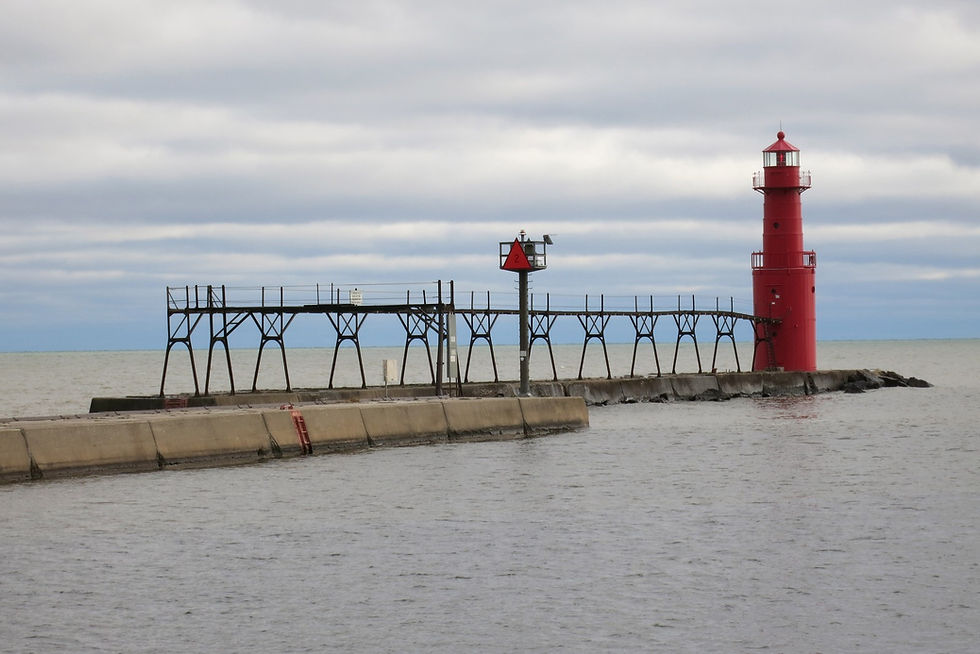
The Algoma Pierhead Light is a genuine, specific, photograph-worthy local landmark - likely the single image most guests associate with this harbor town, and worth featuring prominently in any listing description where the walk to it is actually available from the property.
This landmark's visual appeal doesn't fluctuate seasonally the way this market's actual occupancy does. The light can be photographed beautifully on a quiet Tuesday in February, even though February sits within this market's clearly named low stretch.
A listing description shouldn't imply that a strong photograph of the pierhead light, taken during any season, is itself evidence of strong booking demand during that same season - the two remain entirely separate measurements.
The practical rule: feature the pierhead light prominently and honestly in listing photography year-round, while keeping any occupancy or revenue claim tied strictly to this market's actual $15,882 typical year and its named February hole, regardless of how good a specific photograph might look.
Crescent Beach and the Ahnapee River as Genuine Landscape
Crescent Beach and its boardwalk, along with the Ahnapee River and the Ahnapee State Trail, are genuine, verifiable local landscape features worth naming specifically in a guest guide - each offers something concrete and locatable for a guest to plan around.
Visitor traffic at Crescent Beach during a busy July weekend is a genuine demand signal worth noting as guest-guide color, but it isn't itself this market's actual booked-night occupancy figure, which remains 31.1 percent across the full published year.
It's worth being specific and honest about which of these landscape features a given property can actually deliver - a listing description shouldn't imply beach or trail access that the specific property's location doesn't genuinely support.
The practical rule: name Crescent Beach, the Ahnapee River, and the state trail specifically when a property's actual location supports that access, and keep this landscape-focused guest-guide content clearly separate from any revenue or occupancy claim, which should be sourced only from this market's own $15,882 typical year.
Milwaukee Origin Isn't This Market's ADR
Milwaukee is this market's leading guest-origin city, with Madison as a secondary source - genuinely useful demand-side context describing where guests are traveling from, worth knowing for marketing and advertising targeting decisions.
This origin data doesn't itself describe this market's ADR of roughly $244 or its occupancy of roughly 31.1 percent - a guest traveling from Milwaukee still pays this specific harbor market's own rate, not a rate tied to their city of origin.
It's worth keeping this origin data separate from neighboring Kewaunee's own distinct origin pattern (Chicago) - blending the two into one generic "shore origin" description would obscure a genuinely useful distinction between these two separate markets' guest bases.
The practical rule: use Milwaukee and Madison as this market's own confirmed leading origin cities for marketing decisions, while keeping this fact entirely separate from any ADR, occupancy, or rate-setting decision, which should be based only on this market's own published figures.
Keeping Visitor Spend Off the Listing Year
Tourism-board visitor-spend totals - figures describing what day-trippers and overnight visitors collectively spend on meals, tickets, parking, and shopping across an entire season - are a genuinely different measurement from this market's own short-term rental occupancy and revenue data.
A marketing packet or underwriting memo that divides a festival's total visitor headcount by this market's 41 listings, implying some connection to occupancy, is performing a calculation the underlying data doesn't actually support - these are two unrelated measurements entirely.
This market's room tax, set at 6 percent under Chapter 40-24 and Ordinance 856, with 70 percent directed to the local chamber and 30 percent to the city, is itself a tax remittance figure - worth confirming and complying with directly, but also not itself a measure of occupancy.
The practical rule: keep any visitor-spend total, tourism-board headline number, or tax remittance figure in its own clearly labeled category, entirely separate from this market's own confirmed $15,882 typical year and 31.1 percent occupancy figure.
Kewaunee's Tourism Copy Doesn't Describe Algoma
Kewaunee, a separate harbor city down the shore, publishes its own distinct typical year of $18,551 across 33 listings, with its own separate peak-3 (August, July, June), its own named hole (April), and its own leading origin city (Chicago) - genuinely different figures from Algoma's own data across every category.
Kewaunee's own notably low professionally managed share (12.1 percent) and notably high Superhost share (72.7 percent) further distinguish it from Algoma's own host-composition data - two genuinely separate host communities worth understanding on their own terms.
A regional tourism packet or marketing document that blends these two harbor cities into a single "Lake Michigan shore" narrative risks obscuring genuinely useful, town-specific distinctions - particularly around each town's own separately confirmed peak season and named hole.
The practical rule: cite Kewaunee's figures only as clearly labeled neighbor-comparison context, and confirm specifically which of the two harbor cities a given data point, festival date, or seasonal claim actually describes before including it in Algoma-specific marketing copy.
Door County Sits North, With Its Own Separate Identity
Door County, the well-known peninsula immediately north of this market, maintains its own distinct tourism brand, visitor volume, and presumably its own separate short-term rental market data - genuinely distinct from Algoma's own Kewaunee County location.
A listing description that leads with generic Door County peninsula imagery, rather than Algoma's own specific pierhead light, river, and harbor identity, risks disappointing a guest who specifically chose this particular town rather than the broader peninsula.
This distinction matters directly for pricing and calendar decisions: Door County's own seasonal pattern, whatever it might be, shouldn't be assumed to match Algoma's own confirmed August-October-July peak-3 and February-centered hole.
The practical rule: keep any Door County or peninsula-wide reference limited to accurate, clearly labeled day-trip or regional context, never as a substitute for Algoma's own specific landmarks, its own $15,882 typical year, or its own named seasonal pattern.
Photographing the Festival Without Overpromising It
A host whose property is genuinely within walking distance of Legion Park has a real opportunity to photograph and describe that specific proximity honestly for a guest planning around Shanty Days - a genuine, concrete selling point worth naming specifically.
A host whose property requires a drive to reach the festival should describe that drive honestly, rather than implying a walk that doesn't actually exist - a guest who arrives expecting a stroll to Legion Park and instead needs a car will register that gap immediately upon arrival.
It's also worth confirming current festival hours and specific parking details before printing them in a listing description, since a three-day annual event's exact schedule and logistics can shift slightly from year to year.
The practical rule: describe a property's actual, specific relationship to Shanty Days - walking distance, drive time, or no direct connection at all - honestly and specifically, rather than a generic "festival season" claim that could apply to any property in town.
What Charter Fishing and Trail Traffic Actually Tell a Host
Charter fishing out of this harbor, and traffic along the Ahnapee State Trail, are both genuine, ongoing local activities worth naming in a guest guide - they describe real things a guest staying here can actually go do, independent of any specific festival date.
Neither of these activities converts directly into a specific, quotable occupancy or revenue figure. A busy fishing charter season or a heavily used trail doesn't itself confirm that this market's actual occupancy sits above or below its published 31.1 percent figure.
These year-round activities are, however, genuinely useful for framing this market's identity beyond a single named festival weekend - a guest interested in fishing or trail access in October, one of this market's actual peak-3 months, has real, specific things to do outside of the Shanty Days window.
The practical rule: name charter fishing and the state trail specifically as year-round guest-guide content, distinct from any single festival date, while continuing to source all occupancy and revenue claims strictly from this market's own confirmed AirROI figures.
Setting Honest Expectations for the February Hole
A host marketing a winter stay during February, this market's clearly named low point, should set guest expectations honestly: a quiet, off-season harbor town experience, rather than an implied festival-level or peak-season atmosphere the market's own data doesn't support.
This honest framing can still be genuinely appealing to the right guest - someone specifically seeking a quiet winter getaway, interested in open-water photography opportunities at the pierhead light, or simply wanting a lower-cost off-season rate.
A host shouldn't assume that offering a longer minimum-stay option during February will independently reverse this market's named seasonal softness - a minimum-stay setting is a booking-policy choice, not evidence of underlying winter demand this market's data doesn't otherwise show.
The practical rule: market February honestly as this town's genuine off-season character, price it accordingly below peak-3 rates, and avoid implying winter demand strength that this market's own 31.1 percent full-year occupancy figure doesn't actually support.
How a Host Should Actually Read Tourism Copy
The most useful way to read tourism copy - festival dates, landmark descriptions, and visitor-volume claims - is as draft material for an honest, specific guest guide, not as a substitute for this market's own confirmed short-term rental performance data.
Shanty Days, the pierhead light, Crescent Beach, and the Ahnapee River can all appear specifically and accurately in a listing description when a given property's actual location and the actual calendar genuinely support featuring them.
None of this tourism-landscape content should ever be allowed to overwrite or imply something different from this market's own confirmed $15,882 typical year, 31.1 percent occupancy, or its clearly named February hole.
The practical rule: treat tourism copy and short-term rental market data as two genuinely separate categories of information, useful together but never substitutable for each other, and always sourced back to their own separate, confirmed origin.
Related Reading
Related reading for Algoma Wi Tourism, WI hosts: same-town spine first, then nearby geo lines. Skip costume national dumps that do not underwrite this driveway.
Frequently Asked Questions
Does Shanty Days count as occupancy for an Algoma listing?
No. Shanty Days (August 14-16, 2026, at Legion Park) is genuine visitor demand within August, this market's strongest month, but it's a three-day festival weekend, not the full year. This market's actual occupancy is 31.1 percent across the full year, not evidence tied specifically to one festival weekend.
Does the pierhead light indicate strong occupancy?
No. The Algoma Pierhead Light is landscape — it photographs well year-round, including during February, this market's clearly named low point. A landmark's visual appeal doesn't move this market's actual occupancy figure, so it belongs in a guest guide, not in a demand claim.
Should Crescent Beach traffic count as this market's occupancy?
No. Crescent Beach and boardwalk visitor traffic is genuine demand color, worth naming in a guest guide, but it isn't the same as this market's actual 31.1 percent occupancy figure across 41 listings. Foot traffic at a landmark doesn't translate directly into booked nights.
Does Milwaukee origin mean stronger ADR?
No. Milwaukee is this market's leading guest-origin city, but that describes where guests travel from, not this market's actual $244 ADR. A guest from Milwaukee still pays this harbor market's own established rate, the same as a guest from Madison or anywhere else.
Should visitor-spend totals be included in the listing year?
No. Tourism-board visitor-spend figures (meals, tickets, parking) are a separate measurement from this market's own $15,882 typical year. Keep them in a clearly separate, labeled category rather than folding a townwide spending total into a single listing's own revenue picture or underwriting math.
Can Kewaunee's tourism copy describe Algoma?
No. Kewaunee is a separate harbor city with its own $18,551 typical year, its own peak-3 (August, July, June), and its own named hole (April) — genuinely different from Algoma's own confirmed figures, even though the two towns sit close together on the map.
Does Door County's tourism identity apply to Algoma?
No. Door County is a separate peninsula immediately north, with its own tourism brand and its own market data. Algoma's own pierhead light, river, and harbor identity stand on their own and shouldn't be marketed as an extension of Door County's larger visitor draw.
What's Algoma's actual room tax rate?
6 percent, under Chapter 40-24, Ordinance 856, with 70 percent directed to the chamber and 30 percent to the city — a tax remittance figure, not a measure of occupancy, and one that applies regardless of how a listing performs in any given month.
How should a host read festival and landmark copy?
As draft material for an honest guest guide — genuine and worth featuring specifically when a property's location supports it, but never as a substitute for this market's own confirmed $15,882 typical year or its named February hole. Landmarks sell the town; the labeled numbers price the stay.
What is Algoma's actual seasonal pattern?
Peak-3 is August, October, and July, with August as the single strongest month. February is the clearly named hole, sitting within a broader January-through-March low stretch, and neither end of that pattern should be borrowed from a neighboring town's calendar.
Work with Crest & Cove Creative
Shanty Days draws guests to Algoma the weekend of August 14-16, but it doesn't create the town's peak month, August was already this 41-listing market's strongest before the festival's dates are even counted.
We help Algoma hosts feature Shanty Days, the pierhead light, and Crescent Beach honestly without overstating what one festival weekend can do. Send your listing to crestcove.co/audit or (256) 998-7502.
Reach out at crestcove.co or (256) 998-7502.


Comments