
Market Neskowin by Proposal Rock at Low Tide, Not Stock Beach Copy

Updated: Aug 26
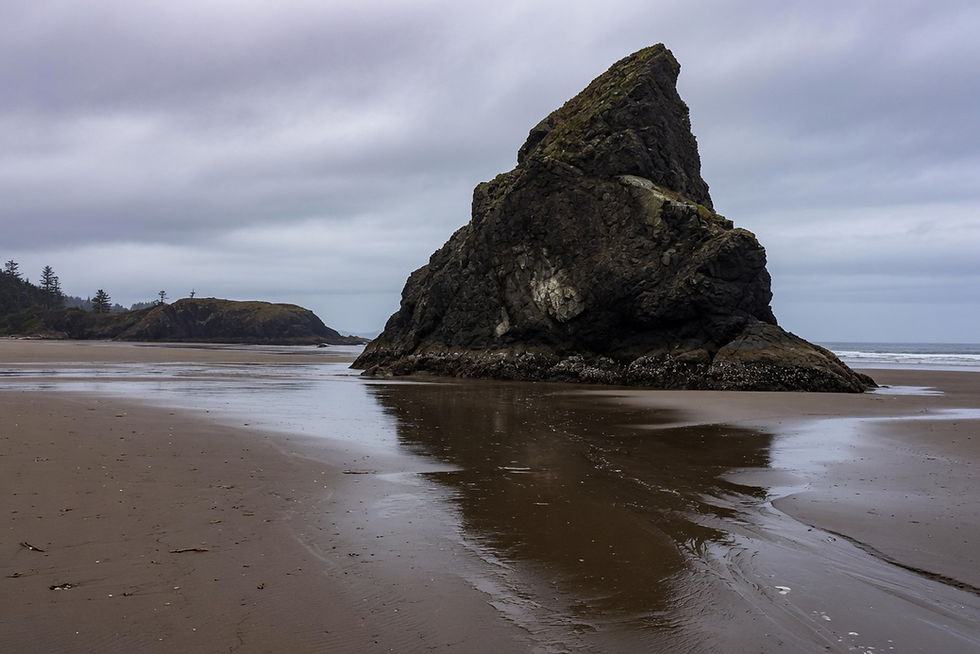
Neskowin, Oregon — an unincorporated coastal community sitting between Lincoln City and Pacific City — shows a confirmed typical year of about $38,932 across 154 listings, with ADR at $355, occupancy at 35.9 percent, and RevPAR at $141: a genuine mid-coast Oregon market with its own specific identity, not a generic stretch of Highway 101 beach town.
This is not legal advice; it's a practical marketing guide. A guest who specifically searched 'Neskowin' was looking for this exact place — the walk to Proposal Rock, the ghost forest visible at low tide, the small village itself — not a generic Oregon beach-town experience interchangeable with any stretch of coast between Lincoln City and Cannon Beach.
The Guest Typed Neskowin, Not a Generic Oregon Beach Search
A guest who specifically searches 'Neskowin' is signaling genuine intent for this exact unincorporated community's identity — not a broad 'Oregon coast' or generic beach-town search that could apply equally to Lincoln City, Pacific City, or Cannon Beach.
That specific search intent means a listing's marketing copy should open by naming Neskowin directly and its actual defining features, giving the guest immediate confirmation that this listing genuinely serves the exact destination they searched for.
A listing that opens with interchangeable beach-town language instead of Neskowin's own specific identity risks a real mismatch between what the guest searched for and what the marketing copy actually delivers in that critical first impression — the moment a guest decides whether to keep reading or click back to the search results.
This matters more in an unincorporated community like Neskowin than it might in a larger, better-known city. There's no city desk or chamber-of-commerce tourism page doing the generic-copy work for the host; the listing itself is often a guest's first real introduction to what makes this specific stretch of coast different from its more heavily marketed neighbors.
Photograph the Proposal Rock Walk — But Only at Low Tide
The walk along Neskowin Beach to Proposal Rock is this market's genuine, defining visual and experiential landmark — a real feature worth featuring prominently in marketing photography, but one that requires honest, tide-accurate representation to avoid misleading a prospective guest.
The ghost forest and the actual approach to Proposal Rock are genuinely visible and walkable specifically at low tide. A high-tide photograph that shows only water, without the walkable beach approach, mis-sells what a guest can actually expect to experience during much of their visit.
Photograph this walk specifically during low-tide conditions to accurately represent what a guest can genuinely access, rather than selecting a more dramatic but less representative high-tide image that overstates the walk's constant accessibility. A guest who arrives expecting the low-tide view and finds it underwater is a guest who feels misled, however accidentally.
A practical operational note worth adding to the about section itself, not just the photo captions: tide tables shift throughout the year, and a guest planning a trip around walking to Proposal Rock benefits from knowing that in advance rather than discovering it on arrival. A short, honest line pointing guests toward checking local tide conditions before their visit does more for guest satisfaction than a caption alone.
Proposal Rock Is Landscape, Not an Occupancy Statistic
Proposal Rock is a genuine, beloved local landmark that draws visitors to walk the beach and take in the view — but it functions as landscape and scenic context rather than a direct occupancy or booking-rate statistic for any specific property in this market.
A listing shouldn't imply that proximity to Proposal Rock, or the popularity of the beach walk, translates directly into a specific booking advantage. It's genuine visitor-interest content, not a market performance figure that overrides this market's confirmed 35.9 percent occupancy.
The same distinction applies to other local visitor draws in the area — the marsh, the golf course, general village foot traffic — all genuine visitor demand and scenic appeal, none of it evidence of actual booked-night performance for a specific listing.
The practical value in naming these features precisely is guest targeting, not occupancy inflation. A birdwatcher researching the marsh, a golfer researching the course, and a family wanting an easy village walk are three different guests with three different priorities — a listing that names the specific feature closest to it, rather than gesturing vaguely at 'lots to do nearby,' reaches the right guest for what the property actually offers.
Peak-3 Is August, June, September — August Is the Confirmed Peak
This market's confirmed peak-3 is August, June, and September, with August standing as the single confirmed peak month — a straightforward late-summer-into-early-fall Oregon coast pattern worth pricing around directly.
January stands as this market's confirmed hole month, the genuine low point in annual demand, distinct from the confirmed peak period and worth planning for honestly rather than assuming steady demand across the calendar.
Price August at genuine peak strength, with June and September as strong but distinct supporting months within that same peak-3 window, while planning realistically for January's confirmed softness rather than hoping tide-walk photography alone carries the winter calendar.
Origin: Portland First, Then Seattle
Portland is confirmed as this market's primary guest origin, with Seattle as a secondary contributor — a specific, actionable detail for targeting marketing spend toward the greater Portland metro area rather than assuming a more distant regional city drives the majority of demand.
This Portland-forward pattern is worth building marketing around directly: emphasizing drive-time convenience from the greater Portland area specifically, with Seattle included as a secondary but genuine audience in broader marketing efforts.
A host who assumes Seattle drives the majority of guests, perhaps because of that city's larger population, may be misdirecting marketing spend away from this market's actual, confirmed primary origin city. Population size doesn't automatically translate into booking share.
Forks, Washington's $35,529 Is a Different Peninsula — Keep It Off Every Comp
Forks, Washington, a town on the Olympic Peninsula, shows its own confirmed figure of about $35,529 — a genuinely separate market from Neskowin's own $38,932, situated on an entirely different peninsula in a different state with its own distinct character and guest base.
A marketing packet, comparison table, or listing tile that includes Forks' figure alongside Neskowin's data, or implies the two markets share comparable guest profiles or seasonal patterns, is blending two genuinely unrelated coastal markets into a misleading comparison.
A host or agency building competitive or regional context materials should recognize Forks and Neskowin serve different guest bases in different states, with no genuine basis for direct comparison. Keep Forks' figure entirely off Neskowin comps and marketing tiles.
Don't Blend Neskowin Into Generic Lincoln City-to-Cannon Beach Copy
Lincoln City, Pacific City, and Cannon Beach are all genuine, distinct Oregon coast towns bordering or near Neskowin, and a marketing piece covering this broader stretch of coast shouldn't blend Neskowin's specific identity into generic language that could apply equally to any of these separate towns.
This blending failure mode is the core gap that separates competitive listings in this market: a listing with genuinely Neskowin-specific copy and photography stands apart from listings using interchangeable Lincoln City-to-Cannon Beach beach-town language that fails to differentiate at all.
A host who invests in Neskowin-specific content — naming Proposal Rock, describing the actual tide-dependent walk, referencing the village's specific character — creates a genuine competitive advantage over listings relying on generic regional beach-town language that could describe any of a dozen nearby towns.
Professional Management at 46.8 Percent, Independents Still Hold the Majority
Professionally managed listings account for approximately 46.8 percent of this market's 154-listing sample, with Meredith holding a notable 31 listings — a significant, substantial presence, though independents collectively still hold more than half of this market's total listings.
This near-even split between professional and independent management means a new independent host entering this market faces genuine professional competition, but still operates within a market where independent hosts collectively represent the majority.
Superhost designation sits at 27.9 percent across this market — a more modest share compared to some other markets, suggesting real room for a dedicated independent host to differentiate through consistent guest satisfaction rather than assuming the bar is already saturated.
Meredith's 31-listing footprint is worth understanding as a real, specific competitor rather than a stand-in for 'professional management' generally. An independent host benchmarking their own listing's presentation against the market isn't competing against an abstract concept — they're competing against one identifiable company's actual photos, pricing, and copy, alongside a large field of other independent operators doing the same thing.
Stay Length and Lead Time: A Short Coastal Weekend, Moderate Planning
This market's confirmed average stay of 3.3 nights, alongside a 61-day average lead time, suggests a guest planning a genuine short coastal weekend getaway with moderate advance planning — roughly nine weeks ahead of their actual visit.
That lead time gives a host a specific, practical window for pricing releases and marketing pushes ahead of the confirmed August-June-September peak period, including any tide-dependent seasonal marketing around the Proposal Rock walk.
A host who waits until much closer to peak season to update pricing or marketing copy risks missing a meaningful share of this market's moderately advance-planning guest base. Budget seasonal content updates against that 61-day window rather than a last-minute scramble.
The relatively short 3.3-night average stay also means turnover cadence deserves real attention in the operating plan, distinct from the marketing calendar. A property that turns over more frequently across the peak season has different cleaning and maintenance logistics than a market built around week-long bookings, which is worth factoring into staffing and cost planning alongside the pricing strategy.
Writing an About Section That Names the Actual Walk, Not a Generic Tide Claim
A well-built about section for a Neskowin listing describes the actual Proposal Rock walk with genuine specificity — the honest walking distance from the property, the tide-dependent nature of the approach, and what a guest can realistically expect to see depending on when they arrive at the beach.
This level of specific, tide-aware detail differentiates a genuinely informative listing from one that simply claims 'beach access' or 'ocean views' without addressing the practical reality that this particular landmark's accessibility changes throughout the day based on tide conditions.
A guest who reads accurate, specific tide information before booking arrives with correctly calibrated expectations — which directly supports the kind of positive review outcomes that honest, detailed marketing tends to produce in a market where this specific landmark is a genuine draw. The same segmented honesty applies to the marsh, the golf course, and village foot traffic: match the feature named to what the specific property's location actually supports, rather than claiming all of it for every listing regardless of where it actually sits.
Put together, an honest Neskowin listing reads as a small, specific set of true claims rather than a longer list of borrowed or exaggerated ones: the actual walk to Proposal Rock at the tide when it's visible, the actual distance to the marsh or golf course if either is genuinely close, and the actual character of a village that isn't Lincoln City or Cannon Beach dressed up to look interchangeable with them. That specificity, more than any single landmark, is what a guest who searched this exact town is actually looking to confirm.
Related Reading
Related reading for Neskowin, OR hosts: same-town spine first, then nearby geo lines. Skip costume national dumps that do not underwrite this driveway.
Frequently Asked Questions
What's the confirmed typical year for a Neskowin rental?
About $38,932 across 154 listings, with ADR at $355 and occupancy at 35.9 percent, for the current AirROI vintage. This is Neskowin's own figure — Forks, Washington's separate $35,529 has no basis for comparison and shouldn't appear on the same comp sheet.
When should I photograph the Proposal Rock walk?
At low tide, when the approach and ghost forest are genuinely visible and walkable. High-tide photos, which show mostly water, mis-sell what a guest can actually expect to see and walk during much of their stay.
Does Proposal Rock's popularity mean higher occupancy for nearby listings?
No. It's genuine landscape and visitor-demand context, not an occupancy or booking-rate statistic. The market's confirmed occupancy is 35.9 percent regardless of how popular the beach walk is with day visitors.
What's the confirmed peak season in Neskowin?
August, June, and September, with August as the single confirmed peak month. January is the confirmed hole. Price August at the top of the gradient and plan honestly for the January soft stretch.
Where do most Neskowin guests come from?
Portland is the confirmed primary origin market, with Seattle as a secondary contributor. Marketing spend aimed primarily at the greater Portland metro area matches the actual confirmed guest origin better than an assumption based on population size alone.
Can I compare my Neskowin listing to Forks, Washington's figures?
No. Forks is a genuinely separate, unrelated coastal market on a different peninsula in a different state. Keep its $35,529 figure off every Neskowin comp table or marketing tile.
Should I use generic Oregon coast beach-town language in my listing?
No. Neskowin-specific copy and photography — naming Proposal Rock, the tide-dependent walk, the village's specific character — is the actual competitive gap that separates strong listings here from generic Lincoln City-to-Cannon Beach copy.
How common is professional management in Neskowin?
Professional management covers 46.8 percent of the market, with Meredith holding 31 listings as the largest named manager. Independents still collectively hold more than half of the market's total listings.
What's the confirmed average stay length and lead time?
3.3 nights average stay, with a 61-day average lead time — a short coastal weekend booked with moderate advance planning. Time marketing pushes roughly nine weeks ahead of your target month.
When is the slowest month in Neskowin?
January is the confirmed hole month. Plan honestly for reduced demand rather than assuming Proposal Rock photography or marsh and golf course content can carry occupancy through the winter stretch.
Work with Crest & Cove Creative
A guest who typed Neskowin wanted the tide-dependent walk to Proposal Rock and the ghost forest, not a generic Oregon beach photo that could be Lincoln City or Cannon Beach. A high-tide photo alone can mis-sell the whole listing.
We help Neskowin hosts market the specific, tide-honest landmarks guests actually searched for, instead of stock beach-town language or a comp pulled from an unrelated Washington peninsula town. If your gallery still needs a low-tide reshoot, send us the live listing.
Reach out at crestcove.co or (256) 998-7502.


Comments