
Str Marketing Agency Worth It Flagstaff Williams, AZ: What Independent

Updated: Aug 27
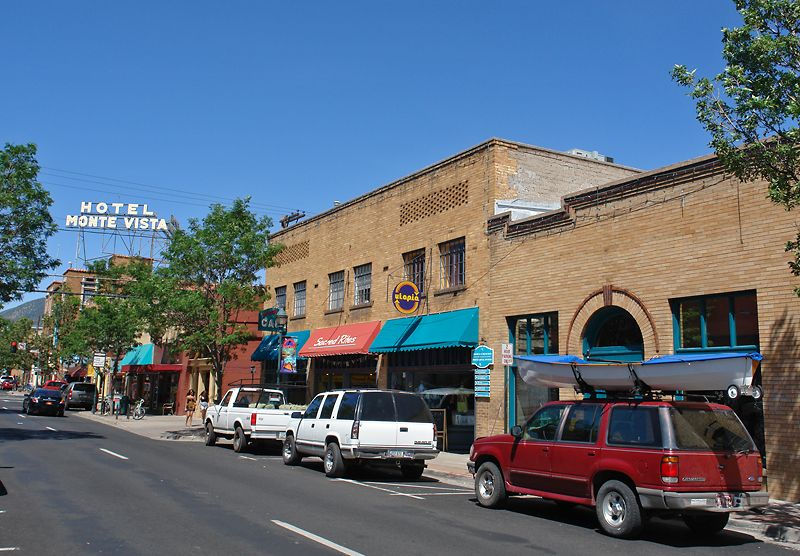
If you own a short-term rental in Flagstaff or Williams, Arizona, you've probably had the same nagging thought at some point: is what I'm doing right now, booking calendars myself, tweaking a listing description once a year, maybe using whatever photos the property manager took when you first listed, actually capturing what this market can produce? For a lot of short-term rental owners in smaller Arizona towns, the honest answer is close enough, don't overthink it. Flagstaff is a genuine exception to that rule, and it's worth walking through why.
Flagstaff isn't a single-season mountain town propped up by one tourist draw. It sits at the intersection of four separate demand cycles: Grand Canyon gateway traffic, a ski season at Arizona Snowbowl, an university calendar tied to Northern Arizona University, and Route 66 heritage tourism, plus Phoenix and southwest Arizona residents who drive up in summer just to escape the heat. That combination gives a well-marketed Flagstaff property more months of the year worth actively selling than most Arizona short-term rental markets get. Williams, about 30 miles west, is a much smaller market riding mostly on its own Grand Canyon Railway draw and Route 66 identity. The calculus below applies differently there, and we'll flag where.
Why Flagstaff's Demand Curve Runs Four Seasons, Not One
Most short-term rental markets have one obvious selling season and three quiet ones. Flagstaff has four selling seasons, and each one appeals to a different kind of guest searching different keywords with a different set of priorities. Summer travelers are booking a Grand Canyon base camp and want proximity, parking for a rental car, and an easy checkout for early park entries. Fall travelers are chasing aspen color on the San Francisco Peaks and want a property that photographs well against that backdrop. Winter travelers are Snowbowl skiers who care about gear storage, covered parking, and distance from the mountain, which sits about 14 miles and roughly 30 minutes from town. And NAU's calendar drives a steady, less glamorous but very real demand pulse around move-in weekends, family weekend, graduation, and athletics, filling gaps the tourist seasons leave open.
Generic marketing treats all of that as one audience: near the Grand Canyon. A property description, photo set, and set of listing keywords built around a single blanket pitch will always underperform four purpose-built ones. That's the specific gap a marketing-focused agency is positioned to close: separate photography and copy that sell the ski season to skiers, the Canyon season to Canyon visitors, and the shoulder seasons to NAU families and leaf-peepers, rather than one generic listing that mentions all four in passing and captures none of them fully.
The Numbers, Honestly
As of AirDNA data from May 2026, Flagstaff has roughly 2,741 active short-term rental listings, an average daily rate around $270, and average annual revenue per listing near Those are healthy numbers for a market this size. But the year-over-year trend is worth stating plainly rather than glossing over: revenue is essentially flat, up 0.4%, occupancy is down 4.1%, ADR is down 0.7%, RevPAR is down 7.3%, and active listings are down 13.6%. That's real softening, not a market in crisis, but not one to assume will keep climbing on autopilot either. Fewer active listings combined with softer occupancy suggests a market working through some correction, which, if anything, raises the value of differentiated marketing rather than lowering it, since a shrinking listing count means less of the market is actively fighting for the same search terms.
Williams doesn't have comparable published data at this scale. It's a much smaller market, and any owner there should treat market-level statistics built for Flagstaff as directional at best, not as a stand-in for their own numbers. Williams, about 30 miles west, is a much smaller market riding mostly on its own Grand Canyon Railway draw and Route 66 identity.
No Dedicated Flagstaff Host Community on Facebook
One thing worth noting honestly: despite Flagstaff's real size, no dedicated Flagstaff STR-specific Facebook group turned up in research as of this writing. Searches surface general real-estate and long-term-rental groups for the area, not a host community trading calendar tips, cleaner referrals, or local regulatory updates the way many resort towns have. That's a meaningful signal. In markets with an active host Facebook group, some of an owner's growth can come from local word-of-mouth and shared bookings. In Flagstaff, without that channel, organic search visibility carries more of the weight, which is exactly the lever a marketing agency pulls, and exactly why it matters here more than in a market where a Facebook group is already doing some of that work for free.
Three Real Options for Flagstaff and Williams Owners
Before comparing anything, it helps to lay out the actual choices on the table, since a marketing agency isn't the only option and isn't automatically the right one. That's the gap where a marketing-only agency's fee is most likely to pay for itself, not because the market guarantees it, but because the property already has demand seasons it isn't actively selling into.
Option 1: Full-Service Property Management
A full-service local property manager handles guest communication, cleaning coordination, pricing, and marketing under one roof, typically for a percentage of revenue. This is the right call for an owner who wants to be hands-off entirely: no calendar-checking, no coordinating cleaners, no writing listing copy. The tradeoff is cost. Full-service fees run higher than a marketing-only retainer because they're covering operations, not just visibility.
Option 2: DIY
Some Flagstaff owners manage everything themselves: pricing, guest messages, photos, listing copy, and that's a completely reasonable choice, especially for an owner with one property who enjoys the work or has time to spare. The limitation isn't effort, it's specialization. Writing four season-specific listing descriptions, refreshing photography for each, and tracking which keywords each season's guests actually search takes a different skill set than running the property day to day, and it's the piece most DIY owners let slide first when time gets tight.
Option 3: Flat-Retainer Marketing-Only Agency
A marketing-only agency sits between those two: the owner keeps running day-to-day operations, or keeps their existing property manager for that piece, while the agency handles listing optimization, photography direction, seasonal copy, and search visibility for a flat fee rather than a percentage of revenue. This is the option that maps most directly onto Flagstaff's specific opportunity. An owner already comfortable operating the property but not equipped to build and maintain four season-specific marketing angles gets exactly the piece they're missing, without paying a full-service percentage for guest communication and cleaning coordination they don't need help with.
Who This Is, and Isn't, Right For
This isn't a fit for every owner, and it's worth saying so directly. An owner with a single Williams condo that's booking steadily on autopilot with minimal effort has comparatively little to gain from a dedicated marketing engagement. The upside is smaller in a smaller market, and the property may already be capturing most of what it reasonably can. The stronger case is a Flagstaff owner sitting on a property capable of pulling in ski-season skiers, fall leaf-peepers, and NAU families, but whose listing and photos currently only speak to summer Grand Canyon tourists. That's the gap where a marketing-only agency's fee is most likely to pay for itself, not because the market guarantees it, but because the property already has demand seasons it isn't actively selling into.
The Regulatory Backdrop, Briefly
This isn't the focus here, but it's worth a short honest note. Arizona state law, A.R.S. Section 9-500.39, effective 2017, limits how far cities can go in banning or restricting short-term rentals outright, though a 2022 amendment restored meaningful local authority. Cities can require permits, notification, and insurance, and can levy fines; they just can't ban short-term rentals wholesale. Flagstaff's own ordinance, effective November 1, 2023, requires a TPT license, neighbor notification, an annual city license, and tax remittance. Williams is a separate jurisdiction, and no confirmed standalone Williams-specific ordinance turned up in research. Owners there should verify current requirements directly with the town rather than assuming Flagstaff's rules apply.
Related Reading
Keep reading in the Flagstaff market spine and nearby towns in the same region: same-cluster pages hosts can use without costume-corridor copy.
Flagstaff Williams, AZ STR Market Report for Independent Hosts
DIY vs Hire Marketing for Independent Hosts for Independent Hosts
Winning Remote Worker Bookings in Flagstaff AZ S Shoulder Season
How Flagstaff AZ Hosts Can Beat Mud Season a Shoulder Season Strategy
Flagstaff Williams Grand Canyon Route 66 Trails for Independent Hosts
Sun: Host Copy, Not a Visitor Brochure for Independent Hosts
How to Market a Short-Term Rental in Prescott for Independent Hosts
How to Market a Short-Term Rental in Flagstaff or Williams Selling
Is Flagstaff or Williams a Better Short Term Rental Investment in 2026
DIY vs Hire Marketing for Should Prescott Hosts Manage Their Own STR
Frequently Asked Questions
Is a marketing-only agency the same thing as a property manager?
No — a property manager typically handles guest communication, cleaning coordination, and day-to-day operations, usually for a percentage of revenue. A marketing-only agency instead focuses on listing optimization, photography direction, and search visibility for a flat fee, while the owner or their existing property manager keeps handling operations. It sits between full-service management and DIY, filling in specifically the marketing piece an owner isn't equipped to build themselves.
How is Flagstaff different from a typical single-season mountain town for marketing purposes?
Flagstaff sits at the intersection of four separate demand cycles rather than one: Grand Canyon gateway tourism, an Arizona Snowbowl ski season, Northern Arizona University's academic calendar, and Route 66 heritage travel, plus Phoenix-area residents escaping summer heat. That gives a well-marketed property more months of the year worth actively selling into than most Arizona short-term rental markets get, since each season pulls a genuinely different kind of guest searching different terms.
Does Williams have the same marketing opportunity as Flagstaff?
Not really — Williams is a much smaller market built mostly around its Grand Canyon Railway depot and Route 66 identity, without Flagstaff's university calendar or ski traffic layered on top. An owner there with a single property already booking steadily on autopilot generally has less to gain from a dedicated marketing engagement than a Flagstaff owner sitting on unrealized off-season demand, since the upside is simply smaller in a smaller market.
Is the Flagstaff short-term rental market growing or slowing down right now?
As of AirDNA data from May 2026, it's best described as softening rather than growing or crashing. Revenue is essentially flat year-over-year (up 0.4%), while occupancy is down 4.1%, ADR is down 0.7%, RevPAR is down 7.3%, and active listings are down 13.6%. That combination — fewer listings and softer occupancy — reads as a market working through correction, which if anything raises the value of differentiated marketing rather than lowering it, since less of the market is competing for the same search terms.
How big is the Flagstaff short-term rental market, and what's a typical rate?
As of AirDNA data from May 2026, Flagstaff has roughly 2,741 active short-term rental listings and an average daily rate around $270. Williams doesn't have comparable published data at that scale, so an owner there should treat Flagstaff's market-level numbers as directional at best rather than a stand-in for their own property's performance.
Why does Flagstaff's demand curve running four seasons instead of one actually matter for marketing?
Generic marketing treats all four seasons as one audience — near the Grand Canyon — and a single blanket pitch built that way will underperform four purpose-built ones. Summer travelers want proximity and easy checkout for early park entries, fall travelers want a property that photographs well against the aspen color on the San Francisco Peaks, winter travelers care about gear storage and covered parking near Snowbowl, and NAU's calendar drives its own steady demand around move-in weekends, family weekend, and graduation. Separate photography and copy built for each season is the specific gap a marketing-focused agency is positioned to close.
Is there a local host community Flagstaff owners can lean on instead of paying for marketing help?
Not really — despite Flagstaff's size, no dedicated Flagstaff STR-specific Facebook group turned up in research; searches mostly surface general real-estate and long-term-rental groups rather than a host community trading calendar tips or cleaner referrals. In markets with an active host group, some growth comes from word-of-mouth for free. Without that channel in Flagstaff, organic search visibility carries more of the weight — which is exactly the lever a marketing agency pulls.
Who is a marketing-only agency actually a good fit for in this market, and who should skip it?
The stronger case is a Flagstaff owner sitting on a property capable of pulling in ski-season skiers, fall leaf-peepers, and NAU families, but whose listing and photos currently only speak to summer Grand Canyon tourists — that's the gap where the agency's fee is most likely to pay for itself. An owner with a single Williams condo booking steadily on autopilot with minimal effort has comparatively little to gain, since the property may already be capturing most of what it reasonably can.
What are the three real options for a Flagstaff or Williams owner weighing help?
Full-service property management handles guest communication, cleaning coordination, pricing, and marketing together, usually for a percentage of revenue — the right call for an owner who wants to be fully hands-off. DIY means managing everything yourself, which works fine for many single-property owners but tends to lose the season-specific marketing piece first when time gets tight. A flat-retainer marketing-only agency sits between the two, handling listing optimization and search visibility for a flat fee while the owner keeps running operations.
What does the short-term rental regulatory picture look like in Flagstaff and Williams?
Arizona state law (A.R.S. Section 9-500.39, effective 2017, amended in 2022) limits how far cities can go in banning short-term rentals outright, though it does let them require permits, notification, and insurance, and levy fines. Flagstaff's own ordinance, effective November 1, 2023, requires a TPT license, neighbor notification, an annual city license, and tax remittance. Williams is a separate jurisdiction, and no confirmed standalone Williams-specific ordinance turned up in research, so owners there should verify current requirements directly with the town.
Work with Crest & Cove Creative
A Str listing fails when the about block sells a costume overnight the driveway and clerk path cannot keep. Guests who typed flagstaff or flagstaff / williams deserve the hall and gallery that match the tax map.
We help Str hosts around flagstaff / williams keep listing and marketing copy honest so the first paragraph cannot sit on the wrong town. Neighbor mix-ups stay off the opening, and the gallery has to match arrival weekend before anyone pays for more words.
Reach out at crestcove.co or (256) 998-7502.



Comments