
Winning Remote Worker Bookings in Flagstaff AZ S Shoulder Season

Updated: Aug 27
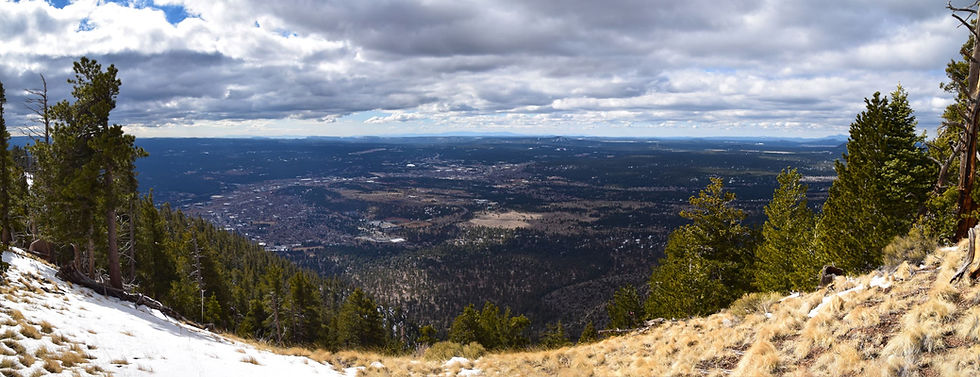
Flagstaff's calendar has two loud seasons and two quiet ones. Summer brings hikers escaping the Phoenix heat. Winter brings skiers heading to Arizona Snowbowl, about fourteen miles and thirty minutes up the mountain from town. In between sit two stretches most owners just try to survive: a late-winter thaw that softens the high trails, and an early-fall lull before ski season fills back up. Both windows get treated as dead time to be discounted through and forgotten.
There is a guest who wants exactly what those windows offer, though, and most Flagstaff listings never say a word to them. Remote workers and location-independent professionals are not looking for a hot tub or a curated activity list. They are looking for a quiet mountain town at 7,000 feet with real elevation and real scenery, minus the summer-weekend traffic and the ski-season lift lines, at a fraction of what the same cabin costs in July or January. That is precisely the shoulder-season trade Flagstaff has to offer, and it converts when a listing names it plainly instead of leaning on generic "peaceful retreat" language that could describe any cabin anywhere.
A Different Guest, Booking a Different Way
A remote worker planning a few weeks in Flagstaff does not behave like a weekend skier or a peak-summer hiker. The booking window runs longer, typically fourteen to sixty days out rather than the last-minute or few-weeks-ahead pattern common to short getaways. The stay itself runs longer too, usually somewhere between two and six weeks rather than a two- or three-night trip built around a single activity.
That difference in behavior changes what the guest is actually evaluating. A weekend guest scans photos for the view, the hot tub, the proximity to trailheads. A month-long remote worker scans for whether they can actually get a full day of work done in the space. Workspace functionality outranks amenity checklists for this guest, by a wide margin. A listing that leads with mountain views and says nothing concrete about the desk situation is asking this guest to gamble on a month of their income, and most will not take that gamble on an unknown.
What Listing Copy Needs to Say Plainly
Vague reassurance does not close this guest. "WiFi included" is table stakes on every listing on the platform; it tells a remote worker nothing about whether a video call will hold together through a two-hour client meeting. What works instead is specificity, stated as fact rather than as a selling point:
Verified upload and download speeds, not just a claim that WiFi exists. Run an actual speed test from the unit and put the number in the listing. A real desk and a proper chair, described and photographed as what they are, not a side table pressed into service. Good natural light in the spot where a laptop would realistically sit, since that is where video calls happen and where a guest will notice bad lighting on day one, not day fourteen.
None of this needs to replace the mountain-town appeal that makes Flagstaff worth choosing over a generic short-term rental market. It needs to sit alongside it. A remote worker still wants the trails and the elevation and the air; they just also need proof the workday will function before they commit five or six weeks of income to a property they have only seen in photos.
The Trade Worth Naming Directly
Flagstaff's specific shoulder-season pitch is a trade a remote worker makes on purpose, and it is worth spelling out in the listing rather than leaving the guest to infer it. Trail access and mountain air without summer-weekend traffic or ski-season lift lines, at a fraction of peak-season cost. Copy that names this directly, something close to "work from Flagstaff during the quieter shoulder weeks and have the trails to yourself once the workday ends," converts better than a generic peaceful-retreat line because it tells the guest exactly what they are getting and why now is the right window to get it.
The lower-elevation network in and around town, including the Flagstaff Urban Trail System, Schultz Creek, and the approach routes up Mount Elden, tends to clear before the higher terrain does. That gives a remote worker staying for weeks, not days, options even during a window when the upper mountain is still soft. A listing or a guest guide that says so, honestly and by trail name, builds more trust than one that promises unrestricted hiking access in every season.
Reading the Two Shoulder Windows Separately
Flagstaff's two quiet stretches are not the same window wearing two different names, and treating them identically in marketing undersells both. The late-winter thaw runs roughly through April, clearing progressively into May depending on how heavy the snow year was, as meltwater softens the higher trails before the lower network dries out. A remote worker booking into this window is trading a soft upper mountain for a genuinely dramatic snowmelt landscape, cooler temperatures than anywhere in the Phoenix valley, and rates that have not yet climbed to summer levels.
The fall window reads differently. It runs roughly from early fall into the run-up to ski season, somewhere in the late September through November range, and it trades summer's hiking crowds and heat for crisp air, changing aspen color at elevation, and a town that has emptied out before the ski crowd arrives. A listing built for the remote-worker guest can speak to each window on its own terms rather than lumping both into a single generic "off-season" pitch, and a guest who reads copy that clearly understands the calendar trusts the rest of the listing more.
Pricing the Long Stay Correctly
A thirty-day discount somewhere in the thirty to forty percent range off the peak nightly rate is standard practice for this guest type, and it is not generosity, it is math. A month-long stay at a discounted rate with one check-in, one check-out, and no turnover cleaning in between is worth more in aggregate than the same thirty nights sold as ten scattered two- or three-night bookings, each one requiring a full clean, a restock, and a new set of guest communications. Occupancy that would otherwise sit empty during a genuine shoulder-season lull becomes revenue with a fraction of the operating overhead.
The math only works if the discount is set up as a distinct long-stay rate rather than left to whatever the platform's default weekly or monthly discount happens to be. Reviewing that setting specifically for the shoulder-season months, rather than assuming it is already dialed in, is worth the ten minutes it takes.
Operational Details That Matter for a Month-Long Guest
A few practical adjustments make the difference between a listing that merely allows long stays and one that is genuinely built for them. Cancellation policies need enough flexibility to make sense for a thirty-plus day commitment; a policy written for weekend bookings can feel disproportionate to a guest weighing five or six weeks of plans.
Honesty about which weeks genuinely have poor weather matters more for this guest than for a two-night visitor. Overselling hiking access during the thaw, when trails are legitimately soft and closures are common, costs more in a bad review from someone who stayed a month and noticed than it ever saves in a marginal extra booking. Loose, accurate language, rather than a hard date range, holds up better here since snow years vary and the thaw does not run on a fixed calendar.
A local coworking space or a coffee shop with genuinely reliable WiFi, listed as a backup recommendation in the guest guide, gives a remote worker a fallback for the one afternoon a rural internet connection has a bad day. It costs nothing to include and it signals, better than almost anything else in the guide, that the space was set up with this guest's actual workday in mind.
Setting Expectations Instead of Overselling Them
The instinct with any slow-season booking push is to oversell how much is available and undersell what might be limited, and that instinct backfires hardest with a guest staying long enough to find out. A weekend guest who discovers a trail is closed loses an afternoon. A remote worker who discovers it on week two of a six-week stay has weeks left to notice, and weeks left to mention it in a review that will sit on the listing far longer than the booking did.
The safer approach, and the one that tends to produce better reviews from this guest type specifically, is to build the guest guide around what is reliably true for the length of a typical stay: the workspace, the town itself, Flagstaff's genuine four-season character at 7,000 feet, and roughly thirty degrees of relief from Phoenix-area heat that holds regardless of trail conditions on any given week. Trail access gets framed as a bonus that improves as the season progresses, not as a guarantee made on day one.
Why This Fills a Window Nothing Else Fills
Discounting a shoulder-season week and hoping a shorter-stay guest takes the bait treats the calendar gap as a problem to minimize. Building for the remote-worker guest treats it as a window that guest is already looking for. They are not settling for Flagstaff's quiet months; the quiet months are the reason they are looking at Flagstaff at all. A listing that proves the workspace functions, prices the long stay correctly, and tells the truth about trail conditions is competing for a guest that most of the market is not even trying to reach.
Related Reading
Keep reading in the Flagstaff market spine and nearby towns in the same region: same-cluster pages hosts can use without costume-corridor copy.
DIY vs Hire Marketing for Independent Hosts for Independent Hosts
How to Market a Short-Term Rental in Flagstaff or Williams Selling
Flagstaff Williams, AZ STR Market Report for Independent Hosts
Is Flagstaff or Williams a Better Short Term Rental Investment in 2026
Flagstaff Williams Grand Canyon Route 66 Trails for Independent Hosts
How Flagstaff AZ Hosts Can Beat Mud Season a Shoulder Season Strategy
Sun: Host Copy, Not a Visitor Brochure for Independent Hosts
DIY vs Hire Marketing for Should Prescott Hosts Manage Their Own STR
How to Market a Short-Term Rental in Prescott for Independent Hosts
Frequently Asked Questions
How far in advance do remote workers typically book a Flagstaff stay?
Most book somewhere between fourteen and sixty days out, a longer runway than the last-minute pattern common to weekend or activity-driven trips. That longer window gives a host time to confirm workspace details, run a fresh speed test, and answer any pre-arrival questions before the guest ever checks in. It also means shoulder-season listings can't rely on impulse bookings the way a peak-weekend listing sometimes does.
What amenities actually matter most to this guest, compared to a typical leisure renter?
Workspace functionality outranks extras like a hot tub or a curated activity list. Verified WiFi speed, a real desk with a proper chair, and good natural light for video calls matter more to someone planning to work from the unit for weeks than a feature list built around leisure travel. A side table pressed into service as a desk reads immediately to this guest, and it shows up in reviews.
How big a discount should a thirty-day shoulder-season stay get?
Thirty to forty percent off the peak nightly rate is standard for this guest type. A month-long, low-turnover stay is worth more in aggregate than the same nights sold as scattered short bookings, each one requiring a full clean, a restock, and a new round of guest messages. The math only works if that discount is set up as a distinct long-stay rate rather than left to the platform's default weekly or monthly setting.
Is it safe to promise unrestricted hiking access during Flagstaff's shoulder seasons?
Not as a blanket claim. The late-winter thaw genuinely softens higher-elevation trails, and conditions vary by snow year rather than following a fixed calendar. Lower-elevation routes like the Flagstaff Urban Trail System and the approaches on Mount Elden tend to clear first, so naming actual, checkable trail conditions holds up better with a guest staying long enough to notice if the copy oversold it.
What actually defines Flagstaff's shoulder season for this kind of guest?
It runs roughly from early fall into the run-up to ski season, somewhere in the late September through November range, plus a second window during the late-winter thaw before summer hiking crowds return. Both stretches trade the loud seasons' crowds and heat for crisp air, changing color at elevation, and a town that has emptied out before the next peak arrives.
Why does Flagstaff's elevation matter to a remote worker choosing between Arizona destinations?
At roughly 7,000 feet, Flagstaff runs about thirty degrees cooler than Phoenix-area heat, and that gap holds regardless of what the trails are doing on a given week. For a guest planning to spend hours at a desk rather than outdoors most of the day, a livable temperature and genuine four-season character are a bigger draw than any single trail being open.
What should listing copy actually say to attract this guest?
Specificity, not a generic peaceful-retreat line. Something close to "work from Flagstaff during the quieter shoulder weeks and have the trails to yourself once the workday ends" tells the guest exactly what they're getting and why now is the right window. "WiFi included" is table stakes on every listing on the platform; it says nothing about whether a video call will hold through a two-hour client meeting.
What operational details actually matter for a month-long guest?
A desk and chair that are real furniture rather than repurposed pieces, measured WiFi speed stated as a number rather than an adjective, and honest natural-light and noise notes for video calls. Because this guest is booking weeks out and staying weeks at a time, small inaccuracies that a weekend guest might shrug off become daily friction for someone working from the unit every day.
Work with Crest & Cove Creative
A Flagstaff listing that leads with the same photos and copy used for weekend leisure guests misses the remote worker booking 14-60 days out who is deciding on WiFi, desk space, and a real chair before anything else.
We help independent hosts rewrite listing copy around what remote-worker guests actually check first, workspace, connectivity, and an honest trail description, instead of generic keyword-stuffed shoulder-season language. Send us your listing at crestcove.co/audit or call (256) 998-7502.
Reach out at crestcove.co or (256) 998-7502.


Comments