
Buying a McKenzie Bridge, OR Short-Term Rental in 2026

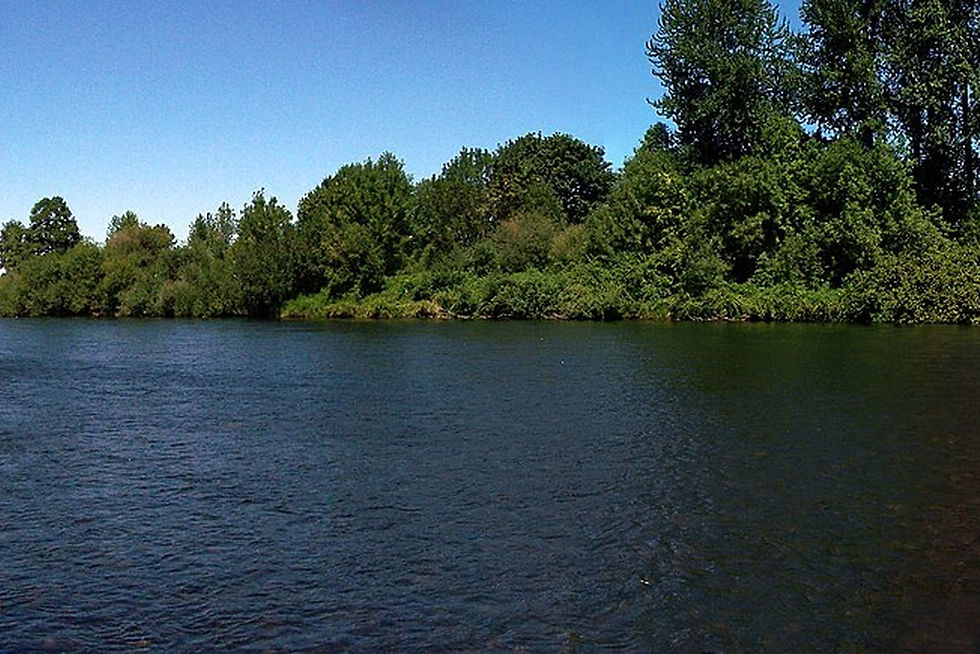
A McKenzie Bridge cabin on the river looks like an easy yes until the underwriting starts. The market data behind that yes has to come from this town, on this stretch of the McKenzie River in unincorporated Lane County, not from a nearby city that happens to share a highway exit. Buyers who mix in numbers from a bigger market end up with a purchase offer built on someone else's guest count.
On the AirROI extract filed for the twelve months of August 2025 through July 2026, typical active listings in McKenzie Bridge earned about $31,397, drawn from a sample of 50 active rentals. That is a small, real sample, and it is the number a buyer should carry into an offer, a rehab budget, or a conversation with a lender. It is not a promise, and it is not the number a bigger nearby market would produce.
This piece walks through what that $31,397 typical year is built from, what a nearby city's very different file looks like so it never gets blended in by accident, and what still has to be confirmed at the county level before a purchase agreement is worth signing.
None of this is a promise about a specific parcel. It is a starting set of market facts drawn from a fifty-listing sample, meant to be checked against the actual comparable listings near the property and against Lane County's own registration and tax files before an offer is written. Treat every figure here as the floor of the homework, not the finish line. This is not legal advice.
What a Typical McKenzie Bridge Listing Actually Earned
The headline figure on the current extract is a typical annual revenue of about $31,397 across 50 active McKenzie Bridge listings, with an average daily rate near $274 and occupancy around 35.4 percent. Multiply those two and the revenue per available night, or RevPAR, lands near $101. Those four numbers are the spine of any buying decision here: they describe a real river-corridor cabin market, not a resort town running near capacity.
Occupancy in the mid-30s is not a red flag on its own for a rural river community with a defined outdoor season. It does mean a buyer should not underwrite this property as if it fills most nights of the year. A pro forma built on 60 or 70 percent occupancy for a McKenzie Bridge address is built on a different town's data, not this one's.
The $274 average night is the number to test against comparable listings currently active near the property, not against a statewide average or a coastal market's published monthly rate. If the subject property's projected rate sits well above $274 without a documented reason, such as a larger footprint or a documented amenity gap in the local set, that gap needs an explanation before it goes into a lender packet.
Independent hosts still write most of this fifty-listing desk rather than large professional management companies, which matters for a buyer thinking about the operating side of the purchase. A smaller, owner-run market can mean more variation in how listings are priced and photographed from one property to the next, which is part of why the typical figure, rather than the top performer in the set, is the safer number to underwrite against.
Why the Nearby City's Numbers Don't Belong on This Deed
Eugene, the larger city nearest McKenzie Bridge, shows typical annual revenue of about $26,063 across 1,328 active listings on the same August 2025 through July 2026 window. That is a genuinely different market: over twenty-five times the listing count, a different guest mix, and a downtown-and-university demand pattern that has nothing to do with a river cabin thirty-plus miles east on Highway 126.
The task for a buyer is mechanical, not philosophical: keep the $31,397 McKenzie Bridge figure on the McKenzie Bridge line of the packet, and keep the $26,063 Eugene figure on its own separate line if it appears at all. A packet that lets those two numbers drift together, even unintentionally through a rounded average or a blended comp set, misstates the actual property being purchased.
The same discipline applies to other nearby STR reports that might get pulled into a folder by habit. Florence, Oregon shows about $28,974 typical revenue on 212 listings; Port Orford shows about $37,640 on 54 listings; Depoe Bay shows about $45,628 on 235 listings. Each of those is its own coastal or river town with its own file. None of them is McKenzie Bridge, and none should be cited as if it describes this address.
The Direction the Market Is Moving, Not Just the Snapshot
A single typical-revenue number tells a buyer where the market sits today. The trend line tells a buyer where it is headed, and in this sample the trend is worth sitting with before an offer goes in. Year over year, revenue on the McKenzie Bridge extract is down about 18.5 percent, while the number of active listings, the supply side, is up about 35.1 percent over the same period.
Read together, those two figures describe a market where more owners are competing for a typical-revenue pool that shrank rather than grew. That is not automatically a reason to walk away from a purchase; it is a reason to underwrite conservatively rather than extrapolating last year's typical revenue forward at a growth rate the current data does not support.
A buyer who runs a five-year pro forma off this sample should build in that supply pressure explicitly: more listings chasing a smaller typical-revenue pool tends to compress rates and occupancy further before it stabilizes, absent a documented change in demand. That is a conversation for a lender packet, not a footnote.
Who Actually Books a McKenzie Bridge Stay
The guest data in this sample points to a specific, repeatable trip pattern rather than a generic vacation-rental crowd. Most guests arrive from Portland, then from Bend, which tells a buyer this is primarily a regional drive market for river, waterfall, and forest access rather than a long-haul destination competing on flight routes.
Typical length of stay runs about 2.7 nights, and booking lead time runs about 64 days. Both numbers matter for underwriting: a short average stay means turnover costs, cleaning frequency, and check-in logistics carry real weight in a McKenzie Bridge operating budget, and a roughly two-month lead time means marketing and pricing for the August peak has to be live well before summer, not the week before.
About 16.0 percent of the 50 listings in the sample already set a 30-night minimum, which likely reflects a mix of longer-stay strategies and units positioned outside the short-term-rental regulatory lane entirely. That is a meaningfully different operating model than the roughly three-night guest who represents most of this market, and a buyer should be clear about which model a specific listing is actually running before valuing it off the $31,397 typical-year figure.
A 30-night setting on a listing is not, by itself, evidence of stronger performance, and it should not be read as a shortcut around the county's occupancy or registration rules. If a target property is currently listed with a 30-night minimum, ask directly whether that reflects an owner's marketing choice or a structural requirement tied to the parcel, before assuming the property will convert cleanly to the roughly three-night guest pattern that drives most of this market's typical revenue.
Registration, Tax, and Land-Use Homework Before Closing
McKenzie Bridge sits in unincorporated Lane County, which means the regulatory desk a buyer needs is the county's registration desk, not a city office. Lane Code 4.005.110 sets a county transient lodging tax stack of five percent plus three percent plus two percent of rent, and Lane County's transient lodging tax is administered by the Oregon Department of Revenue under an intergovernmental agreement. Oregon's own state transient lodging tax runs 1.5 percent on stays ending on or before December 31, 2026.
What this research does not carry is a specific McKenzie Bridge short-term-rental permit fee. That figure should not be estimated or guessed for a buyer packet; it needs to be confirmed directly with Lane County before closing, along with any remaining special-use or land-use conditions tied to the specific parcel. Lane County Land Management is the right desk for land-use questions, and lanecountyor.gov is the right starting point for both registration and tax confirmation.
A buyer packet built for this property should carry three distinct lines: the $31,397 typical-year revenue figure with its 50-listing sample size, the county tax stack confirmed directly with Lane County rather than assumed, and the parcel-specific permit status confirmed the same way. None of the three should be estimated from a neighboring city's file.
It is worth budgeting real time for this step rather than treating it as paperwork to finish the week before closing. County registration questions and land-use conditions on river-corridor parcels can take longer to resolve than a typical urban closing timeline allows, and a lender packet that shows the confirmation already in progress reads very differently than one that shows a blank line where the permit status should be.
Underwriting the Calendar Honestly
this sample shows August, June, and October as the strongest revenue months, and January as the clear revenue hole. That pattern fits a river-and-forest destination built around summer recreation with a secondary fall window, and a soft winter stretch when the McKenzie River corridor sees far less regional drive traffic from Portland and Bend.
A buyer's cash-flow model should reflect that shape rather than smoothing it into an even monthly average. Debt service, reserve contributions, and management costs need to be sized against a calendar where a large share of the $31,397 typical year is earned across a handful of peak weeks, with January carrying the least revenue and likely the most vacancy.
Named local event weekends around the McKenzie River corridor add demand signal on top of that seasonal shape, but a named event is not the same thing as measured occupancy. A buyer should treat event weekends as upside color for a marketing plan, not as a line item in the base-case pro forma.
It also helps to compare this shape against other nearby but distinct river and coastal reports rather than assuming every Oregon short-term rental follows the same curve. Florence, Port Orford, and Depoe Bay each carry their own revenue totals and listing counts on this same data pull, and each has its own seasonal pattern. None of those patterns should be copied onto a McKenzie Bridge calendar without separately confirming it against this town's extract.
Building a Buyer Packet That Actually Holds Up
Put together, a defensible McKenzie Bridge buying packet keeps four things distinct and sourced: the $31,397 typical annual revenue on 50 listings with $274 ADR, 35.4 percent occupancy, and $101 RevPAR from the current AirROI extract; the year-over-year direction of minus 18.5 percent revenue against plus 35.1 percent supply; the guest and calendar pattern of Portland-and-Bend origin, a 2.7-night stay, 64-day lead time, and an August-June-October peak against a January hole; and the Lane County registration, tax, and land-use file confirmed directly rather than assumed.
Every one of those pieces should sit on its own line, sourced to this town's extract or to Lane County directly, with Eugene and every other nearby market kept on a separate line where it belongs. A packet built that way survives a lender's second read. A packet that blends a bigger neighboring city's revenue into a McKenzie Bridge line item usually does not.
The larger point behind all of this bookkeeping is simple: McKenzie Bridge is a small, real, owner-run river market with its own typical revenue, its own tax stack, and its own registration desk. It is not a rounding error inside a bigger regional market, and it should not be underwritten as one. A buyer who treats it as its own market from the first spreadsheet forward is the buyer whose numbers still hold up a year later.
That same discipline pays off past closing. Every renewal, every refinance conversation, and every future sale of the property will get measured against whatever baseline the original purchase packet set. A packet anchored to the actual $31,397 McKenzie Bridge figure, the confirmed county tax stack, and a verified permit status gives every one of those future conversations a foundation that holds, instead of a number that has to be re-explained later.
Related Reading
More Buying a McKenzie Bridge, OR Short-Term Rental in 2026 host reading on desks, calendars, and listing clarity.
McKenzie Bridge, Oregon STR Market Report 2026: Revenue Data
McKenzie Bridge, Oregon STR Rules: What to Confirm Before You List
McKenzie Bridge Tourism Data: What Actually Predicts Revenue
McKenzie Bridge and Eugene: Two Towns, Two Different Guest Trips
Who Books a McKenzie Bridge, Oregon Rental: Origin and Trip Type
Frequently Asked Questions
What did a typical McKenzie Bridge short-term rental earn last year?
On the current AirROI extract covering August 2025 through July 2026, typical active McKenzie Bridge listings earned about $31,397, based on a sample of 50 active rentals. The average daily rate was about $274, occupancy ran near 35.4 percent, and revenue per available night landed close to $101. That figure describes this town's river-corridor market specifically and should not be confused with revenue from Eugene or any other nearby city.
Should I use Eugene's rental numbers to underwrite a McKenzie Bridge property?
No. Eugene is a separate, much larger market with about 1,328 active listings and typical revenue near $26,063 on the same extract window, driven by a different guest base and demand pattern. Blending Eugene's numbers into a McKenzie Bridge packet misstates the property. , and confirm which town's file actually applies to the parcel being purchased.
Is the McKenzie Bridge short-term rental market growing or shrinking?
The extract shows a mixed signal worth underwriting carefully: revenue is down about 18.5 percent year over year, while the number of active listings is up about 35.1 percent over the same period. More owners are competing for a typical-revenue pool that contracted rather than grew, so a buyer should build conservative, not extrapolated, growth assumptions into a purchase pro forma.
Who books a McKenzie Bridge rental, and how long do they stay?
Most guests arrive from Portland, then from Bend, making this primarily a regional drive market rather than a fly-in destination. Typical length of stay runs about 2.7 nights, with a booking lead time of roughly 64 days. That combination means turnover costs matter in the operating budget, and marketing for the August peak needs to be live well before summer arrives.
Do I need a permit to operate a short-term rental in McKenzie Bridge?
McKenzie Bridge sits in unincorporated Lane County, so any registration requirement runs through the county, not a city office. This research does not include a specific McKenzie Bridge short-term-rental permit fee, and that figure should not be guessed on a buyer packet. Confirm current registration and any special-use conditions directly with Lane County before closing, starting at lanecountyor.gov, and budget real time for the answer.
What taxes apply to a McKenzie Bridge short-term rental?
Lane Code 4.005.110 sets a county transient lodging tax stack of five percent plus three percent plus two percent of rent, administered by the Oregon Department of Revenue under an intergovernmental agreement with the county. Oregon's state transient lodging tax adds 1.5 percent on stays ending on or before December 31, 2026. Confirm both rates directly with the county and the state before finalizing pricing.
Which months should a buyer expect to carry the most and least revenue?
On the current extract, August, June, and October stand out as the strongest revenue months, consistent with a summer-and-fall river and forest destination. January is the clear revenue hole. A buyer's cash-flow model should reflect that uneven shape directly, sizing debt service and reserves around a calendar where most of the typical $31,397 year is earned in a handful of peak weeks.
What does the 30-night minimum used by some McKenzie Bridge listings mean for a buyer?
About 16.0 percent of the 50 listings in the sample set a 30-night minimum, a meaningfully different operating model than the roughly three-night guest who represents most of this market. That minimum may reflect a longer-stay strategy or a unit operating outside the typical short-term-rental lane. Before valuing a listing off the $31,397 typical-year figure, confirm which operating model it is actually running.
Work with Crest & Cove Creative
A river cabin near McKenzie Bridge earns real revenue, but only when the underwriting starts from this town's numbers instead of a bigger neighbor's file. Confirm the county desk, price the calendar honestly, and the purchase holds up under review.
Ready to see whether a McKenzie Bridge property pencils out against real 2026 data instead of a borrowed comp set? Our team builds the market packet, checks the Lane County registration and tax file, and hands you a straight answer before you make an offer.
Reach out at crestcove.co or (256) 998-7502.


Comments