
How to Market a McKenzie Bridge, OR Short-Term Stay


Marketing a McKenzie Bridge short-term rental well starts with refusing to write it like a generic Oregon listing. This is a specific river community in unincorporated Lane County, along the McKenzie River corridor on Highway 126, and the listings that perform best here are the ones that read like they were written by someone who has actually stood at the property, not a template applied across a dozen unrelated towns.
The market data backs that specificity up directly. On the current AirROI extract, covering August 2025 through July 2026, McKenzie Bridge's 50 active listings produced a typical annual revenue of about $31,397, an average daily rate near $274, and occupancy around 35.4 percent. Most guests arrive from Portland, then from Bend, book about 64 days ahead, and stay roughly 2.7 nights, a specific, repeatable pattern that should shape every part of a listing's marketing, not just its photos.
This piece walks through what to name specifically, when to have the calendar and pricing ready, and what county-level details have to be confirmed rather than guessed before a listing goes live.
Year over year, this market's revenue is down about 18.5 percent while the number of active listings is up about 35.1 percent, meaning more hosts are competing for a smaller typical-revenue pool than a year ago. In a more competitive environment like that, the difference between a specific, well-marketed listing and a generic one shows up directly in the calendar, not just in the annual total.
The remaining share of the market, about 90 percent of the 50 active listings, is run independently rather than through professional management, which means most of the marketing decisions covered here are ones an individual owner can make directly, without needing an outside company to execute them. This is not legal advice.
Name the McKenzie River, Not a Generic Oregon Caption
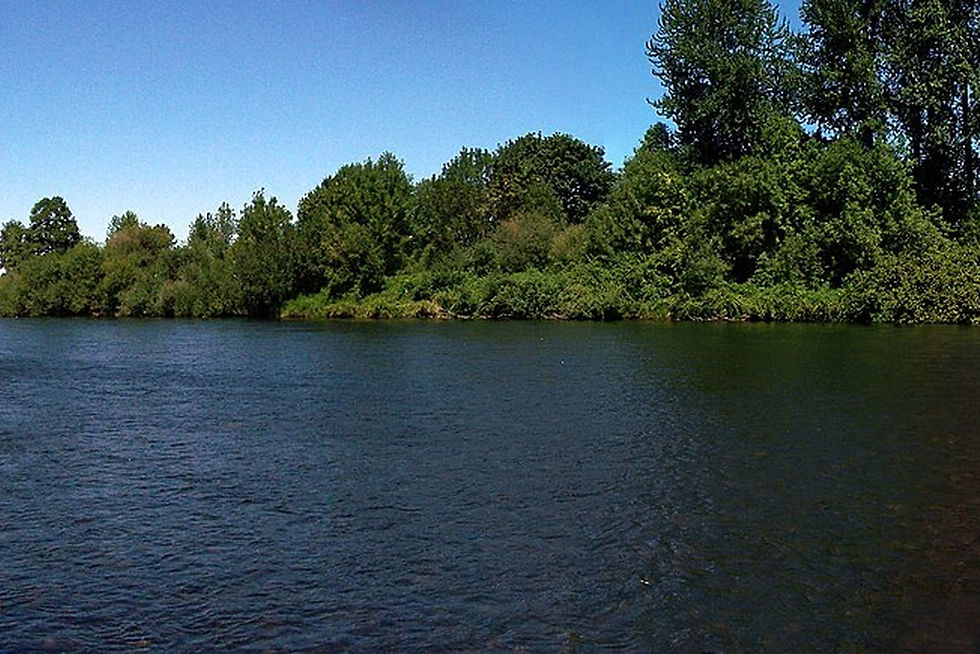
The single biggest, most fixable marketing mistake for a McKenzie Bridge listing is generic language: pine trees, mountain air, Oregon beauty, phrases that could describe hundreds of listings across the state. Guests choosing McKenzie Bridge are choosing it specifically for the McKenzie River and the surrounding forest corridor, and a listing that names the river directly, and describes real proximity and access, converts better than one that stays vague.
Sahalie Falls sits within reach of the McKenzie Bridge area and is worth naming specifically in a listing description or photo caption rather than folding into a vague phrase like 'nearby waterfalls.' Guests planning a trip here are frequently planning it around river and waterfall access specifically, and precise, named detail signals a listing written by someone who actually knows the area.
The same principle applies to photography. Images that clearly show the property's actual relationship to the river, its actual drive-up, and its actual interior outperform generic forest stock photography that could belong to any Pacific Northwest listing. Guests comparing similar-sounding properties in this corridor are, in practice, choosing based on which listing looks and reads like it is telling the truth about one specific place.
A first-night walk, a short, specific route from the property to a nearby river viewpoint that a host lays out step by step in the listing description or welcome guide, is a small piece of copy that does real marketing work. It gives a guest a concrete reason to picture the first evening of the trip, which is more persuasive than a general claim about the area's natural beauty, and it reads as more trustworthy to a guest comparing several similar listings at once.
Write for the Guest Who Is Actually Booking
Most guests arrive from Portland, then from Bend, which means this is primarily a regional drive market, not a fly-in destination. Listing copy and pre-arrival messaging should speak directly to that drive: clear directions along Highway 126, a note on where market coverage gets patchy, and a sense of how far the property sits from the last reliable grocery or fuel stop.
Typical stay length runs about 2.7 nights, so a listing's messaging should be built around a short, high-impact visit rather than a long list of distant attractions a guest will not have time to reach. One or two specific, well-described nearby experiences, the river itself, a specific falls, a described first-night walk from the property, do more for conversion than an exhaustive, generic regional guide.
Because the booking lead time runs about 64 days, a listing's messaging also has time to work in stages. An initial listing description sells the trip; a pre-arrival message, sent well ahead of check-in, can add the practical detail, road conditions, market coverage, the last grocery stop, that a shorter-lead booking would not have time to deliver before arrival. Hosts who use that lead window deliberately tend to arrive at check-in with a guest who already feels oriented, which shows up in reviews as much as it does in the booking numbers.
Time the Marketing Push to the Real Calendar
August stands out as the single month to protect on this market's calendar, showing the strongest revenue alongside June and October, while January is the clear low point. With an average booking lead time near 64 days, listing copy, pricing, and photography need to be current and specific well before summer, not updated the week before the peak arrives.
A listing that is still running generic, statewide language in late May is already behind the guest who is booking an August stay roughly two months out. Getting the McKenzie River and Sahalie Falls language, current photography, and accurate pricing in place before that lead window opens is one of the most direct, controllable levers a host has heading into the peak.
About 16.0 percent of listings in this market currently set a 30-night minimum. That is a meaningfully different marketing approach than the roughly three-night guest who represents most of this market, and a host running that model should write toward the longer-stay guest specifically rather than trying to market the same listing to both audiences at once with a single generic description.
Occupancy in this sample runs near 35.4 percent overall, with January standing out as the clear low point. A host does not need to hide that fact; a shoulder-season or off-peak message that is honest about a quieter month, while still highlighting what the property offers, tends to perform better with the guests who are specifically looking for a calmer, less-booked visit than one that oversells a slow month as if it were the August peak.
Get the Registration and Tax Facts Right Before the Ad Goes Live
McKenzie Bridge sits in unincorporated Lane County, which means any short-term rental has to be confirmed against county files, not a city office, before it is marketed. Lane Code 4.005.110 sets a combined county transient lodging tax of five percent plus three percent plus two percent of rent, administered by the Oregon Department of Revenue under an intergovernmental agreement with the county. Oregon's own state transient lodging tax adds 1.5 percent on stays ending on or before December 31, 2026.
This research does not carry a specific McKenzie Bridge short-term-rental permit dollar figure, and none should be guessed or guessed at in a listing description or a guest-facing FAQ. Confirm current registration status and any land-use conditions directly with Lane County, starting at lanecountyor.gov, and route land-use-specific questions to Lane County Land Management before the listing goes live.
A listing that gets the registration story wrong, either by overstating compliance or by staying silent on a detail a guest or a platform later asks about, creates real risk that no amount of good photography or copy can offset. Getting this right is not a marketing nicety; it is part of the marketing job.
It is worth budgeting real time for this step rather than leaving it until the listing is otherwise ready to publish. County confirmation can take longer than expected for a river-corridor parcel, and a host who starts that process early has more room to adjust the marketing calendar if a question comes back that changes the listing's timeline before the busy season starts.
Keep the Neighbor's Gallery on the Neighbor's Listing
Eugene sits nearby and shows a very different market on the same data window, about $26,063 typical revenue across 1,328 active listings, a downtown-and-university guest pattern with essentially no overlap with a McKenzie Bridge river stay. Marketing material, photography, and even language borrowed from a nearby city's listing template should stay off a McKenzie Bridge page entirely; it describes a different trip to a different guest.
The same discipline applies to comparisons pulled from other nearby-but-distinct towns sometimes cited for market color, such as Florence, Port Orford, or Depoe Bay, each with its own separate revenue report and its own guest base. None of that material belongs in a McKenzie Bridge listing's marketing, however tempting it is to borrow a stronger-sounding number or a prettier photo from a neighboring file.
This matters for pricing decisions specifically. A host tempted to set rates based on a stronger-performing nearby town's average night is pricing against a market this listing does not actually compete in. The $274 average night this town's own extract shows is the number to test a McKenzie Bridge rate against, adjusted for the specific property's features, not a number imported from a busier or larger neighboring market, however appealing that comparison might look on paper.
Named Events Add Color, Not a Marketing Strategy
Named local event weekends around the McKenzie River corridor are worth mentioning in a listing's seasonal messaging, they add real local color and a reason to book a specific weekend. They should not, however, be treated as a substitute for the underlying occupancy and pricing data this market actually shows. A named event is a demand signal, not proof of typical availability across the rest of the season.
A host who leans too heavily on event-weekend language risks setting guest expectations that the rest of the calendar cannot match. It is more effective, and more honest, to treat a named event as one specific selling point among several, alongside the river, the falls, and the actual drive from Portland or Bend, rather than as the entire marketing strategy for the listing.
A marketing plan built responsibly around this market keeps four things straight: name the McKenzie River and its landmarks specifically, write for the Portland-and-Bend drive guest and the 2.7-night average stay, get pricing and copy live well before the 64-day lead window closes on the August peak, and confirm the Lane County registration and tax story directly rather than guessing. That is what a McKenzie Bridge listing needs to say, and it is not the same thing any nearby city's listing needs to say.
None of this requires an unrealistic amount of ongoing work from a host. Most of the effort is front-loaded: get the description, photos, and county file right once, well ahead of the August peak, and then keep pricing and availability current through the season. A listing built that way tends to outperform a generic one for the rest of the year, not just during the single busiest month, and it holds up better as more listings enter this market and competition for the same typical-revenue pool increases.
Related Reading
More How to Market a McKenzie Bridge, OR Short-Term Stay host reading on desks, calendars, and listing clarity.
McKenzie Bridge, Oregon STR Market Report 2026: Revenue Data
McKenzie Bridge, Oregon STR Rules: What to Confirm Before You List
McKenzie Bridge Tourism Data: What Actually Predicts Revenue
McKenzie Bridge and Eugene: Two Towns, Two Different Guest Trips
Who Books a McKenzie Bridge, Oregon Rental: Origin and Trip Type
Frequently Asked Questions
What is the biggest marketing mistake for a McKenzie Bridge listing?
Generic language is the most common and most fixable mistake: pine trees, mountain air, Oregon beauty, phrases that could describe hundreds of listings statewide. Guests are choosing McKenzie Bridge specifically for the McKenzie River and the surrounding forest corridor. Naming the river, and a specific landmark like Sahalie Falls, directly in the listing converts better than vague, interchangeable descriptions of Oregon scenery.
Who is the typical McKenzie Bridge guest, and how should that shape marketing?
Most guests arrive from Portland, then from Bend, making this a regional drive market rather than a fly-in destination. Typical stays run about 2.7 nights with a booking lead time near 64 days. Listing copy should speak directly to the actual drive, road conditions, and market coverage along Highway 126, rather than generic scenic language aimed at a broader, undefined audience.
When should I update my McKenzie Bridge listing for the August peak?
Well before the roughly 64-day average booking lead time closes on an August arrival, which typically means having current photography, accurate pricing, and specific McKenzie Bridge language in place by late spring. August, alongside June and October, is this market's strongest revenue period, and a listing still running generic copy in late May is already behind guests actively booking for that peak.
Should I mention Sahalie Falls or the McKenzie River specifically in my listing?
Yes. Guests booking a McKenzie Bridge stay are frequently planning the trip specifically around river and waterfall access, and naming the McKenzie River and Sahalie Falls directly, rather than using a vague phrase like nearby attractions, signals a listing written by someone who actually knows the area. That specificity is one of the most effective, low-cost marketing levers available to a host here.
What do I need to confirm with Lane County before marketing my listing?
Confirm current short-term-rental registration status and any special-use or land-use conditions directly with Lane County, starting at lanecountyor.gov, before the listing goes live. This research does not include a specific McKenzie Bridge permit dollar figure, and none should be guessed at in listing copy or a guest-facing FAQ page. Route land-use-specific questions to Lane County Land Management directly.
What taxes should my McKenzie Bridge pricing account for?
Lane Code 4.005.110 sets a combined county transient lodging tax of five percent plus three percent plus two percent of rent, administered by the Oregon Department of Revenue under an intergovernmental agreement with Lane County. Oregon's state transient lodging tax adds 1.5 percent on stays ending on or before December 31, 2026. Confirm current rates directly with the county and state before finalizing pricing.
Should I market my listing differently if it has a 30-night minimum?
Yes. About 16.0 percent of listings in this market currently set a 30-night minimum, a meaningfully different guest than the roughly three-night stay that drives most of this market. A listing running that model should write specifically toward the longer-stay guest rather than trying to market the same copy to both a weekend visitor and a month-long tenant at once.
Can I use Eugene's market data or photos to market a McKenzie Bridge listing?
No. Eugene is a separate market showing about $26,063 typical revenue across 1,328 listings on the same data window, with a downtown-and-university guest pattern that has nothing to do with a McKenzie Bridge river stay. Borrowing numbers, language, or photography from Eugene, or any other nearby town, misrepresents the actual property and should be avoided entirely.
Work with Crest & Cove Creative
A McKenzie Bridge listing wins by naming the river, the falls, and the real Portland-to-Bend drive, not by borrowing generic Oregon language. Get that specific, and the August peak fills faster.
Want listing copy and a seasonal marketing calendar built around McKenzie Bridge's own numbers instead of a generic Oregon template? We write to this town's real guest pattern and confirm the Lane County file so your listing is ready well before the August peak.
Reach out at crestcove.co or (256) 998-7502.


Comments