
One Photo Set, Four Jobs: Reusing Vacation Rental Photos Across OTA

Updated: Aug 27
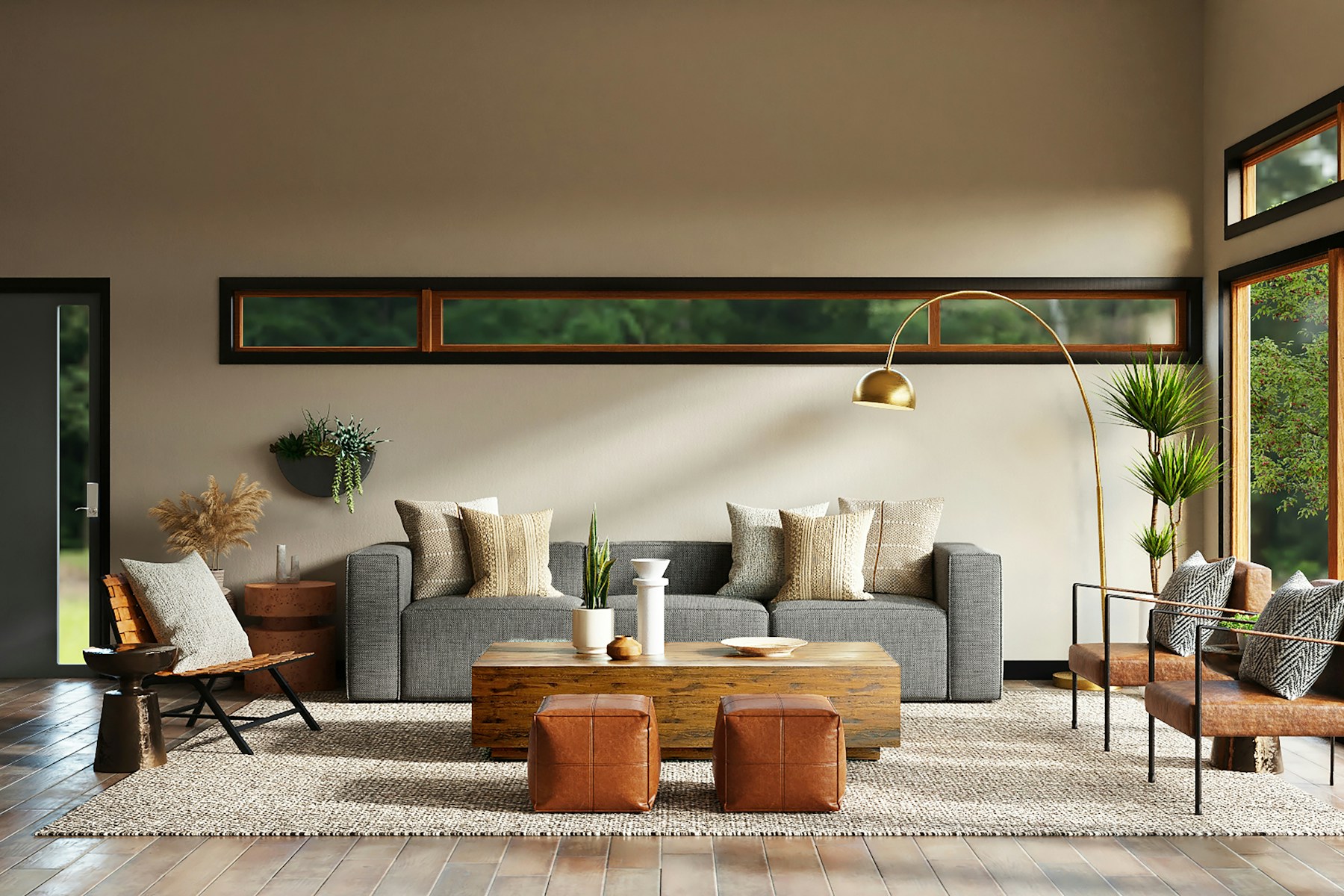
Most independent hosts shoot one photo set a year, if that, and then spend the next twelve months deciding where each image is allowed to go. The OTA listing gets the wide living-room shot. The website gets the moody sunset exterior. The ad gets whatever crops best into a square. Nobody is lying on purpose, but by the third channel the story has drifted far enough from the actual house that a guest who cross-checks the website against the Airbnb listing notices the seams.
The fix isn't a bigger photo budget. It's a rule: the same house has to be recognizable no matter which door a guest walked in through. A single photo set can do four jobs , OTA listing, website, paid ads, and organic content , as long as each channel gets an honest crop of the same rooms rather than a separately imagined version of the property. This is not legal advice.
Why the Same Ten Photos Have to Behave Differently on Four Pages
An OTA listing, a website, an ad, and a social caption are not the same job even when they're built from the same photo folder. A guest lands on each one wanting something different, and the photo has to answer that specific want without contradicting what the other three pages already said. That's the entire discipline: one set, four honest jobs, zero guessed rooms.
The trap most hosts fall into isn't bad photography , it's treating the four channels as four separate marketing problems instead of four windows onto one property. Once a host starts asking "what does the ad need" instead of "what does this house actually look like," the crop starts hiding things: a cramped hallway, a driveway shared with a neighbor, a view that only exists from one specific chair. None of those omissions are lies on their own. Stacked across four channels, they add up to a guest who books a house they never actually saw.
What an OTA Photo Is Actually For
Marketplace pages exist to sell a specific night to a stranger who is comparing a grid of thumbnails, most of them open in other tabs at the same time. The OTA photo's only job is to represent the stay honestly and fast , the bed, the kitchen, the bathroom, the outdoor space, in the order a guest actually experiences arriving. It is not the place for a brand deck, a seasonal campaign image, or a shot chosen because it photographs well rather than because it's the room the guest will sleep in.
This is also the least forgiving channel. A guest who feels misled by an OTA photo doesn't email to ask a clarifying question , they leave, or they arrive and leave a review about it. Whatever gets cut from the OTA gallery should be cut for honesty, not for polish. If a room is small, an accurate photo of a small room outperforms a wide-angle lie that gets discovered at check-in.
Where the Website and the Ads Are Allowed to Borrow , and Where They Aren't
A brand website and a paid ad can borrow tone from the OTA photo set, but they cannot guess a second house. The website is allowed to lead with the strongest single image , the one shot that best captures what makes the property worth booking , even if that photo would rank fourth or fifth in the OTA gallery's practical order. The ad is allowed to crop tightly for a square or vertical format. Neither is allowed to show a room, a view, or an amenity that doesn't exist on the property a guest will actually check into.
The test is simple: could a guest who saw the ad, then the website, then the OTA listing, put all three together and recognize the same house? If the answer is yes, the crop is doing its job. If the answer is no , if the ad's hero shot and the OTA's hero shot look like they belong to two different properties , the marketing has quietly created a mismatch that the guest will notice on arrival, not before.
The Crop That Cost a Booking
Picture a Facebook ad built from a photo that cropped out the driveway because it looked messy in the square format. The resulting image reads clean and inviting. The guest who books based on that ad arrives to find a shared gravel driveway the ad never hinted at and the mismatch becomes the first line of the review rather than a footnote. Nothing in the ad was technically false , the driveway wasn't edited or replaced , but the crop deleted a fact the guest needed before booking, not after.
This is the difference between styling a photo and misrepresenting a property. Styling chooses the best light, the best angle, the tidiest version of a real room. Misrepresenting deletes the parts of the truth that are inconvenient for the ad. A host who wants all four channels to keep working over time has to be honest about which one they're doing, especially on the channel , paid social , where the guest has the least ability to cross-check before clicking book.
AI-Visible Pages Still Need an Honest First Image
As more of a guest's early research happens through AI-generated summaries and search overviews rather than a manual scroll through a gallery, the first image a system pulls from a listing or website matters even more than it used to. A crop that misrepresents the property doesn't just risk a bad review anymore , it risks getting summarized and repeated by a system the host has no way to correct in real time. The honest-first-image rule isn't just good manners toward the guest; it's the only version of the photo set that holds up no matter which channel, human or automated, surfaces it first.
This doesn't require new photography. It requires picking the same handful of accurate, representative images for every channel that pulls from the photo set automatically, rather than letting each platform's algorithm choose whichever crop performs best in isolation.
A Weekly Rhythm a Small Operation Can Actually Keep
Most hosts don't need a content calendar. They need a standing five-minute check: does this week's homepage, ad, and OTA gallery still describe the same house? A weekly rhythm that fits inside regular turnover work looks like this , after cleaning, take one current photo of whatever changed (a repainted room, a new piece of furniture, a seasonal yard difference) and swap it into whichever channel is most out of date. That's the whole cadence. It beats a quarterly photoshoot that gets scheduled, delayed, and eventually skipped.
The goal isn't a constant stream of new content. It's making sure the oldest photo across all four channels never drifts more than a season or two behind what a guest will actually see. A listing that looked accurate in spring and still shows the same photos in the depths of winter, with the yard and light completely different, is quietly training guests to distrust the next photo they see, too.
The Composite Failure: Work Finished on Paper, Not on the Page
The most common failure isn't a single bad photo , it's a set of finished-looking marketing materials that were never reconciled against each other. The ad campaign got built. The website got redesigned. The OTA listing got refreshed. Each project was completed and checked off, but nobody sat all four channels side by side and asked whether they described the same house. Guests do that comparison instinctively, even if the marketing team never did.
Treat the four channels as one project with four outputs, not four separate projects that happen to feature the same address. When they're built that way, refreshing one photo automatically raises the question of whether the other three still match , and that single habit prevents most of the mismatches that turn into review complaints months later.
Related Reading
More independent-host photography and video reading already live on Crest & Cove.
Frequently Asked Questions
Can the same photo set really work for the OTA listing, the website, and paid ads?
Yes, as long as each channel gets an honest crop rather than a separately imagined version of the property. The OTA gallery should lead with the rooms in the order a guest experiences them. The website can lead with the single strongest image. The ad can crop tightly for its format. What none of them can do is show a room, view, or amenity that doesn't exist on the actual property.
What's the difference between styling a photo and misrepresenting the property?
Styling picks the best light, angle, and tidiest real version of a room that exists. Misrepresenting deletes an inconvenient truth — cropping out a shared driveway, a busy road, or a cramped hallway so the guest doesn't see it until arrival. The test is whether a guest who saw all four channels together would recognize one consistent house.
How often does a host actually need new photography?
Less often than most content calendars suggest. What matters more is a weekly five-minute check, ideally folded into regular turnover, to confirm the four channels still describe the same house. A single current photo swapped in when something changes — new furniture, a repainted wall, a different season in the yard — does more for accuracy than an annual shoot that gets scheduled and then delayed.
Why does the first image on a listing matter more than it used to?
AI-generated search summaries and overviews increasingly pull and repeat a listing's first or most prominent image without the host reviewing it in the moment. A crop that misrepresents the property in that context doesn't just risk a bad guest review — it risks being summarized and passed along by a system the host can't correct on the spot. Picking the same honest, representative images across channels protects against both risks at once.
Is it ever okay for the website's hero photo to differ from the OTA listing's first photo?
Yes — the website is allowed to lead with the single strongest image even if it wouldn't be the first photo in the OTA gallery's practical order. What it can't do is show something the OTA gallery contradicts, like a different room, view, or feature that doesn't exist on the property a guest will actually book.
What should a host do if they realize their ad photo hid something important?
Swap it as soon as the mismatch is noticed, rather than waiting for the campaign to run its course or for a guest complaint to force the issue. A cropped-out driveway, a hidden shared wall, or a flattering angle that overstates a room's size should be corrected the same week it's identified — the fix is usually a five-minute crop change, not a new photoshoot.
How does a host know if their four channels have drifted apart?
Open all four side by side — the OTA gallery, the website, the most recent ad, and the most recent social post — and ask whether a stranger could tell they're the same house. If the hero images tell noticeably different stories about the size, condition, or setting of the property, the channels have drifted and need to be reconciled before any new photos are added.
Does repurposing photos across channels save real time for a small operation?
Yes, but only if the host builds one photo set with four honest crops in mind from the start, rather than shooting separately for each channel or letting each platform's algorithm pick its own version of the truth. The time savings come from maintaining one accurate story, not from cutting corners on any single channel.
Work with Crest & Cove Creative
The ad, the website, and the OTA listing all pulled from the same folder , and guests still noticed they didn't match. Name the failure mode the guest can check on the listing.
If your website, ads, and OTA gallery have quietly drifted into three different versions of the same house, bring the current listing and we'll reconcile the story before another guest catches the seam. Reach out at crestcove.co or (256) 998-7502. Keep the repurpose line labeled.
Reach out at crestcove.co or (256) 998-7502.


Comments